How to Automate Denticon
Denticon automates the group's own side: Morning Huddle, Task Manager, AutoEligibility, automated appointment messaging and balance reminders, and analytics that read across every office. Payer fee schedules, stalled claims and provider licence dates live on sites outside it. An agent such as WebRun reads those and assembles the rollup.
 Written by
Aiko Tanabe
Product researcher
Written by
Aiko Tanabe
Product researcher
 Reviewed by
Hannah Vogel
Finance operations
Reviewed by
Hannah Vogel
Finance operations
Every office in the group sits in one database
Most dental software assumes one office. Denticon assumes a group.
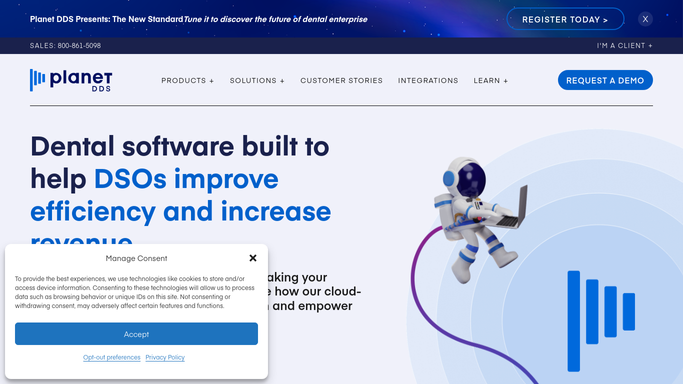
It is the cloud practice management system from Planet DDS, used by dental service organisations, multi-site groups and private practices that have started adding locations. The difference that matters is architectural: every office shares one database rather than running its own copy, so the group is a single system with locations in it rather than a set of systems to be reconciled afterwards.
That changes what a day looks like above the front desk. A regional manager opens eleven schedules without eleven logins. A hygienist covering at another site is not a new user account. The reporting rolls up because the numbers were never separated to begin with.
So Denticon carries the operational picture of the whole business: production and collections by office and by provider, how full each schedule is, the recall list, treatment diagnosed and not booked, the ageing receivables, and which provider is credentialed to work where.
The group report gets typed up office by office
The system holds all of that. Getting it in front of the people who act on it is still mostly copying.
Somebody pulls yesterday's production for each location and pastes it into a spreadsheet before the operations call. Somebody else builds a per-region scorecard by hand, because the version each manager wants is not the version the standard report produces. A third keeps the credentialing list, watching licence and DEA expiry dates that live on state board websites.
Then there is everything that arrives from outside. A payer changes a fee schedule and the news reaches office managers as a forwarded PDF, if it reaches them at all. Claims stall on payer portals. A new location comes out of the acquisition pipeline with its checklist in a project tool, its access requests in a ticket queue and its production in Denticon, so nobody sees all three at once.
None of this is difficult. It is a rota of tabs, worked by the same few people, every week of the year.
Morning Huddle answers the questions asked inside Denticon
The platform automates a great deal of this already, and a group not using it is paying for something switched off.
Morning Huddle puts the day's schedule, production and gaps in front of a team before it starts. Task Manager routes work between people and offices instead of leaving it in somebody's head. AutoEligibility checks coverage ahead of appointments, automated appointment messaging and balance due reminders take routine patient contact off the phone, and Quick Fill works the cancellation. Analytics, reporting and data share put the group's numbers where an operations team can use them.
Everything on that list operates on what Denticon can see, which is the group's own database and the patients inside it.
The wall is what the group depends on and does not own. The fee schedule a payer just changed sits on that payer's portal. A stalled claim sits there too, with its reason code and appeal window. A provider's licence expiry sits on a state board's website. A new office's onboarding progress sits in whatever project tool the integration team uses. None of those pages tells Denticon anything.
Each office is answered for before the regional call starts
Put a reader on all of those pages overnight and the Monday call changes shape.
Yesterday's production, collections and adjustments for every location in one sheet before anyone logs on, each office set against its own goal and its own trend, so the site that moved is named rather than hunted for. Open chair time for the next ten days per office.
Diagnosed treatment that never got booked, totalled by location, which is the largest number in most groups and the least often looked at. Receivables aged the same way at every office, so a site with a quiet billing problem shows up before it becomes a write-off.
Then the things that arrive from outside. Fee schedule changes read off the payer's portal and turned into a plain note for office managers, waiting for approval before it goes out. Provider licences, DEA registrations and payer credentialing checked against the boards that issue them, months ahead. A new hire's permission set matched to their role and office and queued.
In a clinical business the rule holds. The reading runs unattended, and anything that changes a record, files a claim or goes to a patient is drafted and waits for a person.
The rollup builds itself overnight
Every item on that lap is mechanical. It is the same twenty pages, opened early enough that the numbers are ready by nine.
WebRun is an AI agent that works a real Chrome browser, signed in the way your team signs in. It opens Denticon office by office, the payer portals and the state board sites, reads what is there, and delivers the rollup, the variance list or the credential report already built.
Runs happen on your schedule inside your own private environment, a workflow can be restricted to a named list of domains, and sessions are not shared between the sites it touches.
The workflows below are already built, and each one names the systems it opens.
Questions people ask
Does it write anything back into Denticon?
No. Reading across offices runs unattended. Anything that edits a record, posts a claim or reaches a patient is prepared and held for a person to approve, which is the only sane default in a clinical system every location shares.
Adding a location: is that a whole new automation to build?
No. Because the locations sit in one Denticon database, a workflow is written once and told which offices to cover. Adding a site is a line in that list rather than a new automation to build and maintain.
Our analytics already produce a report. Why add this?
Because the report stops at the group's own data. This adds what Denticon cannot see: fee schedules on a payer's portal, claim status and appeal windows, licence expiry on a state board site, and onboarding progress in the tools your integration team uses.
11 ready-made Denticon workflows
Each one names the apps it touches and the exact steps it takes. Open one to read what it will do, then turn it on.

Want one of these running on your own Denticon?
Show WebRun the process once and it will run it on schedule, in your own private browser environment.