How to Automate WhatsApp
WhatsApp automates at two levels. The Business app covers greetings, away messages, quick replies and broadcast lists on its own. Sending each customer something specific to them, like their order status or their appointment, needs the answer looked up first, which is where the manual work still sits.
 Written by
Samuel Adeyemi
Integrations writer
Written by
Samuel Adeyemi
Integrations writer
 Reviewed by
Elliot Nakamura
Platform writer
Reviewed by
Elliot Nakamura
Platform writer
WhatsApp is the channel customers actually answer
WhatsApp is the messaging app most of the world already has open, and for a great many businesses it has quietly become the main line to the customer. Orders come through it. Photos of the broken thing come through it. Appointments get moved in it.
It won that job by being where people already were. A customer who ignores email and never installed your app will reply on WhatsApp in four minutes, because it is the same app their family is in.
For a small business that is a real advantage and a real trap. The advantage is that messages get read. The trap is that a channel this personal does not scale by adding people to it, and the owner ends up answering it at ten at night.
Every answer is the same answer with different details
Look at a week of business WhatsApp messages and most fall into about five shapes.
Where is my order. When are you coming. How much for this. Did you get my payment. Can we move it to Thursday.
None of those are hard. Each one takes somebody opening the booking system or the courier page or the ledger, finding the one line about that customer, and typing it into a chat. Two minutes each, forty times a day, mostly done standing up with a phone in one hand.
The information is never the problem. The problem is that it lives somewhere else, and a person has to be the bridge.
The Business app covers the generic, not the specific
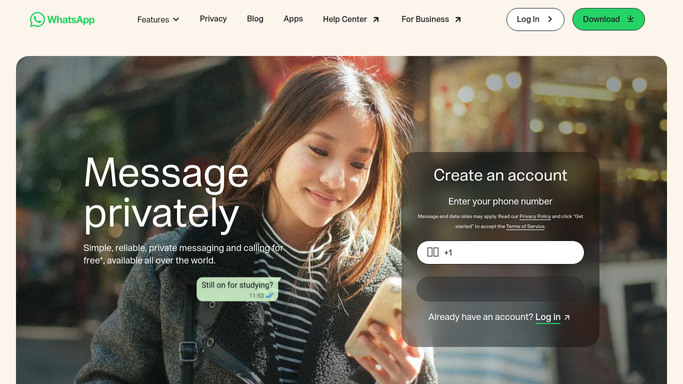
The free WhatsApp Business app does more than most owners have set up, and it is worth using properly first.
It gives you a greeting message for first contact, an away message for out of hours, quick replies you can fire with a shortcut, labels for organising chats, a catalogue for products, and broadcast lists for sending one message to many people at once. The Business Platform, the paid API tier, adds templated messages and proper integrations for larger operations.
Notice what all of those have in common. They send something written in advance. A greeting is the same for everyone. A quick reply is the same paragraph every time. A broadcast is one message to a list.
The moment a message needs a fact about that specific customer, the automation stops and a person takes over, because the app has no way to find out where that particular order is.
Each customer can be told their own answer
Change what is able to look things up and the five shapes above stop being work.
The customer asking where their order is gets the actual status, read off the courier site using the reference from their own confirmation. The customer asking when you are coming gets tomorrow's window from the scheduling system. The one asking about payment gets told what the ledger says, rather than a promise to check.
It works in the other direction too, before anyone asks. The delivery that slipped, flagged to the person waiting for it. The appointment reminder that goes out the evening before with the right time on it. The part that came back into stock, mentioned to the three people who asked about it last month.
This is also where the care belongs. WhatsApp is somebody's personal phone, sitting next to messages from their family, and people are far less forgiving of an automated mistake there than in email. Anything going to a customer should be drafted and read by a person before it leaves, at least until you trust the shape of it completely.
The lookup is what needs handing over
Typing the message was never the slow part. Finding out what to put in it was.
WebRun is an AI agent that works a real Chrome browser, signed in as you. It opens the courier site, the booking system or the ledger, finds the line about that customer, and prepares the reply with the real detail in it, ready for you to glance at and send.
It runs on your schedule in your own private environment, and you can watch a run and stop it. Customer messages draft and wait by default, because this is the channel where that matters most.
The workflows below are already built, and each one names what it opens.
Questions people ask
Will it message my customers on its own?
Not by default. It prepares the message with the details already filled in and leaves it for you to send. This is the channel where an automated mistake is least forgivable, so approval is the starting position.
Does this need the paid WhatsApp Business API?
No. It works the WhatsApp interface you already use, signed in as you, which is why it suits small operations that were never going to set up the Business Platform.
How does it know which customer a message is about?
From the conversation itself, plus whatever reference is in it. It reads the thread, takes the order number or the name, and looks that up in the system that holds the answer.
1,350 ready-made WhatsApp workflows
Each one names the apps it touches and the exact steps it takes. Open one to read what it will do, then turn it on.










Want one of these running on your own WhatsApp?
Show WebRun the process once and it will run it on schedule, in your own private browser environment.