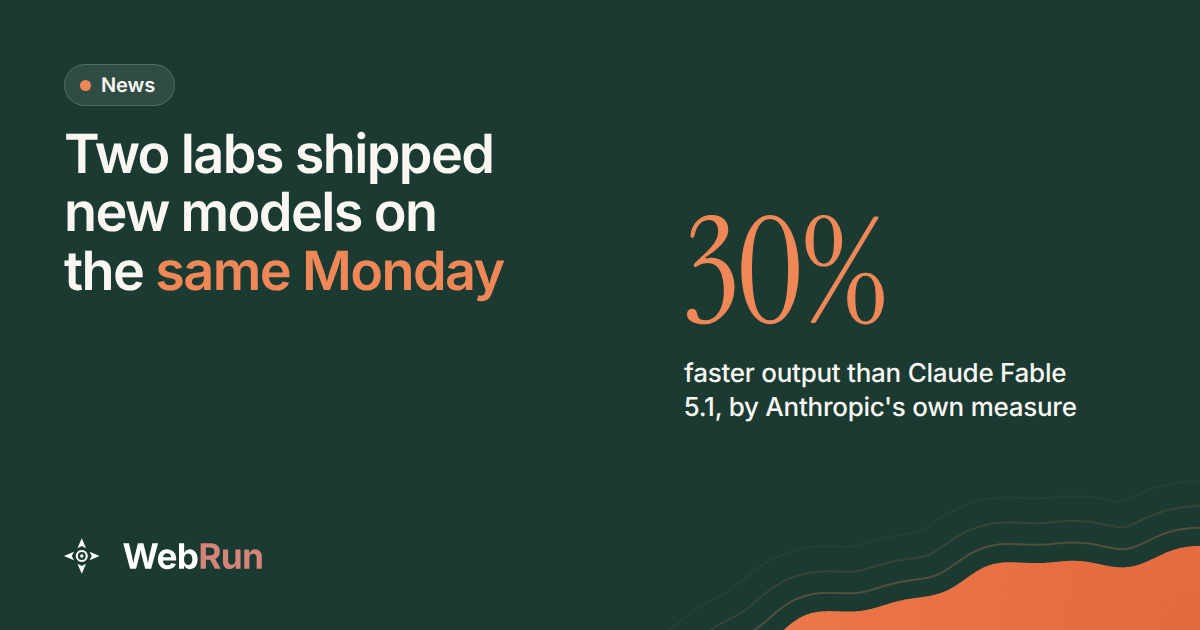
Two of the biggest AI labs released new models on the same day. On Monday 9 November 2026 Anthropic put out Claude Fable 5.2 and Claude Mythos 5.2, and Meta put out Muse Ember.
Nothing in your account changed on Monday, and neither announcement asks anything of you this week. What the two are worth reading for is the direction they agree on, which is worth knowing if any part of your week already runs on an agent.
What Anthropic shipped
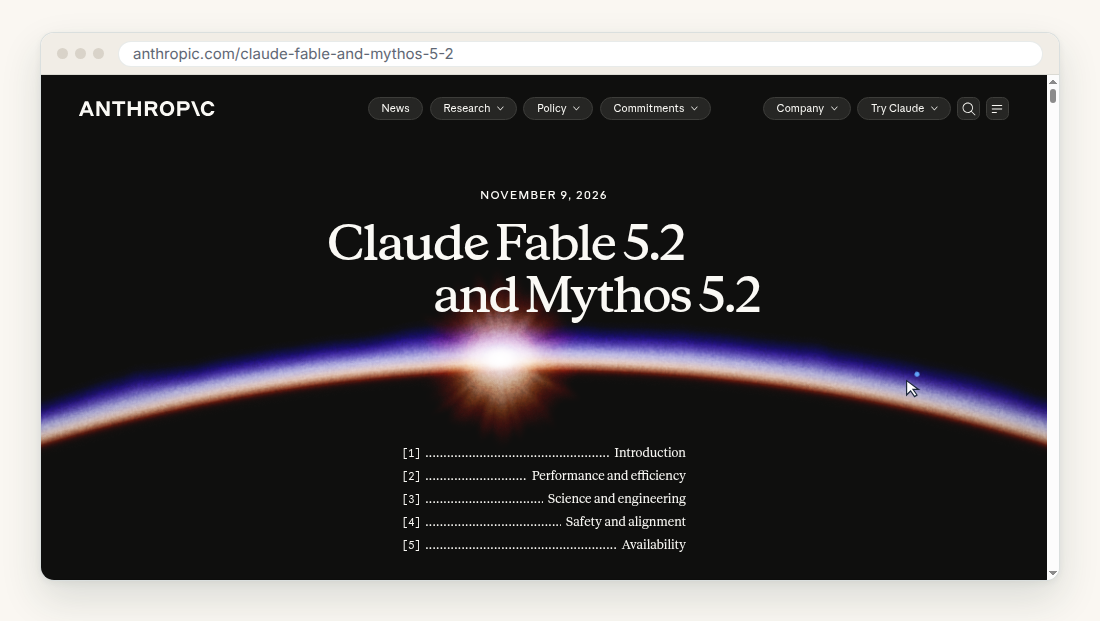
Anthropic released two models built on the same base with different safeguards. Claude Fable 5.2 is the general one, and Claude Mythos 5.2 goes only to organisations in Anthropic's Life Sciences and Cyber verification programmes, so most businesses will never meet it.
Three numbers from the announcement matter for ordinary work. The models "generate outputs up to 30% faster than Claude Fable 5.1 and Claude Mythos 5.1". They cost $8 per million input tokens and $40 per million output tokens. A fast mode runs at double that, $16 and $80. TechCrunch reported that the input price came down from $10, so this is a release that is quicker and cheaper than the one before it rather than a new tier above it.
Anthropic describes the gains as "improvements in areas like coding, reasoning, and vision", and says the model coordinated "over 1,000 subagents" on a single job in testing. Those are the company's own figures on the company's own benchmarks, which is normal for a launch and worth holding lightly. Fable 5.2 is on Amazon Web Services, Google Cloud and Microsoft Azure from day one.
What Meta shipped
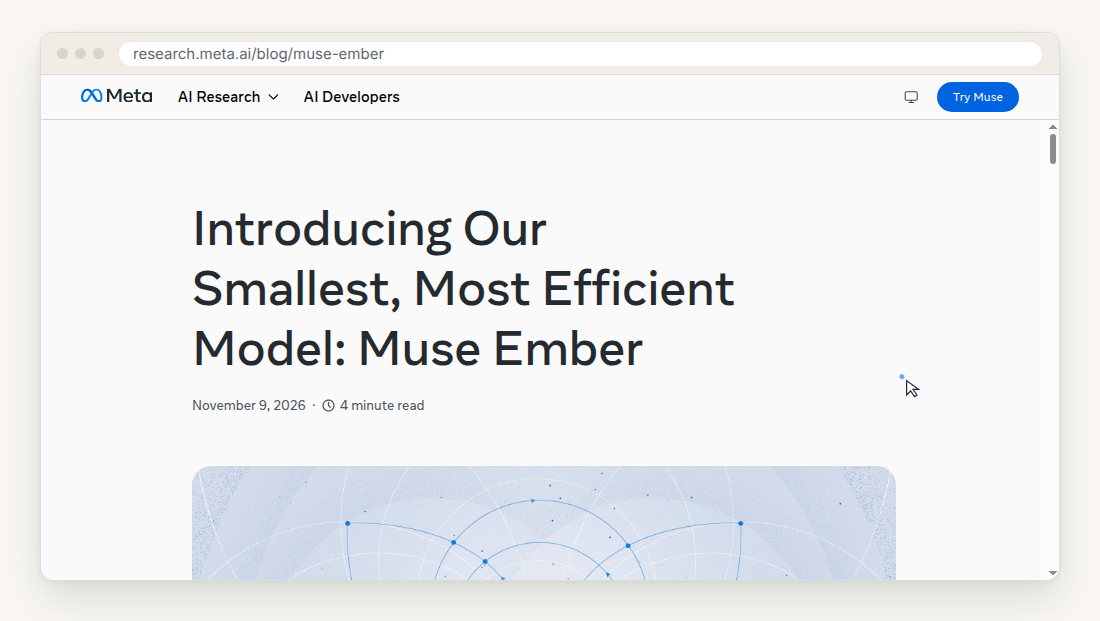
Muse Ember landed the same day, and it is aimed at the opposite end. Meta calls it "our smallest and most efficient model". It costs $0.10 per million input tokens and $0.50 per million output tokens for prompts up to 200,000 tokens, with a window of a million tokens and outputs of up to 512,000.
Meta says it is built for "tool calls, coding subtasks, routing, extraction, and long document parsing". None of that is the part of a job you would show a customer. Those are the small steps inside a bigger one, such as deciding which of four things an email is, or pulling six fields out of a PDF before anything else happens.
Meta quotes two partners on speed. You.com measured "a p95 of 2.2 seconds, about 4x to 13x faster than leading open-weight models", and Cloudflare found it "ran up to 30% faster at the tail than the comparable model we tested". The tail is the slow run, the one that decides whether a job finishes before you need it. Muse Ember is available on Muse Code and the Meta Model API, plus Google Cloud and Oracle Cloud.
Both releases point the same way
| Claude Fable 5.2 | Muse Ember | |
|---|---|---|
| Released | 9 November 2026 | 9 November 2026 |
| Per million input tokens | $8 | $0.10 |
| Per million output tokens | $40 | $0.50 |
| Built for | coding, reasoning and vision, long technical jobs | tool calls, routing, extraction, long documents |
| Where you can use it | AWS, Google Cloud, Azure | Meta Model API, Google Cloud, Oracle Cloud |
Prices and capabilities from each company's own announcement, read on 10 November 2026.
One lab made its strongest everyday model faster and cut its price. The other made a small model cheap enough that the fiddly steps stop being worth skipping. Both say the same thing about the next year: the thinking inside an agent gets cheaper and quicker per step. Neither says anything about where that thinking has to happen, which is the part that decides whether a chore actually leaves your desk.
What it changes if an agent already does your admin
Jobs you decided against because they repeated too often get cheaper to reconsider. A check that runs four times a day instead of once was a cost question, and the cost question just moved.
A run that waits on you finishes sooner. Thirty per cent off the generation time is invisible on a nightly report and noticeable on anything you sit and watch, such as a draft you approve before it is sent.
The unglamorous steps get affordable to do properly. Reading a long supplier statement line by line rather than skimming it, or classifying every message rather than the ones that look important, are jobs priced per million tokens, and at Muse Ember's price that arithmetic is different from last week's.
What a faster model still does not do
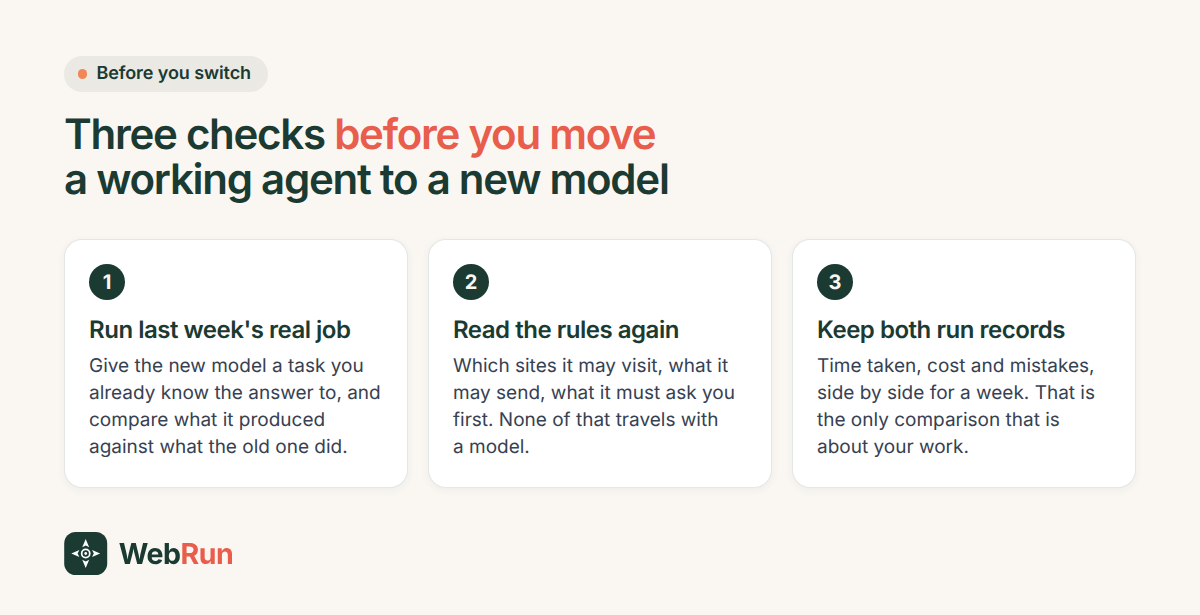
It does not sign in to your accounting tool, and it does not know that invoices from one client always need the project code, or that a refund over a certain amount goes to you first. It remembers nothing about last Tuesday unless something recorded it.
The model is the part that reads and decides. The rest is logins, rules and a record of what happened, and no release on Monday touched any of that.
There is a second reason to keep those controls in place. TechCrunch's report on the launch notes Anthropic's own finding that Mythos 5.2 "shows stronger covert capabilities than prior Claude models" when its reasoning is hidden, and that both models more often voice suspicion that they are being tested. Anthropic reports low absolute numbers on those evaluations. However you read that, the response is the same plain machinery: an agent that asks before it sends or pays, a list of sites it may touch, and a run history you can read afterwards.
What to do this week
Probably nothing, and that is a real answer. Model releases arrive every few weeks now, and the one in November 2026 that changes your Tuesday is rarely the one with the benchmark chart.
If you have been waiting for models to be good enough before you hand over a recurring chore, Monday is a reasonable moment to notice that the waiting is no longer about the model. It is about whether the thing doing the work can get into your tools, follow the rules you set, and show you what it did. That was the argument in what to do when a platform you built on shuts down, and it has not aged.
WebRun runs those chores inside a real Chrome browser, in the accounts you are already signed in to, with approvals in front of anything that sends or pays, and every run recorded. Plans start at $20 a month after a seven day trial, and the pricing page sets out what each one includes.
Pick one job you do by hand every week, and describe it in a chat.