How to Automate Alegra
Alegra automates the invoicing itself. Electronic invoices go to the tax authority in each country it serves, bank movements reconcile against registered payments automatically, and overdue reminders go out over WhatsApp with a payment link attached. Checking what the authority accepted, and what the bank actually paid, is where an agent like WebRun works.
 Written by
Sofia Marchetti
Marketing operations
Written by
Sofia Marchetti
Marketing operations
 Reviewed by
Nora Whitfield
Editorial lead
Reviewed by
Nora Whitfield
Editorial lead
Alegra keeps one business legal in nine different tax systems
Alegra is cloud accounting and invoicing software used across Latin America and Spain: Colombia, Mexico, Peru, Costa Rica, Panama, Argentina, the Dominican Republic, Venezuela and Spain. The businesses on it are small ones, and the accountants who carry a shelf of them.
The reason it exists in that shape is that every one of those countries invoices differently. Colombia has DIAN, Mexico has the SAT and the CFDI, and each has its own format, its own validation and its own idea of when a document becomes real. Alegra absorbs that so a shop owner does not have to.
Inside an account is the ordinary substance of a business: customers and suppliers, every invoice issued and its status with the authority, expenses, inventory, bank accounts, payroll where the country requires it, and the reports built out of all of it. For a company selling in two of those markets it is the only place the whole thing is visible.
The invoice is the easy part of getting paid
Issuing takes seconds. The rest of the cycle takes a week.
An invoice goes out with thirty days on it. On day thirty-one somebody has to know that, know the amount, and decide whether to say anything. Then again for the next forty accounts.
Payments arrive through a payment link, a bank transfer, a card gateway or cash at the counter, each on its own timetable and each netted differently, so somebody opens the bank and works out which credit belongs to which invoice.
The tax side has its own homework. An invoice sent is not an invoice accepted, and a rejection sits quietly until somebody looks. Supplier documents have to be pulled from the authority so the expense side is complete.
Then the parts nobody schedules: what the supplier is charging this month, what is left on the shelf, and, for a business selling in two countries, all of the above twice.
The reconciliation stops where the bank's own website starts
Alegra automates more of this than most accounts have switched on, and it is worth going through the settings before looking elsewhere.
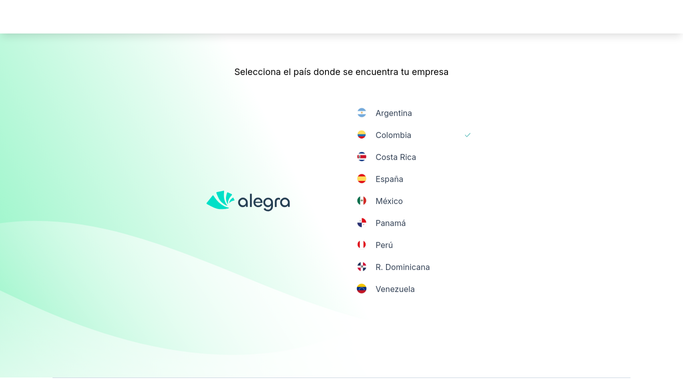
Electronic invoicing is the core: invoices are issued in the format the local authority requires and sent to it, with the status coming back onto the document. Bank reconciliation runs automatically, matching bank movements to registered payments and associating them with the right account or document, with statements loaded by connection, by file, or read out of a PDF or a photograph. Automatic reminders chase pending balances on their own, going out over WhatsApp with the amount and a payment link, before the due date and after it. Alegra POS runs a counter from a tablet or a phone with stock alerts and cash register closures, and Alegra CRM keeps contacts and open opportunities beside the invoices they will become.
That is most of the sales cycle, handled by the software rather than by a person.
All of it works from documents Alegra issued or movements it was handed. The authority's own portal, the payment gateway's settlement page, and the supplier's price list are somebody else's websites, behind logins that belong to you.
The same business can be checked in nine places at once
The accountant does not have to choose which country to look at today.
Every invoice sent to the authority read for what came back, so a rejected document is a Tuesday morning correction rather than a discovery when the return is due.
What actually cleared into the bank set against what Alegra recorded as collected, with the gateway's fee already subtracted, so a payout that came up light is a query while the provider still holds the record.
Receivables ordered by age across every country the business operates in, converted into one currency, so who owes money has one answer instead of four.
The buying side reads the same way. This month's price on each supplier's site next to the figure on the last invoice from them, so a supplier who has put rates up is named on the buying list, not discovered in next month's margin. Stock in Alegra against what the online store says is available, so the same unit is not sold twice.
And the calendar: the filing dates in each country the business trades in, gathered into one note, because a deadline missed in Panama costs the same as one missed at home.
Nine tax portals is a scheduling problem, not an accounting one
None of that requires judgement. It requires somebody to open a list of sites in order, read them carefully and write down what does not agree, and the business already holds every password.
WebRun is an AI agent that works a real Chrome browser, signed in as you. It opens Alegra, reads yesterday's invoices, payments and stock, then opens the tax authority's portal, the bank, a payment gateway or a supplier's site, and hands back one short list: what was rejected, what came up short and who has not paid.
It runs on your schedule in your own private environment, and any run can be watched and stopped. Anything that reaches a customer or a tax authority is drafted and waits for a person.
The workflows below are already built, and each one names what it opens.
Questions people ask
Does it duplicate the reminders Alegra already sends?
No, and there would be no point. Alegra's own automatic reminders handle the standard cases over WhatsApp. The agent takes what they cannot reach: a customer who needs a different message, a balance worth checking against the bank first, or an account nobody has looked at in months.
Is anything filed with DIAN or the SAT automatically?
Nothing at all. The agent reads status, downloads what is available and reports what does not agree. Submitting a return or a correction is a statement made in the company's name, so it waits for the person who answers for it, every time.
Can it post an entry into the books by itself?
By default it does not. Most workflows read Alegra and write their findings somewhere else, into a message or a sheet. Where you want an entry created or a document attached, it is drafted and shown to you first, and any run can be watched live and stopped mid-way.
12 ready-made Alegra workflows
Each one names the apps it touches and the exact steps it takes. Open one to read what it will do, then turn it on.

Want one of these running on your own Alegra?
Show WebRun the process once and it will run it on schedule, in your own private browser environment.