Track every assignment-of-benefits form before billing is delayed
Every morning, WebRun opens OPIE Software, reviews active patients for any missing or expired assignment-of-benefits forms required by their payer, logs each gap to a Google Sheet AOB tracker, and flags cases where an upcoming claim could be delayed so billing staff can collect signatures proactively.
- No credit card
- Under $0.01 per run
- Cancel anytime
How do I automatically track missing assignment-of-benefits forms in an O&P practice?
WebRun opens OPIE Software every morning, identifies active patients with missing or expired assignment-of-benefits forms, and updates a Google Sheet AOB tracker with payer, status, and urgency flags. Patients with a claim due within 14 days are marked high priority, so your billing team collects signatures proactively and claims never stall at submission for a missing AOB.
- Claims never stall at submission because a missing AOB surfaces days before the deadline
- Billing staff work from a prioritized sheet instead of manually checking each patient record
- Patients with imminent claims are flagged high priority so signatures are collected in time
Built for O&P billing coordinators · practice managers · prosthetics and orthotics front-office staff
What does WebRun do on every run?
The exact actions WebRun takes, in order - in plain language, so you can adjust anything.
-
WebRun signs in and gets to work
Opens
app.opiesoftware.comin a real browser with your saved login - no setup, no API keys. -
1
OPIE Software - identify patients with missing or expired AOB forms
opiesoftware.com How to Automate OPIE Software
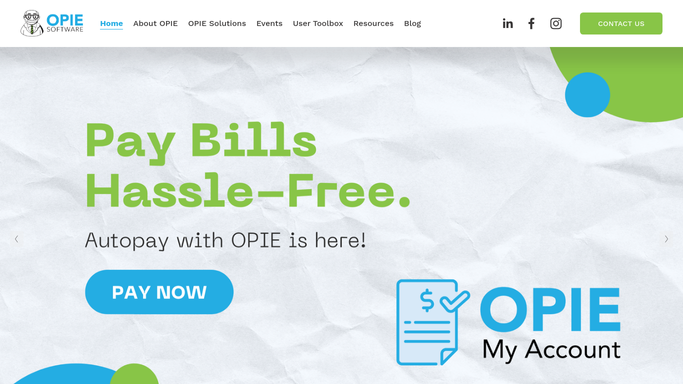
WebRun opens OPIE Software to identify patients with missing or expired AOB forms. - Open OPIE Software and review active patient records for payer AOB requirements
- Identify patients missing a signed AOB or whose AOB has expired
- Flag any patient with a pending fabrication job or upcoming claim submission
- Capture patient name, payer, AOB status, expiry date (if any), and days until next claim
Done when Every active patient with a missing or expired AOB is listed with claim-impact context.
-
2
Google Sheets - update AOB tracker with status and urgency
google.com How to Automate Google Sheets
WebRun opens Google Sheets to update AOB tracker with status and urgency. - Open the AOB tracker spreadsheet
- Update or add a row for each patient with AOB status, payer, and urgency flag
- Mark rows where a claim submission is within 14 days as high priority
- Record the last updated date so billing staff can see when each row was last reviewed
Done when The AOB tracker is updated with current status and urgency for every patient with a gap.
How is each run configured?
Secure by default
Connect once, stays signed in
WebRun signs in once and keeps each session in a persistent environment, so every run picks up right where it left off.
Every action is checked against this policy before it runs.
Questions, answered
Will it send AOB forms to patients for signature automatically?
No. WebRun logs gaps to Google Sheets for billing staff to action. Any outreach to a patient to collect a signature requires a staff member to send it, keeping sensitive forms under human control.
How does it know which payers require an AOB on file?
It reads the payer and AOB document status recorded in each patient's OPIE record. If your team tracks AOB requirements in OPIE, WebRun surfaces gaps from that data.
What does the urgency flag mean in the sheet?
Any patient with a claim submission expected within 14 days and a missing AOB is marked high priority in the sheet, so billing staff collect those signatures before the claim is blocked.
Related templates
Put this on autopilot.
Turn it on in minutes - or have our team set it up for you.