How to Automate Airtable

Airtable automates a lot on its own. Triggers fire on new or changed records, scripts run inside the base, and sync pulls from products that publish an API. Getting records in from a system with no API and no export is the gap, and it is usually filled by somebody pasting.

Airtable is the database an operations team can actually build

Airtable is a database that looks enough like a spreadsheet that people who would never open a database will build one. That single fact explains most of where it ends up.

The teams using it are operations, marketing, production and HR, not engineering. They build the thing nobody would ever get budget to have built: an applicant tracker, a content calendar, an inventory of equipment, a pipeline of properties, a register of every machine on site and when it was last serviced.

What they get is real structure. Linked records, so a supplier connects to its orders. Views, so the same data is a grid for one person and a calendar for another. Forms, so somebody outside the team can add a row without touching the base.

It works well enough that within a year it holds something the business genuinely depends on.

The base is only as current as its last paste

A base earns its keep by being accurate, and accuracy is where the manual work hides.

Somebody exports a CSV from the ordering system every Monday and imports it. Somebody checks four supplier sites for lead times and updates a column. Somebody opens the applicant tracking system, reads which candidates moved stage, and mirrors that into the base the team actually looks at.

It is a strange kind of work: high consequence and no skill. If it is skipped for a fortnight nothing appears to break, and then a decision gets made on a stale number and the base loses the team's trust for good.

Once people stop believing the base, they go back to asking each other, and the whole thing quietly becomes a very tidy museum.
The airtable.com homepage, the app these three jobs run in. Airtable
Records that arrive on their own Orders, applications and stock levels written into the base from wherever they actually happen.
Fields kept current A status that changed in the source system changed in the base too, instead of quietly going stale.
No connector required The regional portal and the industry package never built an integration. They can still fill a table.

Automations and syncs stop at the connector list

Airtable is far from passive, and inside its own boundaries it is strong.

Automations trigger when a record is created, updated, or matches a condition, and then send email, update other records, post to chat or run a script. The scripting extension runs JavaScript against the base. Sync pulls a table from another base or from a product Airtable has built a connector for, and keeps it updated. Interfaces put a usable front end on top for people who should never see the raw grid.

All of that is triggered by something happening in the base, or by a product that already publishes an API and got a connector built for it.

The systems that hold most operational reality tend to have neither. The industry package the company runs on, the supplier portal, the customer's extranet, the government site with the licence status. Those are exactly the sources people paste in by hand, week after week.

The base can fill itself from anywhere you can log in

A connector list is a list of the systems somebody else decided to support. Your base can know more than that.

The orders that came in overnight, read from a system that only ever shows them on screen, written in as rows. Lead times checked across every supplier you buy from, updated in place, with the ones that moved marked. Candidate stages mirrored from the recruiting system so the base and the source agree by nine each morning.

The equipment register updated with the service dates the maintenance portal holds. The property pipeline updated with the listings that changed price. The compliance table updated with which certificates now expire inside ninety days.

One habit is worth adopting early: write incoming data to its own table that only the automation touches, and let your working views read from it. Then a bad run can never overwrite something a person typed, and you can compare the two when a number looks wrong.

Data entry is the part worth handing over

The judgement in a base is in how it is structured and what gets decided from it. Keeping the rows current is not judgement, it is transcription.

WebRun is an AI agent that works a real Chrome browser, signed in as you. It opens the ordering system, the portal or the industry package that has no API, reads what is on the screen, and writes the rows into your base.

It runs on your schedule in your own private environment, and you can watch a run and stop it mid-way. Anything that would message a person outside the team drafts and waits.

The workflows below are already built, and each one names the apps it touches.

Questions people ask

Do we need an Airtable paid plan for this?

No. It works the Airtable interface signed in as you, so whatever your current plan allows you to do by hand is what it can do. Sync and higher automation limits are separate Airtable features you may or may not want.

Will it create duplicate records?

Each workflow matches on a key from the source, such as an order number, so a second run updates the existing record rather than adding another. Writing to a dedicated intake table makes that easy to verify.

Can it pull from a system that offers no export?

Yes, and that is the usual reason to use it. It reads what is on the screen the way a person would, then writes the rows, so a portal with no download button stops being a weekly copy and paste job.

1,250 ready-made Airtable workflows

Each one names the apps it touches and the exact steps it takes. Open one to read what it will do, then turn it on.

Automated AB Tasty Stale Test Alerts
WebRun checks AB Tasty for tests running past their planned end date, logs each one to Airtable, and posts the chase list in Notion.
AB TastyAirtableNotion
Automated NetEase Cloud Music Release Tracking
Every week, WebRun checks your artist page on NetEase Cloud Music for new release status and listener comments, logs each release to Airtable, and drafts a Gmail digest for your label team.
NetEase Cloud MusicGmailAirtable
Automated 126 Mail Stale Thread Chasing
Every morning, WebRun finds 126 Mail threads with no reply after 3 days, drafts a reply for you to review, cross checks Gmail for related context, and logs the chase list to Airtable.
126 MailGmailAirtable
Automated Yellowfin Insight Alert Handoff
Every morning, WebRun opens Yellowfin, reads the automated insights it surfaced overnight, creates an Airtable ticket for each one worth investigating, and drafts a summary email in Gmail for the analyst so unusual data patterns get a proper look.
YellowfinGmailAirtable
Automated WooCommerce Failed Renewal Tracking
Every day, WebRun checks your WooCommerce Subscriptions for any renewal payment that failed, logs each one to Airtable, and drafts a follow-up email in Gmail for you to review and send, so a failed card doesn't quietly end the subscription.
WooCommerceGmailAirtable
Automated Wish Order Processing Deadline Alerts
WebRun checks your Wish Merchant orders every day for processing time compliance, logs at-risk orders to Airtable, and emails your team an urgent worklist before any deadline is missed.
WishAirtableGmail
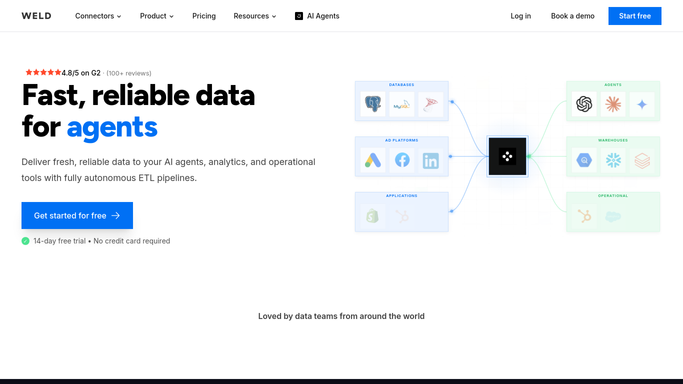
Automated Weld Data Model Setup Checklist
When a new transformation project starts, WebRun works through the Weld setup checklist from source connection to model scheduling, tracks progress in Notion, and logs the connected sources to Airtable so the data team has a clear record of what feeds the new model.
WeldAirtableNotion
Automated Weebly Weekly Store Scorecard
Every Monday, WebRun checks your Weebly site for the past week's orders, visitor traffic, and low stock products, emails you a scorecard, and logs the numbers to Airtable.
WeeblyGmailAirtable
Automated WazirX Transaction Tax Export
Every Monday, WebRun reads your WazirX transaction history, logs each buy, sell, and transfer to an Airtable base, and emails you a running summary so your records are ready well before tax season.
WazirXGmailAirtable
Vultr Automated Instance Setup Checks
The moment a new instance spins up on Vultr, WebRun checks that backups and a firewall group are attached, logs the result to Airtable, and creates a Notion task if anything is missing.
VultrAirtableNotion
Automated Volusion Stuck Order Alerts
WebRun checks your Volusion admin for stuck orders every day, logs them to Airtable, and creates a Notion follow-up task for anything stuck more than 24 hours.
VolusionAirtableNotion
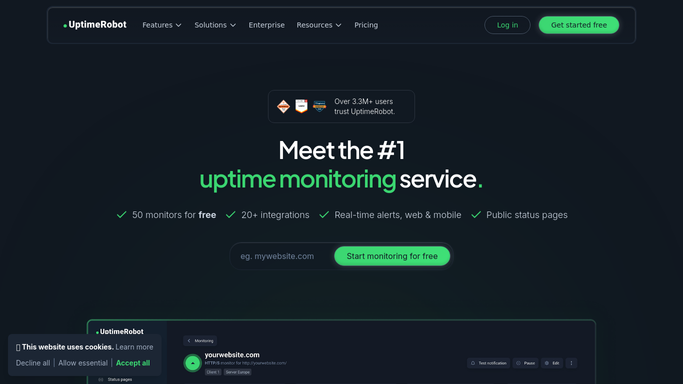
Automated UptimeRobot Daily Outage Digest
WebRun reviews your UptimeRobot monitors every morning, logs each outage from the last 24 hours to Airtable with its downtime duration, and emails the team a summary.
UptimeRobotGmailAirtable
Automated Upstox Trade Log and Summary
Every Monday, WebRun reads your Upstox holdings and the past week executed trades, logs each one to an Airtable base, and emails you a summary so your records stay current without manual entry.
UpstoxGmailAirtable
Automated Uploadcare Weekly Storage Usage Export
WebRun reviews your Uploadcare usage every Monday, logs storage and bandwidth consumption to Airtable, and emails the admin a summary flagging anything approaching your plan limit.
UploadcareGmailAirtable
Automated Uniswap Swap History Tracking
Every week, WebRun reads your Uniswap swap history, logs each swap with its exchange rate and gas cost to Airtable, and drafts a summary email in Gmail so your DeFi activity stays organized for review or taxes.
UniswapGmailAirtable
Automated Tipalti Supplier Onboarding
When a new supplier is submitted in Tipalti, WebRun checks their onboarding record for missing items, logs the status to Airtable, and drafts a Gmail request listing exactly what is missing.
TipaltiGmailAirtable
Automated Temu Price Drop Tracking
Every hour, WebRun checks your tracked list of Temu products for a price drop, logs each one to Airtable with the new price, and updates the Notion catalog so your buying team can act while it lasts.
TemuAirtableNotion
Automated Tastytrade Weekly Options Scorecard
Every Friday, WebRun reads your closed tastytrade options positions from the week, logs realized P&L and buying power used to Airtable, and writes a scorecard note in Notion so you can see how the week actually went.
TastytradeAirtableNotion
Automated Takealot Seller Order Digest
WebRun checks your Takealot Seller Portal every evening, logs new orders to Airtable, and emails you a daily digest including any buy box changes.
TakealotAirtableGmail
Automated Swissquote Currency Reconciliation
Every morning, WebRun checks balances across your Swissquote multi currency sub accounts, compares them against your internal Airtable ledger, and logs any mismatch to Notion for review.
SwissquoteAirtableNotion
Automated Surge New Site Domain Setup Checklist
WebRun checks newly published Surge projects every Monday, confirms whether a custom domain and HTTPS are configured, logs it to Airtable, and posts a setup note to Notion.
SurgeAirtableNotion
Automated StreamSets Overnight Pipeline Reconciliation
Every morning, WebRun opens StreamSets, checks every scheduled pipeline run from overnight, logs any failure to Airtable with the error, and drafts a summary email in Gmail for the data engineering lead so broken pipelines get fixed before the day's data relies on them.
StreamSetsGmailAirtable
Automated Strato Hosting Setup Checklist
When a new Strato hosting package is ordered, WebRun checks off the setup checklist, domain pointing, email, SSL, and backups, logs the status in Airtable, and posts the full setup summary to Notion.
StratoAirtableNotion
Automated StackBlitz Project Activity Scorecard
WebRun checks your StackBlitz projects every Monday, notes which ones were forked or edited that week, logs the activity to Airtable, and posts a short scorecard to Notion.
StackBlitzAirtableNotion

Want one of these running on your own Airtable?

Show WebRun the process once and it will run it on schedule, in your own private browser environment.