How to Automate Airtable

Airtable automates a lot on its own. Triggers fire on new or changed records, scripts run inside the base, and sync pulls from products that publish an API. Getting records in from a system with no API and no export is the gap, and it is usually filled by somebody pasting.

Airtable is the database an operations team can actually build

Airtable is a database that looks enough like a spreadsheet that people who would never open a database will build one. That single fact explains most of where it ends up.

The teams using it are operations, marketing, production and HR, not engineering. They build the thing nobody would ever get budget to have built: an applicant tracker, a content calendar, an inventory of equipment, a pipeline of properties, a register of every machine on site and when it was last serviced.

What they get is real structure. Linked records, so a supplier connects to its orders. Views, so the same data is a grid for one person and a calendar for another. Forms, so somebody outside the team can add a row without touching the base.

It works well enough that within a year it holds something the business genuinely depends on.

The base is only as current as its last paste

A base earns its keep by being accurate, and accuracy is where the manual work hides.

Somebody exports a CSV from the ordering system every Monday and imports it. Somebody checks four supplier sites for lead times and updates a column. Somebody opens the applicant tracking system, reads which candidates moved stage, and mirrors that into the base the team actually looks at.

It is a strange kind of work: high consequence and no skill. If it is skipped for a fortnight nothing appears to break, and then a decision gets made on a stale number and the base loses the team's trust for good.

Once people stop believing the base, they go back to asking each other, and the whole thing quietly becomes a very tidy museum.
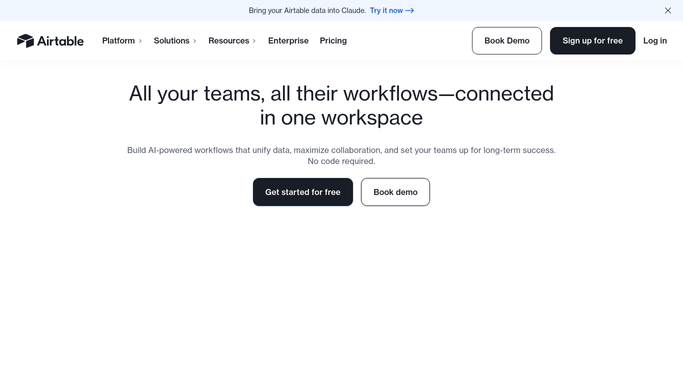
The airtable.com homepage, the app these three jobs run in. Airtable
Records that arrive on their own Orders, applications and stock levels written into the base from wherever they actually happen.
Fields kept current A status that changed in the source system changed in the base too, instead of quietly going stale.
No connector required The regional portal and the industry package never built an integration. They can still fill a table.

Automations and syncs stop at the connector list

Airtable is far from passive, and inside its own boundaries it is strong.

Automations trigger when a record is created, updated, or matches a condition, and then send email, update other records, post to chat or run a script. The scripting extension runs JavaScript against the base. Sync pulls a table from another base or from a product Airtable has built a connector for, and keeps it updated. Interfaces put a usable front end on top for people who should never see the raw grid.

All of that is triggered by something happening in the base, or by a product that already publishes an API and got a connector built for it.

The systems that hold most operational reality tend to have neither. The industry package the company runs on, the supplier portal, the customer's extranet, the government site with the licence status. Those are exactly the sources people paste in by hand, week after week.

The base can fill itself from anywhere you can log in

A connector list is a list of the systems somebody else decided to support. Your base can know more than that.

The orders that came in overnight, read from a system that only ever shows them on screen, written in as rows. Lead times checked across every supplier you buy from, updated in place, with the ones that moved marked. Candidate stages mirrored from the recruiting system so the base and the source agree by nine each morning.

The equipment register updated with the service dates the maintenance portal holds. The property pipeline updated with the listings that changed price. The compliance table updated with which certificates now expire inside ninety days.

One habit is worth adopting early: write incoming data to its own table that only the automation touches, and let your working views read from it. Then a bad run can never overwrite something a person typed, and you can compare the two when a number looks wrong.

Data entry is the part worth handing over

The judgement in a base is in how it is structured and what gets decided from it. Keeping the rows current is not judgement, it is transcription.

WebRun is an AI agent that works a real Chrome browser, signed in as you. It opens the ordering system, the portal or the industry package that has no API, reads what is on the screen, and writes the rows into your base.

It runs on your schedule in your own private environment, and you can watch a run and stop it mid-way. Anything that would message a person outside the team drafts and waits.

The workflows below are already built, and each one names the apps it touches.

Questions people ask

Do we need an Airtable paid plan for this?

No. It works the Airtable interface signed in as you, so whatever your current plan allows you to do by hand is what it can do. Sync and higher automation limits are separate Airtable features you may or may not want.

Will it create duplicate records?

Each workflow matches on a key from the source, such as an order number, so a second run updates the existing record rather than adding another. Writing to a dedicated intake table makes that easy to verify.

Can it pull from a system that offers no export?

Yes, and that is the usual reason to use it. It reads what is on the screen the way a person would, then writes the rows, so a portal with no download button stops being a weekly copy and paste job.

1,250 ready-made Airtable workflows

Each one names the apps it touches and the exact steps it takes. Open one to read what it will do, then turn it on.

Automated Douyu Highlight Clip Handoff
WebRun checks your sponsored Douyu streamer's session for viewer spikes, logs likely highlight timestamps to Airtable, and emails the clipping team a ready worklist.
DouyuGmailAirtable
Automated DonorPerfect Lapsing Donor Alerts
Every morning, WebRun checks DonorPerfect for donors whose recurring gift is about to lapse or who have not given this year, logs the list to Airtable, and drafts a re-engagement email in Gmail for the top lapsing donors.
DonorPerfectAirtableGmail
Automated Doctolib Daily Booking Digest
Every morning, WebRun checks Doctolib for the day's appointments, cancellations, and no-shows, logs each change in Airtable against the schedule, and emails the front desk the digest.
DoctolibAirtableGmail
Automated Disroot Renewal Notice Tracking
Every morning, WebRun scans Disroot for renewal and subscription notice emails, cross checks Gmail for the same notice, and logs each one to Airtable with its due date.
DisrootGmailAirtable
Automated DesignEvo Weekly Request Scorecard
WebRun tallies logos exported from DesignEvo this week, logs each in the Airtable brand requests tracker, and updates the Notion team page with a short weekly scorecard.
DesignEvoAirtableNotion
Automated Deno Deploy Project Registry Sync
Every day, WebRun checks each Deno Deploy project's latest deployment status, reconciles it against an Airtable project registry, and updates a Notion deployment log page, noting anything that failed to deploy.
Deno DeployAirtableNotion
Automated Astra DB Usage Threshold Alerts
WebRun checks Astra DB read, write, and storage usage against your plan threshold every day, logs usage history to Airtable, and emails an alert.
DataStax Astra DBGmailAirtable
Automated Datafold Data Diff Reconciliation
WebRun checks Datafold's data diff results after every migration run, logs the outcome to Airtable, and writes the validation summary to Notion.
DatafoldAirtableNotion
Automated Crunchyroll Catalog Addition Tracking
Every morning, WebRun checks Crunchyroll for new simulcast and catalog additions, logs each title in Airtable with genre and date, and updates the shared catalog tracker in Notion.
CrunchyrollAirtableNotion
Automated Crunchbase Funding Round Alerts
Every morning, WebRun checks Crunchbase for new funding rounds at the companies on your watchlist, drafts a congratulatory intro email in Gmail for each one, and logs the event to Airtable so the opportunity is not lost.
CrunchbaseGmailAirtable
Automated Cronometer Client Compliance Reports
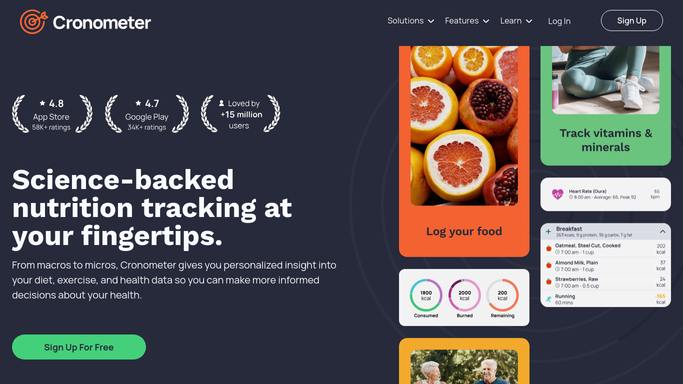
WebRun checks each client's Cronometer log for the week, records logging compliance and macro trends to Airtable, and updates your Notion client notes so check-ins are ready ahead of time.
CronometerAirtableNotion
Automated CrazyGames Performance Tracking
WebRun checks CrazyGames for your published game's weekly plays and rating, logs the numbers to Airtable, and keeps a Notion dev log updated with the trend.
CrazyGamesAirtableNotion
Automated Crayon Competitor Change Digest
Every morning, WebRun checks Crayon for tracked competitor changes like pricing, website updates, or new reviews, logs each change to Airtable, and updates the relevant Notion battlecard automatically.
CrayonAirtableNotion
Automated Coursera Stalled Learner Nudges
Every week, WebRun checks each employee's Coursera course completion, logs progress to Airtable, and drafts a Gmail nudge for stalled learners that you review and send.
CourseraGmailAirtable
Automated Confluent Consumer Lag Alerts
WebRun checks Confluent Cloud consumer group lag every hour, logs any spike to Airtable, and keeps the incident notes current in Notion.
ConfluentAirtableNotion
Automated Comscore Audience Scorecard
Every Monday, WebRun pulls audience reach and ranking data from Comscore, logs it to Airtable, and summarizes the trend in Notion.
ComscoreAirtableNotion
Automated Commonwealth Bank Setup Tracking
WebRun checks which Commonwealth Bank account setup steps are still open, logs status in Airtable, and posts the checklist for the team in Notion.
Commonwealth BankAirtableNotion
Automated Codewars Club Weekly Scorecards
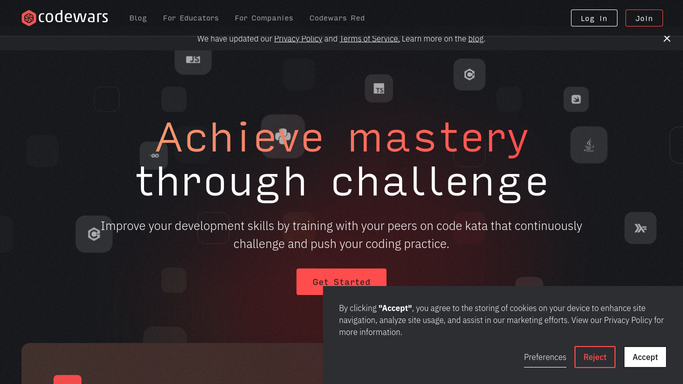
Every Sunday, WebRun checks each member's Codewars kata completions and rank changes for the week, logs it to Airtable, and drafts a Gmail recap for the club advisor.
CodewarsGmailAirtable
Automated Codacy Code Quality Scorecard
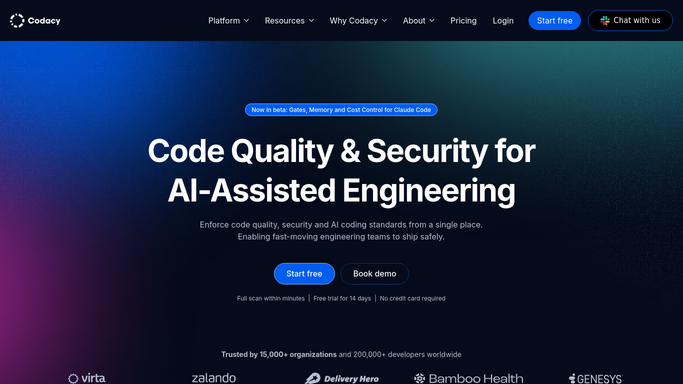
Every Monday, WebRun compiles each repository's Codacy grade and issue counts, logs the numbers to Airtable, and emails the engineering team a summary.
CodacyGmailAirtable
Automated Close CRM Stale Deal Detection
Every Monday, WebRun checks Close for open deals with no activity in the last two weeks, checks Gmail for any unread reply sitting in the thread, and logs the stale deal list to Airtable for the manager.
CloseGmailAirtable
Automated Clicky Web Analytics Report
WebRun reads your Clicky traffic every week, logs visits and top content to Airtable, and emails the report over Gmail.
ClickyAirtableGmail
Automated Clever Sync Error Tracking
Every night, WebRun checks the Clever sync dashboard for rostering errors between your SIS and connected apps, logs each one to Airtable, and keeps a running fix-it log in Notion.
CleverAirtableNotion
Automated CK-12 Weekly Mastery Scorecards
Every Friday, WebRun checks each student's CK-12 practice and quiz completion for the week, logs scores to Airtable, and keeps a Notion re-teach list of the concepts most missed.
CK-12AirtableNotion
Automated CaptivateIQ Commission Query Handoff
Every morning, WebRun checks CaptivateIQ for new commission queries reps have flagged, logs each one to Airtable as a tracked ticket, and briefs the comp team in Notion so every query gets picked up for review.
CaptivateIQAirtableNotion

Want one of these running on your own Airtable?

Show WebRun the process once and it will run it on schedule, in your own private browser environment.