How to Automate Awery
Awery ERP already runs the carrier's own side: Cargo Reservation takes bookings, Cargo Track and Trace publishes status, ULD Control follows every unit, and the Info and Rates Database prices quotations. Interline partners, handling agents, customs sites and delivery agents stay outside it, and an agent such as WebRun reads those.
 Written by
Priya Raghavan
Solutions lead
Written by
Priya Raghavan
Solutions lead
 Reviewed by
Ben Kirkwood
Solutions engineer
Reviewed by
Ben Kirkwood
Solutions engineer
The ERP holds the flight, the freight and the invoice
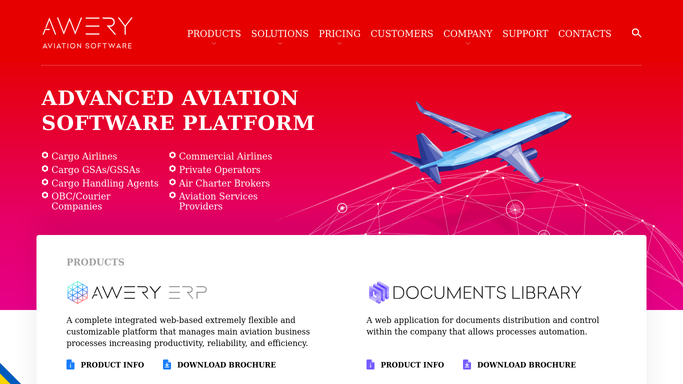
Awery is aviation management software: a web-based platform used by cargo airlines, commercial and private operators, GSAs and GSSAs, charter brokers, cargo handling agents and the service providers around them.
Air cargo is an unusual business to run on software, because the same shipment is at once a commercial booking, a physical unit on a pallet, a line on a load plan, a regulated consignment and an invoice. A single flight has to be quoted, crewed, fuelled, loaded, tracked, closed out and billed, and the people doing those things sit in different countries and different companies.
Awery ERP puts them in one system. Cargo Management, Flight Operations, Crew Control, Fleet Management, ULD Control, Accounting and Finance, CRM and the Info and Rates Database are modules of the same platform, so the tonnage that flew and the invoice that follows come off the same record.
Air cargo is a relay between companies that share no database
The awkward truth of the industry is that almost nothing on a shipment's journey belongs to the carrier that booked it.
A consignment is trucked to the gateway by a road feeder operator. It is accepted and built up by a handling agent who works for four airlines. It may fly one sector on your aircraft and the next on somebody else's under an interline agreement. It clears customs through a national system. It is delivered by a trucking company at the far end, and the proof of delivery comes back whenever it comes back.
So somebody in the office spends the day in other people's screens. Checking an interline partner's tracking page for a waybill that has gone quiet. Asking a handling agent at an outstation what actually got loaded. Refreshing a customs status. Chasing a proof of delivery so an invoice can go out, then chasing the invoice. Watching a certificate of insurance that expires next month and a dangerous goods qualification a month after that.
Reservations, track and trace and ULD stock are already covered
Awery covers the internal picture properly, and it is worth using fully before adding anything around it.
Cargo Reservation is an online booking engine that plugs into the carrier's own website, so agents and customers quote and book directly instead of by email. Cargo Track and Trace gives customers a shipment status through the web and through iOS and Android apps, so the phone rings less. ULD Control tracks the entire company ULD stock, its movement history and where each unit currently is, which is the difference between owning containers and losing them. The Info and Rates Database holds the rates that quotations are built from, and the Mail Link Tool and templated messaging handle the correspondence.
All of that operates on what has been booked, flown, messaged or invoiced through Awery.
The blind spot is everyone else's system. An interline partner's tracking. A handling agent's portal at a station you do not staff. A customs website. A road feeder operator's tracking. A customer's payment portal. Each holds a fact your operation depends on and offers no way in except a login.
Every waybill checked on whoever is holding it
The customer should never be the first to notice a shipment has stopped moving. Each handover in the chain has a website that will say exactly where the freight got to.
Interline waybills checked on the operating carrier's own tracking page, so a consignment that missed its connection is on an exceptions list within hours instead of when the consignee calls. Road feeder movements read from the trucker's tracking, so a truck running late into the gateway becomes a load plan decision rather than an offload.
Proofs of delivery chased from delivery agents and matched against the waybills waiting to be invoiced, because unbilled freight is the cheapest money in the business to find. Detention and demurrage clocks watched at the terminals that publish them. Certificates of insurance and staff qualifications checked against the sites that issue them before they lapse, not after an audit turns them up.
Published market rate benchmarks read weekly against what your own lanes are earning.
Anything going to a customer or a partner is drafted and read by a person first. A missed connection is an operational problem. A wrong message about one is a commercial one.
The handover is where a shipment goes quiet
A shipment is never lost on your own aircraft. It goes dark at the handovers, when it belongs to a trucker, a handling agent, a customs authority or another carrier. Each of those has a website somebody in your office already signs into.
WebRun is an AI agent that works a real Chrome browser, signed in as your team. It opens the partner's tracking, the handling agent's portal or the customer's system, reads what is there, and either updates the record in Awery or hands your operations desk the exceptions.
Nothing has to be integrated first, which matters when a partner at a small station has no message feed at all. It runs on your schedule in your own private environment, and you can watch a run and stop it.
The workflows below are already built, and each one names what it opens.
Questions people ask
Will it message customers or partners without us?
No. Anything going to a customer, an agent or a partner is drafted and left for a person to send. Reading trackers, portals and customs sites runs on its own, because none of that is visible to anyone outside your office anyway.
Our interline partners and handling agents have no message feed. Does that matter?
That is the case this is built for. It reads their tracking page or portal the way your operations desk does, in a browser signed in with your own account, so a partner with no feed works like one with full messaging.
Will it change records in Awery?
Only where you point it, and much of what is useful here is read-only. Where a workflow does write, such as noting a delivery against a waybill, the template says exactly what it writes before you turn it on.
13 ready-made Awery workflows
Each one names the apps it touches and the exact steps it takes. Open one to read what it will do, then turn it on.


Want one of these running on your own Awery?
Show WebRun the process once and it will run it on schedule, in your own private browser environment.