How to Automate Extensiv
Extensiv automates what happens inside the warehouse. Automated Billing invoices recorded movements, Integration Manager downloads orders and syncs inventory, and SmartScan runs receiving and picking. The screens that decide a month, client storefronts, retailer vendor portals and carrier billing sites, need an agent like WebRun signed in as you.
 Written by
Clara Bennett
Revenue operations
Written by
Clara Bennett
Revenue operations
 Reviewed by
Sofia Marchetti
Marketing operations
Reviewed by
Sofia Marchetti
Marketing operations
Extensiv runs a building full of other people's stock
Extensiv is warehouse and fulfilment software, and its best-known product, 3PL Warehouse Manager, is built for third-party logistics providers: the companies that store, pick and ship goods they do not own. Brands send them pallets. They send parcels back out.
That ownership detail changes everything about the software. In an ordinary warehouse system a bin holds stock. Here every bin holds somebody else's balance sheet, and the count in it is a number a client will check against their own storefront on a Tuesday morning.
It also means the system is the operations record and the invoice at the same time. A 3PL does not sell products, it sells storage and touches: pallets held per month, receipts unloaded, orders picked, cartons packed, special projects nobody planned for. Each of those has to be captured as it happens, because a movement that goes unrecorded is not a data problem. It is work performed for free.
A 3PL gets judged on screens it does not own
The warehouse can have a perfect day and still spend the afternoon defending it.
A client emails because their Shopify says four hundred units and your count says three hundred and eighty-eight. Somebody opens both, works backwards through receipts and adjustments, and writes a paragraph. Another client wants to know why an order shipped Thursday rather than Wednesday, and the answer is on a carrier's tracking page. A retailer raises a deduction against a pallet your team built six weeks ago, and the notice is sitting in a vendor portal your client gave you a login to and nobody opens.
Then the monthly cycle. Carrier invoices arrive with address corrections and reweighs against shipments passed through to the client at a different number. The gap is the margin, and finding it means somebody comparing line items on a Sunday.
Every one of those conversations happens on a screen belonging to a client, a retailer or a carrier.
Automated Billing bills what the floor recorded
Extensiv automates the part it owns, and a 3PL that has not turned this on is leaving money in a spreadsheet.
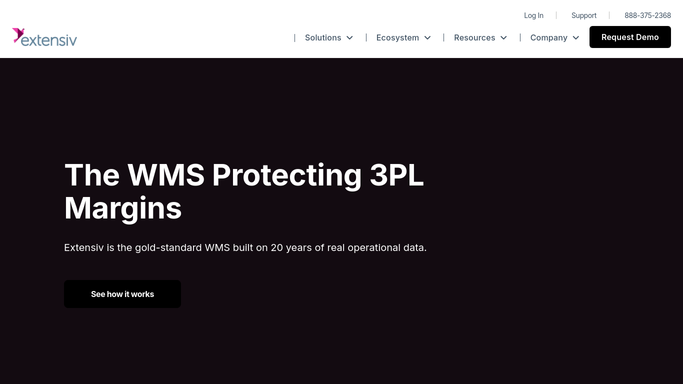
Automated Billing turns storage, handling and recurring charges into invoices from the movements already recorded, which for most 3PLs is the single largest source of recovered revenue. Integration Manager connects the commerce channels, so orders download on their own, inventory syncs back and tracking numbers reach the store without anyone exporting a file. SmartScan puts receiving, picking and cycle counts on a mobile scanner instead of paper. Small Parcel Suite rate shops carriers and processes labels at volume, and Dock Scheduling books the inbound.
All of it acts on events inside the four walls, or on channels somebody has already built a connector for.
That connector list is the boundary, and it is a fair one: it covers the storefronts and marketplaces a 3PL meets most often. It stops there. The client's own seller account, the retailer's vendor portal where the chargeback appears, the carrier's billing site, the retailer's routing system: none of them publish to a warehouse system, and between them they decide whether the month was profitable.
Every client account can be checked before the client checks it
An account manager could start the day already knowing what each client is about to ring about.
Each client's storefront and marketplace dashboard opened before the client opens it, so a suppressed listing, a stuck order or an inventory count that has drifted arrives on your desk with the explanation already attached. Retailer portals watched for deductions and compliance charges raised against shipments you built, with the receipt, the carton counts and the appointment time gathered while the dispute window is still open.
Carrier invoices read off the billing portal and set against what each shipment was billed to the client at, so a surcharge you absorbed becomes a line to re-bill rather than margin that quietly left. Delivery appointments confirmed on each retailer's routing site, so a pallet is not built for a slot that moved.
The monthly client pack assembled from the same places the client looks, so a review meeting starts from numbers both sides agree on.
Keep the boundary where the client is. Gathering, comparing and drafting run unattended quite safely. Sending a dispute to a retailer or a re-bill to a client is a commitment, and those stay with a person.
Watching six client dashboards is not a job
Each client's seller account and each retailer's portal gets opened and read by hand, every day. In most 3PLs that falls to an account manager who was hired to keep clients, not to take screenshots.
WebRun is an agent that works a real Chrome browser, signed in as you. It opens the storefront, the vendor portal, the carrier's billing site or the routing system, reads what is on the screen, and hands back an exception list, a dispute pack, a re-bill or a client report.
It runs on your schedule in your own private environment, and you can watch a run and stop it mid-way. Anything sent to a client, a retailer or a carrier is drafted and waits for approval.
The workflows below are already built, and each one names the sites it opens.
Questions people ask
Integration Manager already connects our clients' stores. Is this the same thing?
No, and keep it. Integration Manager moves orders, inventory and tracking on the connections a vendor built. This reads the accounts nobody built a connector for: seller dashboards, retailer vendor portals and carrier billing sites.
Is it safe to give it a client's login?
The session stays in your own private environment and is not shared with the other tools in a workflow, and a workflow can be locked to a named list of sites. Use the same access your account manager already has.
Can it file a retailer chargeback dispute for us?
It assembles the dispute, with the receipt, carton counts, appointment record and photographs attached, then leaves the submission to a person. Anything that commits you to a retailer or a client is drafted, not sent.
13 ready-made Extensiv workflows
Each one names the apps it touches and the exact steps it takes. Open one to read what it will do, then turn it on.

Want one of these running on your own Extensiv?
Show WebRun the process once and it will run it on schedule, in your own private browser environment.