How to Automate Alt Legal
Alt Legal automates the docket itself. Automated IP Docketing adds filings, updates statuses and calculates the deadlines that follow, with direct connections to the USPTO and CIPO. The half it cannot reach is the client who owes a specimen and the associate whose quote is unanswered, which suits an agent like WebRun.
 Written by
Aiko Tanabe
Product researcher
Written by
Aiko Tanabe
Product researcher
 Reviewed by
Marcus Deleon
Support operations
Reviewed by
Marcus Deleon
Support operations
Every registered mark comes with a schedule attached
Alt Legal is trademark docketing software, and the people in front of it keep other companies' brands alive: IP paralegals, docketing specialists, trademark counsel in a firm, and the single in-house lawyer who looks after every name a business sells under. The docket is the working document. It holds each mark, the application that created it, the office it sits in, and every date that follows from those two facts.
The company describes what it sells as intelligent IP management for trademark professionals. Alongside trademarks the platform dockets copyrights, patents, TTAB proceedings, disputes and a matter type for design rights.
Volume is what makes the job hard. One client can hold hundreds of marks across dozens of countries, each office with its own forms, its own status vocabulary and its own clock, and not one of those clocks was started by anybody in the firm.
The client, not the office, is what holds a filing up
Very little of a docketing week is spent entering dates.
It is spent on the client. A response usually needs to know how a mark is actually being used, which means a photograph of a label, a screenshot of a checkout page, or a straight answer about whether the product ever shipped. Alt Legal says as much in its own guidance: client input is often what a deadline is waiting on, whether that is information about use, a specimen, or agreement to pay a fee for more time.
So the week goes on email. One to the brand manager who answered last year and has since left the company. One to the foreign associate whose renewal quote has sat unopened for three weeks. One to the in-house lawyer who wants to know, before anything is authorised, which of the ninety marks on their list are still on something a customer can buy.
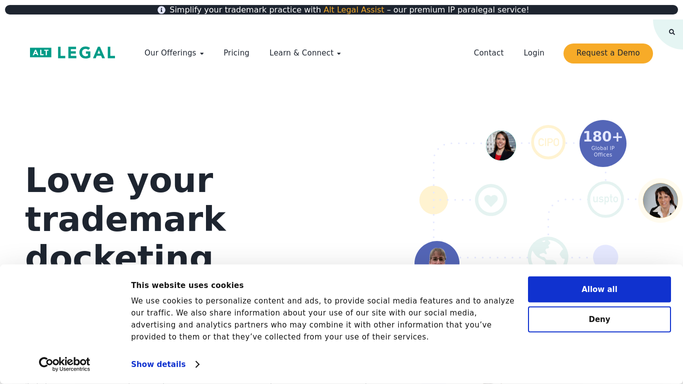
Alt Legal calculates the date the moment an office publishes it
The platform has taken an enormous amount of that off the desk, and a team still keeping deadlines in a spreadsheet should fix that first.
Automated IP Docketing adds filings, updates statuses and calculates the deadlines that follow, with direct connections to the USPTO and CIPO and data partnerships reaching IP offices around the world. Daily email updates and calendar sync put those dates in front of whoever owns them. The Section 2(d) Trademark Watch flags applications published close to a client's mark, Trademark Application Match monitors a portfolio globally, and the Goods and Services Composer drafts identification language against the USPTO ID Manual. Clients, foreign associates and outside counsel each get a limited view of their own matters without anyone buying them a seat.
The vendor is candid about the edges. Its support notes list deadline types it asks you to docket by hand, section 7 post-registration office actions among them.
Every one of those still begins with something an IP office published. None of it opens the client's inbox, reads the quote an associate sent on Tuesday, or goes to look at whether the mark is still printed on the box.
The client side of the docket can be worked overnight
A deadline with a client attached can be prepared before anyone reaches the office.
The docket read each morning and turned into one message per client, listing what that client owes and by when, drafted and waiting to be sent. The specimen request that went unanswered chased again with the original thread attached, so nobody has to go looking for it. The associate's quote lifted out of the inbox and set beside the matter it belongs to, so authorising it is one decision instead of a search.
A client's own shop and product pages checked before you ask whether a mark is still in use, so the question opens with a screenshot rather than a blank email. Watch notices turned into the short note a brand manager will actually read. Renewal invoices raised and never paid tied back to the marks they were raised for. New clearance requests logged the day they arrive, with whatever is already on the docket set out beside them.
Reading, gathering and drafting run unattended. Nothing is filed, nothing is paid, and nothing reaches a client or an office until somebody qualified has read it and said so.
Nothing gets filed because software decided it was time
It takes about twenty emails to establish that three clients have not replied, and not one of those emails needed a paralegal to write it.
WebRun is an agent that works in a real Chrome browser, signed in as you. It opens the docket next to your inbox, the client's website and the billing system, reads what each one shows, and hands back the chase list, the client update or the quote summary already written.
It runs on your schedule inside your own private environment, sessions are not shared between tools, and a workflow can be locked to a named list of sites. You can watch a run and stop it at any point.
Each workflow below names the screens it opens before you switch it on.
Questions people ask
Can it respond to an office action or authorise a renewal payment?
No. Filing and paying stay with the attorney or paralegal answerable for the matter. It reads the docket, gathers what a response is waiting on, and drafts the chase or the summary. The decision to file, to pay, or to let something go is made by a person.
Will it change or delete anything in our docket?
Not unless you ask it to, and even then it works to a policy you set. The common shape is read-only against Alt Legal: it opens the docket, takes what it needs and writes nothing back. Anything that edits a record is scoped explicitly and can be left off entirely.
Alt Legal already dockets our USPTO filings, so what is this for?
The half that never came from an IP office. Automated docketing covers what the USPTO and CIPO publish. This covers the client who has not sent a specimen, the associate quote nobody opened, the renewal invoice that went unpaid, and the product page that answers a question about use.
10 ready-made Alt Legal workflows
Each one names the apps it touches and the exact steps it takes. Open one to read what it will do, then turn it on.


Want one of these running on your own Alt Legal?
Show WebRun the process once and it will run it on schedule, in your own private browser environment.