How to Automate WellSky
WellSky automates the clinical record and the revenue cycle for post-acute agencies. Documentation, visit calendars, referrals and claims processing are handled inside the platform, with AI tools drafting notes. Tracking what payers and regulators require, on their portals and to their deadlines, is still manual.
 Written by
Yara Haddad
Data operations
Written by
Yara Haddad
Data operations
 Reviewed by
Julian Adeniyi
Retail operations
Reviewed by
Julian Adeniyi
Retail operations
WellSky holds the record that regulators read
WellSky is software for post-acute and community care: home health, hospice and palliative care, private duty, therapy and infusion, used by several thousand agencies. Its family includes WellSky Hospice and Palliative, the Kinnser Link mobile app for clinicians working offline, and CareTend for infusion.
The care happens in somebody's home, but the record is the thing that gets audited, and in this sector the record is not a formality. Reimbursement depends on it. Survey readiness depends on it. An agency can deliver excellent care and still be in serious trouble because a document was late.
That gives everything in this field a deadline attached. Not a preference, a date, usually set by a payer or a regulator who will not be negotiating it.
Compliance is a deadline, not a document
In most agencies there is a coordinator with a spreadsheet, and the spreadsheet is what the agency actually runs on.
It tracks which authorisations expire this week, which face-to-face documentation is still outstanding, which claims were denied and when the appeal window closes, which referrals came in and have not been actioned. It is maintained by a person opening payer portals one at a time and typing what they find.
The spreadsheet exists because the information lives in a dozen places: several payer portals, a referral source's system, a hospital's discharge platform, a state site. WellSky holds the agency's own record beautifully and cannot see any of them.
When that coordinator is on leave, the agency does not stop. It just quietly starts missing dates, and finds out weeks later in the form of denied claims.
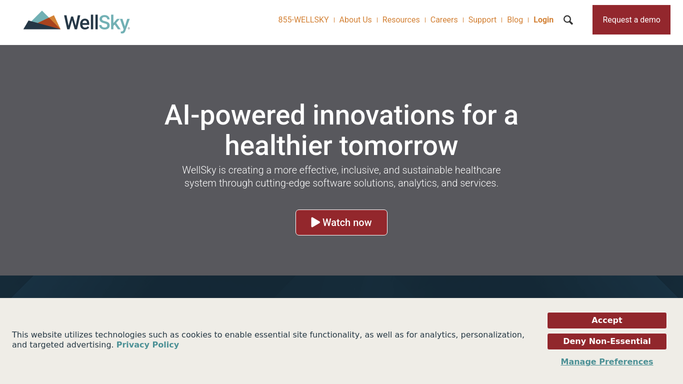
WellSky automates the record and the claim
The platform covers the agency's internal workflow thoroughly, and it is worth being precise about how much.
Referrals are received securely, visits across disciplines sit on one calendar, and bereavement follow-up tasks are managed as part of the hospice workflow. The claims process is expedited for managed care and Medicare, with claim submission issues, remittance and payments across different payers handled inside the system. Kinnser Link lets clinicians work offline in the field and sync later. WellSky Scribe provides ambient documentation, WellSky Extract pulls data out of documents, and WILA is a voice-enabled assistant, with the company reporting substantial reductions in documentation time.
All of that acts on the agency's own record and the channels WellSky has built.
The payer portal is a different world. So is the referring hospital's discharge system and the state licensing site. Each has its own login, its own layout, and no intention of integrating with anyone.
The agency runs on systems WellSky does not own
The tracking spreadsheet is a single point of failure held together by one coordinator's memory. Every figure in it was copied out of a portal that can be read directly.
Authorisation status checked across every payer each morning, so anything expiring inside two weeks gets extended rather than discovered on a denial letter. Eligibility verified ahead of admission rather than after the first visit has already been delivered unpaid.
Denials collected from each payer portal with their appeal windows, ordered by which closes first. Referrals pulled from hospital discharge platforms so nothing waits in a queue nobody opened over a weekend. Remittance advice downloaded and filed against the right claim.
The boundary in care is firm and it is worth stating plainly. This gathers, checks and flags. It does not make clinical decisions, and anything that changes a patient record or communicates with a family is prepared for a qualified person to review and send. Taking the chasing away gives that person their week back, which is the entire point.
Checking portals is not care
An agency's scarcest resource is people who understand both the clinical and the administrative side. Those people currently spend a large part of the week logging into other organisations' websites.
WebRun is an AI agent that works a real Chrome browser, signed in as your staff are. It opens each payer portal, the referral platform or the state site, reads what is there, and brings back a list with the dates attached.
It runs on your schedule in your own private environment, sessions are not shared between tools, and a workflow can be locked to an explicit list of sites. You can watch a run and stop it.
The workflows below are already built, and each one names what it opens.
Questions people ask
Can it be restricted to specific payer sites?
Yes. A workflow can be locked to an explicit list of domains, so it can only reach the portals you named and cannot wander anywhere else with a session.
Does it make any clinical decision?
No. It gathers, compares and flags. Anything that changes a patient record or reaches a family is prepared for a qualified person to review before it goes anywhere.
What about portals that need multi-factor authentication?
A login needing a one-time code needs a person the first time. That session is then reused on later runs, so the interruption is occasional rather than daily.
32 ready-made WellSky workflows
Each one names the apps it touches and the exact steps it takes. Open one to read what it will do, then turn it on.


Want one of these running on your own WellSky?
Show WebRun the process once and it will run it on schedule, in your own private browser environment.