How to Automate DocuSign
DocuSign automates the signing itself. Templates hold the fields, routing sets the order signers receive a document, and reminders chase on a schedule. Raising the envelope from the record that justifies it, and acting once it is signed, is where the manual work sits.
 Written by
Devon Ruiz
Workflow engineer
Written by
Devon Ruiz
Workflow engineer
 Reviewed by
Aiko Tanabe
Product researcher
Reviewed by
Aiko Tanabe
Product researcher
DocuSign is where an agreement becomes binding
DocuSign is the electronic signature service most businesses reach for, and the moment it handles is the one that matters commercially. Before the signature there is an intention. After it there is an obligation.
Which is why it tends to sit at the seam between departments. Sales gets the quote agreed. Legal owns the wording. Operations cannot start until it is signed. Finance cannot invoice until operations started.
The document itself is rarely the constraint. The template exists, the wording was settled months ago, and the fields are in the right places.
The constraint is everything either side of the signature: getting the envelope raised in the first place, and noticing it came back.
The chasing starts the moment it is sent
An envelope that has been sent and not signed is the most expensive kind of pending work, because nothing downstream can begin.
So somebody keeps a mental list. They open the signing dashboard on Monday and see what is still out. They cross-reference against the deals they care about. They work out which of the unsigned ones are old enough to be worrying, and which have a customer behind them who needs a phone call rather than another automated nudge.
On the other side, somebody has to notice completion. A contract signed at nine on Friday evening sits there until Monday, when a person opens the dashboard, downloads the PDF, files it, and tells the team they can start.
Both jobs are watching. Neither is skilled. Both are the reason a week gets added to a deal that everybody had already agreed to.
Reminders repeat, they do not investigate
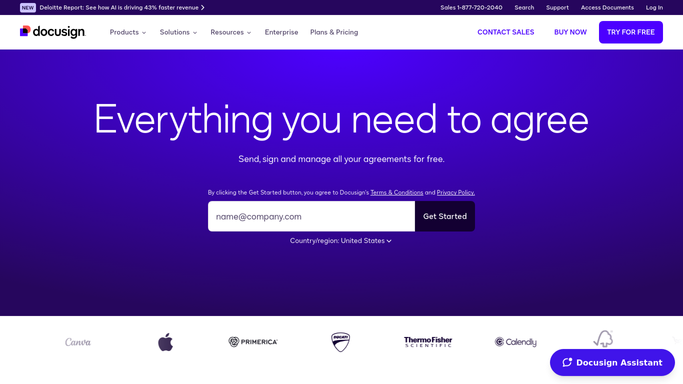
DocuSign automates the signing process itself thoroughly, and for that stretch it is very good.
Templates hold reusable documents with fields and roles. Routing controls the order recipients receive an envelope and whether it goes in parallel or in sequence. Automatic reminders and expiry chase on a schedule. Bulk send issues the same document to many recipients. PowerForms let someone start an agreement themselves from a link. The audit trail records every view and signature.
All of that begins once an envelope exists, and operates on the envelope alone.
DocuSign has no way to know that a quote was accepted in your CRM this morning, that a job in your operations system is waiting on paperwork, or that the applicant who signed yesterday now needs an account opening. It manages the document, not the process the document belongs to.
The envelope can be raised from the record that justifies it
A quote gets accepted on Tuesday morning and the agreement goes out on Thursday afternoon. Nothing happens in between except somebody finding the time to open two systems.
The quote marked accepted in the CRM turns into the right template, populated from that record, sent to the contact on it. The application that reached the approved stage turns into the agreement it requires. The job booked in the operations system that legally needs a signed authority gets one raised the same hour, not the following week.
Afterwards matters as much. The signed PDF pulled down and filed against the client in Drive under a consistent name. The record in the CRM moved on. The operations system told it can proceed. The Monday chase list assembled with the oldest and largest at the top, and with the context of what each one is holding up.
Keep one distinction. Preparing an envelope and filing a completed one are safe to run unattended. Sending a legal agreement to a customer is not, and should have a person between the draft and the recipient.
Somebody has to notice it was signed
The signing is instant. The waiting either side of it is what adds the week.
WebRun is an AI agent that works a real Chrome browser, signed in as you. It reads the CRM or the operations system, prepares the envelope from the right template, and afterwards collects the signed copy, files it, and updates the record that was waiting on it.
It runs on your schedule in your own private environment, and you can watch a run and stop it. Anything going to a customer is drafted and waits for a person.
The workflows below are already built, and each one shows the steps it takes.
Questions people ask
Will it send a legal agreement without me seeing it?
No. Preparing the envelope and filing the signed copy run unattended, but sending an agreement to a customer waits for a person to approve it.
Do we need the DocuSign API or a developer plan?
No. It works the DocuSign interface signed in as you, using the templates you already have, so there is no integration to build or maintain.
Can it update the system that was waiting on the signature?
Yes, and that is usually the point. Once an envelope completes it can file the PDF, move the record on in your CRM and tell the operations system it can start.
225 ready-made DocuSign workflows
Each one names the apps it touches and the exact steps it takes. Open one to read what it will do, then turn it on.













Want one of these running on your own DocuSign?
Show WebRun the process once and it will run it on schedule, in your own private browser environment.