How to Automate Google Calendar

Google Calendar automates the parts that live inside it. Recurring events repeat, booking pages let people take a slot, notifications fire before a meeting, and Apps Script can run on a schedule. Keeping it accurate when the work is scheduled in another system is the part still done by hand.

The calendar is the only place anyone checks

Google Calendar is the free scheduling tool in Google Workspace, and in most small companies it has become the single source of truth about time, whether or not anyone intended that.

People will look at a calendar. They will not reliably look at a job management system, a rota tool or a booking platform, even when those are the systems the business actually runs on. If it is not on the calendar, for practical purposes it is not happening.

This produces a specific and very common failure. The real schedule lives in one system, everyone's behaviour is driven by another, and the gap between them is maintained by a person copying things across.

Two systems disagree about Thursday

The copying is invisible until it goes wrong, and it goes wrong in a way that costs real money.

A job gets booked in the field service system and somebody adds it to the shared calendar. A shift changes in the rota tool and the calendar keeps the old one. A client reschedules by email and the calendar gets updated but the job system does not.

Then an engineer drives to an address that was cancelled on Tuesday, or two people turn up for the same slot, or a visit that was moved never made it onto anyone's day at all.

The cause is never carelessness. It is that keeping two systems in step by hand is a task with no natural end, and it is always the first thing dropped on a busy day.
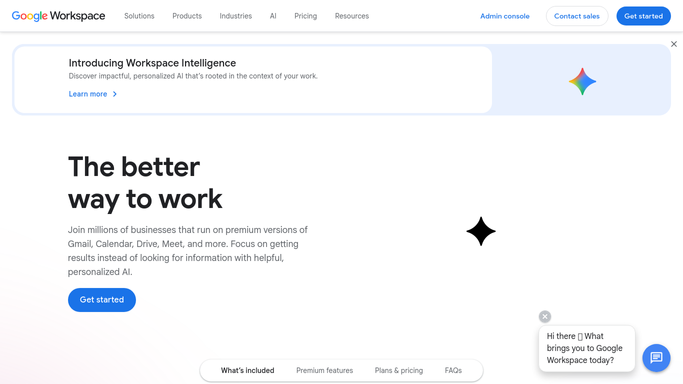
The calendar.google.com homepage, the app these three jobs run in. Google Calendar
The week filled in for you Jobs, shifts and appointments created where the work is booked, appearing on the right calendar without retyping.
Changes that follow through A visit moved in the job system moves on the calendar too, instead of drifting apart until someone notices.
Reminders with real detail The address, the reference and the contact pulled in, so nobody opens another system to find out where they are going.

Recurring events and booking pages cover a narrow slice

Google Calendar is more capable on its own than it is given credit for.

Events repeat on flexible rules. Appointment schedules let people book a slot from a public page, with buffers and limits. Working hours stop meetings landing at seven in the morning. Notifications fire by popup or email before an event. Calendars can be shared with fine-grained permissions, and Apps Script will run against them on a timer, so a nightly tidy-up is possible for anyone willing to write a little code.

What all of that shares is that the calendar is the origin. Something is created in the calendar, or created by someone booking through the calendar, and the calendar manages it from there.

When the appointment is created somewhere else, none of it applies. The calendar has no way to know that a job was booked in a different system twenty minutes ago, and no way to find out.

The week can fill itself from wherever the work is booked

The calendar can be written straight out of whatever system took the booking. Nobody needs to read one screen and type into another.

Tomorrow's jobs, read out of the field service system and written onto the right engineer's calendar with the address and the reference in the description. The week's shifts from a rota tool that has no calendar export. Appointments from a clinic system that only ever shows them in its own day view.

The corrections matter as much as the creations. A visit moved in the source system moves on the calendar. A cancellation removes the event instead of leaving it there to send somebody on a wasted trip.

It is worth being deliberate about direction. Pick one system as the truth, usually the one where the work is genuinely booked, and let the calendar follow it. Two systems that both write to each other will eventually fight, and the argument will surface as a double booking on a Friday afternoon.

Keeping two systems in step is nobody's job

Tomorrow's jobs are already written down somewhere; they are just not written down on the calendar. Moving them across is not skilled work, but it is the work that stops an engineer driving to the wrong town.

WebRun is an AI agent that works a real Chrome browser, signed in as you. It opens the system where the work is booked, including the ones with no API and no calendar export, reads the day, and writes the events onto the calendar with the details filled in.

It runs on your schedule in your own private environment, and you can watch a run and stop it. Anything that would notify a customer drafts and waits for a person.

The workflows below are already built, and each one shows the steps it takes.

Questions people ask

Will it create duplicate events if it runs twice?

Each workflow matches on a reference from the source system, so a second run updates the event it already created rather than adding another one.

Can it write to several people's calendars?

Yes, as long as the account it signs in with has permission to those calendars. It uses the same access a person would, so shared team calendars work the way they already do for you.

What about a booking system with no export at all?

That is the usual case. It reads the day off the screen the way a person would, then writes the events, so a system that never offered a calendar feed is no longer a dead end.

1,265 ready-made Google Calendar workflows

Each one names the apps it touches and the exact steps it takes. Open one to read what it will do, then turn it on.

Automated Missed Call Callback Queues
Every hour, WebRun reads the CallTrackingMetrics call log for missed calls, logs each one in Airtable with its tracking number, and blocks callback time in Google Calendar.
CallTrackingMetricsAirtableGoogle Calendar
Automated Bordio Weekly Workload Balancing
Every Monday, WebRun adds up each person's estimated task time in Bordio, subtracts the meetings already on their Google Calendar, and writes a workload table to Airtable showing who is overloaded.
BordioGoogle CalendarAirtable
Automated Stale Document Reviews
Every Monday, WebRun finds Almanac docs untouched for months, books review time against each owner in Google Calendar, and texts you the review list through Twilio.
AlmanacGoogle CalendarTwilio
Automated Zulip New Member Channel Setup
When someone new joins Zulip, WebRun works out the channels and groups their role needs from your Google Sheets map, prepares the subscription list, and books a first week check-in.
ZulipGoogle SheetsGoogle Calendar
Automated Zoho WorkDrive Storage Alerts
Every Monday, WebRun reads storage used per Zoho WorkDrive team folder, ranks what is growing fastest, books a cleanup slot in Google Calendar, and texts you when space runs low.
Zoho WorkDriveGoogle CalendarTwilio
Automated Zoho Wiki Weekly Change Digest
Every Monday, WebRun reads your Zoho Wiki version history, lists the pages edited last week and the comments nobody answered, and posts the digest to Slack.
Zoho WikiSlackGoogle Calendar
Automated Zoho Survey Response Tracking
Every morning, WebRun checks your Zoho Survey response count against target, works out which collector has stalled, files the tracker in Google Drive, and books reminder time in your calendar.
Zoho SurveyGoogle DriveGoogle Calendar
Automated Wrike Approval Chasing
Every morning, WebRun finds the Wrike approvals still waiting on someone, records how long each has sat in a Google Sheet, and checks the deadlines they threaten in Google Calendar.
WrikeGoogle SheetsGoogle Calendar
Automated Wayfair Returns and Claims Tracking
Every morning, WebRun tracks your open Wayfair returns, damage claims, and replacements, drafts the chase email in Gmail, and puts each deadline on Google Calendar.
WayfairGoogle CalendarGmail
Automated Udemy Business Seat Audits
Every Monday, WebRun audits your Udemy Business seats, lists who holds a license and never uses it, writes the numbers to Google Sheets, and books your renewal review.
Udemy BusinessGoogle SheetsGoogle Calendar
Automated Tenable Scan Coverage Audits
Every morning, WebRun checks your Tenable assets for anything with no recent scan or a silent agent, sends the coverage gap list to Telegram, and books time to fix it.
TenableTelegramGoogle Calendar
Automated Slack Quiet Channel Audit
Every Monday, WebRun finds Slack channels with no recent messages or almost no members, writes the audit into Google Sheets, and books a review slot in Google Calendar.
SlackGoogle SheetsGoogle Calendar
Automated SendGrid Sender Authentication Audit
Every Monday, WebRun audits your SendGrid domain authentication, link branding, and sender identities, emails you the failures, and puts a fix window on your Google Calendar.
SendGridGmailGoogle Calendar
Automated Segment Plan Usage Monitoring
Every Monday, WebRun reads your Segment workspace usage against the plan allowance, names the sources driving it, and emails you the position with time to act.
SegmentGmailGoogle Calendar
Automatic Scratch Class Comment Monitoring
Every hour, WebRun checks the comments on your Scratch class studio and student projects, logs them to Google Sheets with anything unkind first, and books review time in Google Calendar.
ScratchGoogle SheetsGoogle Calendar
Automated Quip External Sharing Audits
Every Monday, WebRun reads sharing settings across your Quip documents and folders, pings Telegram with the externally shared ones, and books a review slot in Google Calendar.
QuipTelegramGoogle Calendar
Automated Dock Appointment ETA Sync
Every morning, WebRun opens project44, reads tomorrow's delivery appointments and the live ETAs against them, puts the slots on a Google Calendar, and flags the mismatches in Slack.
project44Google CalendarSlack
Automated Power BI Report Distribution
Every morning, WebRun reads the key page of your Power BI report and writes the headline figures into a shared Google Sheet the whole leadership team can open.
Power BIGoogle SheetsGoogle Calendar
Automated Pendo Onboarding Milestone Checks
Every Monday, WebRun checks in Pendo which recently signed accounts have not hit your setup milestones, writes the gaps to Google Sheets, and books outreach time in Google Calendar.
PendoGoogle SheetsGoogle Calendar
Automated PayPal Failed Payment Recovery
Every morning, WebRun opens PayPal, finds recurring payments that failed overnight, drafts a note to each customer for approval, and books a retry check in Google Calendar.
PayPalGoogle CalendarTelegram
Automated NocoDB Overdue Record Chasing
Every morning, WebRun finds the NocoDB records past their due date, groups them by owner, blocks catch-up time in Google Calendar, and sends the chase list to Telegram.
NocoDBGoogle CalendarTelegram
Automated Namecheap DNS Change Alerts
Every night, WebRun opens Namecheap, compares each domain's DNS records against last night's snapshot, sends what moved to Telegram, and puts a review slot on Google Calendar when something changed.
NamecheapGoogle CalendarTelegram
Automated Miro Board Sharing Audit
Every Monday, WebRun reviews your Miro boards for public link sharing and stale guests, then sends the over-shared list and books time to fix it.
MiroTelegramGoogle Calendar
Automated Microsoft To Do List Audits
Every Monday, WebRun audits your shared Microsoft To Do lists for tasks assigned to nobody or with no due date, blocks time to fix them, and emails you the list.
Microsoft To DoGoogle CalendarGmail

Want one of these running on your own Google Calendar?

Show WebRun the process once and it will run it on schedule, in your own private browser environment.