How to Automate Ekos
Ekos automates the production side of a craft beverage business. Inventory moves in real time as batches are brewed and packaged, reorder points raise low ingredients, keg tracking follows shells out to the customer, and TTB reports come pre-populated. Distributor portals, till systems and filing sites still need someone to open them, or an agent like WebRun.
 Written by
Clara Bennett
Revenue operations
 Reviewed by
Julian Adeniyi
Retail operations
A brewery is a factory with a bar attached
Ekos is the production and inventory system craft beverage makers run on: breweries first, but also cideries, wineries, distilleries and the seltzer and canned cocktail producers that came after them.
The shape of the business is unusual, and it explains the software. On one side is a manufacturing plant with tanks, ingredients, yields, batch numbers and a federal regulator that wants a report every quarter. On the other is a taproom selling pints to whoever walks in on a Friday. The same fifteen people run both.
Ekos holds the manufacturing half. Recipes and how they scale. What is in which tank and for how long. Which malt and hops went into batch 412 and what came out. How many kegs got filled, where they went and how old the beer in them is. Sales orders for the distributor and the invoices behind them. It is the record of what the brewery made and what it has left.
The paperwork outlasts the beer
Beer takes two weeks. The paperwork about it never really finishes.
Kegs go out and do not come back, and finding out which accounts are sitting on them means going through delivery records and then emailing people. Distributor depletion reports arrive as spreadsheets in whatever shape that distributor uses, and somebody reformats them to work out what actually sold. Excise filing has a deadline that becomes somebody's problem on the last possible day. The taproom's till knows what Friday took, and the brewery's books find out when a person types it in. A malt supplier's portal has the lead time on the base malt you are about to run short of, but only if you log in and look.
None of it is brewing. All of it lands on the two or three people who are also brewing.
TTB reports and keg tracking are already solved
Ekos removes a real amount of this on its own, and a brewery should have all of it switched on before looking further.
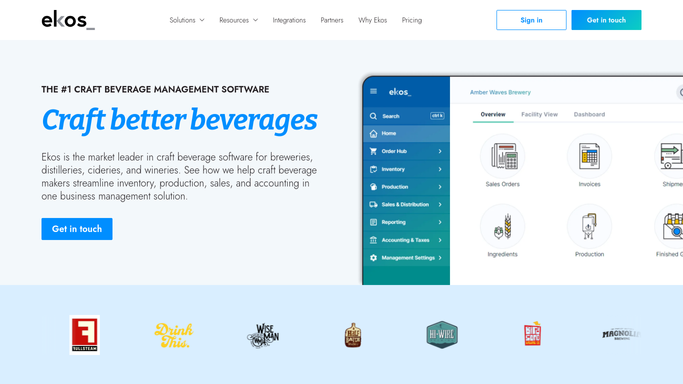
Inventory updates in real time as raw ingredients go into a batch and finished goods come out of it, so the stock figure moves without anyone counting. Reorder points can be set per item, so a low ingredient raises itself rather than being discovered. Recipes can be created and scaled. Keg tracking ties filled kegs to the batch they came from and follows keg shells out to the customer, with freshness tracked per keg and per location. TTB Report Generation pre-populates the Brewer's Report of Operations and the Excise Tax report. Sales orders and invoices reserve finished goods for a customer, and Ekos Order Hub takes orders from distributors and retailers directly. It syncs with QuickBooks Online, QuickBooks Desktop and Xero.
Everything in that list concerns liquid the brewery owns, in a building the brewery controls.
Past the loading dock it goes quiet. Ekos does not know what a distributor's portal says sold last week, whether the excise payment was accepted, what the taproom till took last night, or which of your kegs is in the cellar of a bar that stopped ordering in April.
The trail does not end at the loading dock
A brewery can follow its own beer into the bar it was sold to, using logins it already holds.
Depletions pulled from each distributor's portal on the same morning every week and put into one shape, so the brands that are moving and the ones sitting in a warehouse are obvious without opening three spreadsheets. Keg deposits reconciled: which accounts hold how many of your shells, how long they have had them, and what that is worth.
Taproom takings from the till system compared against what reached the bank, weekly, while a difference is still a week old rather than a quarter old. Excise deadlines tracked on the filing site itself, so what you have at the end is the confirmation rather than the memory of submitting.
Ingredient lead times read off the supplier's own portal and set against what the brew schedule needs, so a hop that has gone to a twelve-week lead time becomes a September problem rather than a November one. Ratings and mentions for a new release, gathered in the week it lands.
Keep the sending human. A release announcement or a note to a distributor is written, read and then sent by a person.
Chasing kegs and filings is a desk job
None of that needs a brewer. It needs somebody willing to open eleven websites in the same order every week without getting bored, which is a poor use of anyone in a brewery.
WebRun is an AI agent that works a real Chrome browser, signed in as you. It opens the distributor portal, the till system's dashboard, the filing site or the supplier's account page, reads what is there, and gives you the comparison with the differences named.
Because it works the browser rather than an API, a distributor portal with no integration stops being a dead end. It runs on your schedule in your own private environment, you can watch a run and stop it, and anything going out to a customer or a distributor is drafted for you to send.
The workflows below are already built, and each one names what it opens.
Questions people ask
Our distributors all use different portals. Does that matter?
No, and it is the reason this works at all. Each portal is read the way a person reads it, in a browser, so a distributor with no integration and no export is handled the same as one that has both. The output is one list in your shape, not theirs.
Will it file our excise return?
No. Filing with a federal regulator is not something to hand to a schedule. It tracks the deadline, assembles what the return needs and tells you whether a submission was accepted, and a person does the filing.
Can it tell us where our kegs actually are?
It can tell you which accounts should have them. It compares what Ekos records against what the distributor or account portal shows, then lists who is holding shells, how long they have held them and what the deposits are worth. It cannot see a keg in a cellar, but it can tell you who to phone first.
22 ready-made Ekos workflows
Each one names the apps it touches and the exact steps it takes. Open one to read what it will do, then turn it on.


Want one of these running on your own Ekos?
Show WebRun the process once and it will run it on schedule, in your own private browser environment.