How to Automate Slack

Slack automates in two layers. Workflow Builder, reminders and vendor Slack apps cover anything that starts inside Slack or gets pushed to it. Getting an answer out of a tool that never built a Slack app is the layer people still do by hand, one browser tab at a time.

Slack is where the company keeps its attention

Slack is a messaging app that turned into something else along the way: the place a company keeps its attention. Decisions get made in a thread before they are written down anywhere official. The person who needs to know something asks in a channel rather than opening the system that holds the answer. New staff learn how the business actually works by scrolling.

Most companies run a few dozen channels and about four that matter. The one where orders come in. The one where things break. The one where the numbers get posted every morning. Those few are checked constantly, by people who are supposed to be doing something else.

That is both the value and the cost. Everything important passes through Slack, which is what makes it worth automating. Everything unimportant passes through too, which is why half the workspace has notifications off.

Someone is quietly paid to watch the dashboards

In most teams one person has become the human integration layer, without anyone deciding they should be.

They open the payment dashboard each morning and post yesterday's total. They check whether the overnight job finished and tell the channel either way. They copy the day's bookings across because the booking system has no Slack app. When somebody asks whether an order shipped, they open another tab and look.

None of that is in their job description. It is what happens when the tool everyone watches knows nothing about the tools that hold the facts. The channel is full of people and short of data.

The slack.com homepage, the app these three jobs run in. Slack
Morning numbers Yesterday's takings, failures and bookings read from the systems that hold them and posted before the team logs on.
The usual questions, answered Whether it shipped, whether it cleared, whether the status changed, checked and posted without anyone opening a tab.
Exceptions only The three lines that fell below reorder, not the two hundred that did not. Quiet channels are the ones people still read.

Workflow Builder only reacts to what happens inside Slack

Slack automates a fair amount on its own, and for what it covers it is good.

Workflow Builder runs a sequence when someone joins a channel, reacts with an emoji, submits a form or clicks a button. Reminders repeat on a schedule. Scheduled send posts a message you already wrote at a time you pick. Hundreds of products publish a Slack app that pushes their own events into a channel.

Every one of those is triggered by something that happened in Slack, or pushed in by a vendor who decided to build the integration. That is the ceiling. A workflow cannot go and look at anything. It posts what it is handed.

So the gap is every tool that never built a Slack app: the supplier portal, the council website, the twenty-year-old booking system, the bank. Those hold the answers people ask for in channels all day, and Slack has no way to reach them.

The channel can report before anyone asks

Change what is able to reach the channel and the whole thing inverts. Instead of people asking the channel questions, the channel starts answering them first.

Yesterday's takings, posted at seven, read from the till system that only ever shows them on a dashboard. The overnight payment failures, listed by customer, out of a portal with no export. The three stock lines that dropped below reorder, checked across every supplier you buy from. The bookings that came in during the night from a system that never built an integration.

The same goes for the questions people ask over and over. Whether a shipment moved. Whether a permit changed status. Whether a listing is still on the first page. Whether a competitor put their price up again. Each of those is somebody opening a tab, looking, and typing what they saw.

One thing worth building in from the start: a channel that posts everything gets muted inside a week, and a muted channel is worse than no channel. The version that survives posts what changed and stays quiet otherwise. Report the exception, not the heartbeat.

Nobody has to be watching at six in the morning

The till system will not post its own number into a channel, and the number is wanted before the doors open. Reading it off a screen at that hour is work, but it is not the kind that justifies a phone by the bed.

WebRun is an AI agent that works a real Chrome browser, signed in as you. It opens the portal or the dashboard, reads what is on the screen, and posts the result into the channel you choose. Because it works the browser rather than an API, it reaches the tools that never built a Slack app, which is most of them.

It runs on your schedule in your own private environment, and you can watch a run and stop it. Anything that would reach a customer drafts and waits for you.

The workflows below are already built, and each one names the apps it touches.

Questions people ask

Will it post to a channel without me approving it?

Posting to your own internal channel runs on its own, because a message you did not want is a message you delete. Anything customer-facing, like an email or a public reply, is drafted and waits for a person.

Do we need a paid Slack plan or admin rights?

No. It posts through the browser using the access you already have, so there is no app to get approved into the workspace and no admin ticket to wait on.

How do we stop it turning into noise?

Post exceptions rather than everything. Each workflow decides what is worth saying: the lines below reorder, the payments that failed, the job that did not finish. A channel that only speaks when something changed keeps getting read.

5,789 ready-made Slack workflows

Each one names the apps it touches and the exact steps it takes. Open one to read what it will do, then turn it on.
Automated commonsku Monthly Commission Report
On the first Monday of each month, WebRun pulls the previous month's invoiced orders from commonsku, calculates each rep's commission based on your configured rates, and posts a summary digest to Slack.
commonskuSlackGoogle Sheets
Automated Workiz Unscheduled Lead Worklist
WebRun scans Workiz daily for leads that arrived but were never converted to a scheduled job, and posts a prioritised worklist to Slack so your team can follow up before they go cold.
WorkizSlackGoogle Sheets
Automated Workiz Overdue Invoice Chaser
WebRun finds all overdue invoices in Workiz, drafts a polite payment reminder for each customer, and flags the largest balances in Slack so you know who to prioritise.
WorkizGmailSlack
Automated Workiz On-My-Way Text Drafts
WebRun checks each technician's next job in Workiz, drafts a courteous on-my-way text message for the customer, and queues it for a quick human review before it is sent.
WorkizTwilioSlack
Automated Workiz Pressure Washing Lead Routing
WebRun picks up every new Workiz lead, checks your schedule for the nearest open slot, assigns the right crew, and queues a booking confirmation draft for your approval.
WorkizGoogle CalendarSlack
Automated Workiz Equipment Maintenance Tracker
WebRun checks your equipment records in Workiz, flags any machine or trailer due for service, and posts a weekly maintenance worklist to Slack so nothing breaks down mid-job.
WorkizSlackGoogle Sheets
Automated Workiz Pressure Washing Job Digest
Every morning, WebRun pulls today's full job schedule from Workiz and posts a clean dispatch digest to Slack so every crew member and dispatcher knows exactly what's happening.
WorkizSlack
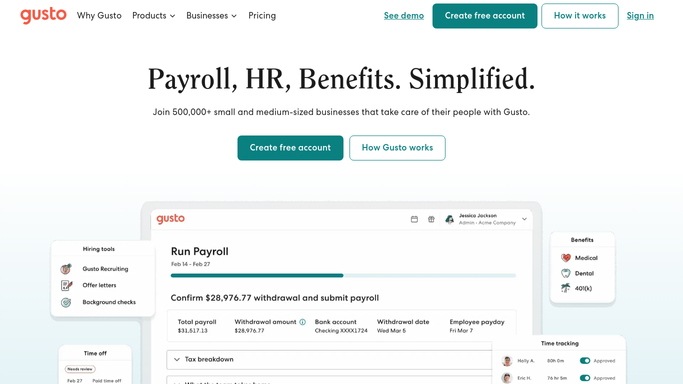
Automated Gusto Timesheet Completion Chaser
WebRun checks Gusto for employees who have not submitted their timesheets before the payroll cutoff, and posts a targeted list to Slack so managers can follow up fast.
GustoSlackGoogle Sheets
Automated Gusto Termination Final Pay Checklist
When an employee termination is recorded in Gusto, WebRun assembles a final-pay checklist covering state deadline requirements, outstanding PTO payout, and benefit cancellation steps, and queues it for your HR team to action.
GustoSlack
Automated Gusto Payroll Tax Deadline Tracker
WebRun monitors upcoming federal and state payroll tax filing deadlines tied to your Gusto account and posts a weekly priority list to Slack so your payroll or accounting team is never caught off guard.
GustoSlackGoogle Calendar
Automated Gusto Payroll Run Reminders
WebRun checks your Gusto payroll schedule, flags every upcoming run deadline, and posts a reminder to Slack so your team processes payroll on time, every time.
GustoSlack
Automated Gusto PTO Balance Report
Every Monday, WebRun reads PTO balances from Gusto and posts a summary by team to Slack so managers can plan coverage and catch any balances that are unusually high or at risk of expiring.
GustoSlack
Automated Gusto Overtime Anomaly Detection
Before each payroll run, WebRun checks Gusto for employees with overtime hours that exceed their normal pattern, flags the anomalies, and delivers a review list to managers in Slack so surprises are caught before paychecks go out.
GustoSlackGoogle Sheets
Automated Gusto Off-Cycle Payroll Approval Queue
WebRun checks Gusto for pending off-cycle payroll runs awaiting approval, compiles all the details, and queues a draft approval summary for your payroll manager to review before anything is processed.
GustoSlack
Automated Gusto New Hire Onboarding Doc Chaser
WebRun checks Gusto for new hires with incomplete onboarding documents, identifies exactly what is still missing, and logs a daily worklist to Google Sheets for your HR team to action.
GustoGoogle SheetsSlack
Automated Gusto Monthly Labor Cost Report
On the first Monday of each month, WebRun pulls the prior month's payroll data from Gusto, breaks down total labor cost by department and employee type, and delivers a formatted report to your finance team in Google Sheets.
GustoGoogle SheetsSlack
Automated Gusto Garnishment Setup Tracker
WebRun monitors your Gusto payroll garnishment orders, flags any that are approaching their effective date without being fully set up, and delivers a compliance checklist to your payroll team via Slack.
GustoSlackAirtable
Automated Gusto Contractor 1099 W-9 Chaser
WebRun checks Gusto for contractors who have been paid but are missing W-9 information needed for 1099-NEC filing, and delivers a follow-up worklist to your accounting team via Slack.
GustoSlackAirtable
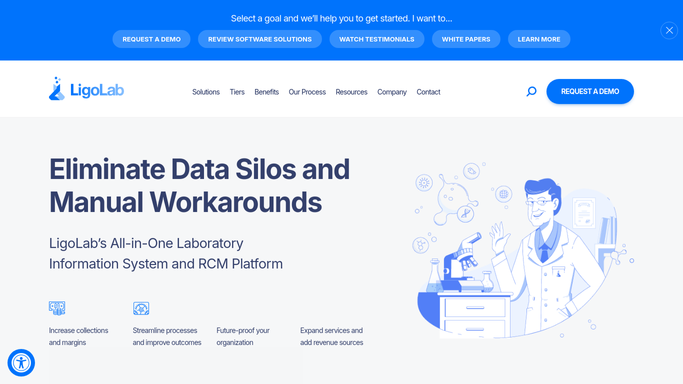
Automated LigoLab Pending Case Follow-Up
Each morning, WebRun reviews LigoLab for cases stuck in pending status beyond their expected completion window and posts a prioritized follow-up list to Slack for the lab team.
LigoLabSlack
Automated LigoLab Instrument Maintenance Tracker
Each Monday, WebRun checks LigoLab for instruments with preventive maintenance or calibration due in the next 14 days and posts an internal Slack reminder for the lab team.
LigoLabSlack
Automated LigoLab Daily Lab Volume Digest
Each morning, WebRun pulls prior-day case volume by department from LigoLab and posts a concise internal digest to Slack so lab leadership can track throughput at a glance.
LigoLabSlack
Automated LigoLab Courier Pickup Tracking
Each afternoon, WebRun checks LigoLab for clients whose specimens have not been picked up by the expected courier window and posts a missed-pickup alert to Slack for the logistics team.
LigoLabSlack
Automated LigoLab Addendum Pending Worklist
Each morning, WebRun checks LigoLab for cases with an open addendum request and posts an internal Slack list so pathologists can act on pending addenda before cases age.
LigoLabSlack
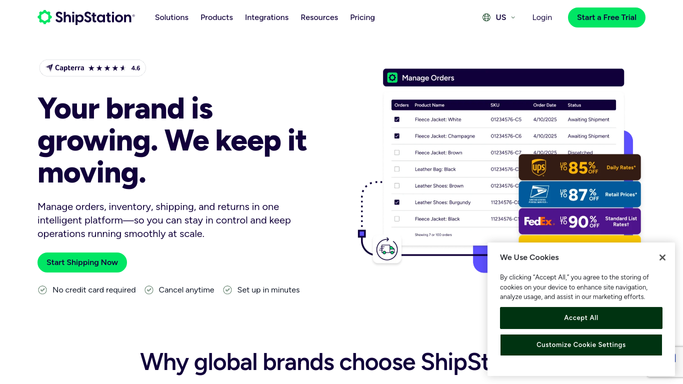
ShipStation New Store Onboarding Kickoff Automation
WebRun walks through the ShipStation store connection steps for a new sales channel, verifies the integration is receiving orders, and posts a setup confirmation checklist to Slack so your ops team knows the store is live.
ShipStationSlackAirtable

Want one of these running on your own Slack?

Show WebRun the process once and it will run it on schedule, in your own private browser environment.