How to Automate Google Drive

Google Drive automates the mechanics of storage. Sharing rules, shortcuts, version history and Apps Script on a timer all work well. Getting documents into it, downloaded from portals and named consistently and put in the right folder, is the part that is still somebody's Friday afternoon.

Drive is where documents go to be found later

Google Drive is the storage layer of Google Workspace, and its real job is not storing things. It is answering the question somebody asks nine months later: where is that document.

Every business accumulates paperwork it did not create. Supplier invoices. Bank statements. Signed contracts. Delivery notes. Certificates and inspection reports. Council correspondence. None of it is written in Drive. All of it needs to be in Drive when an accountant, an auditor or an angry customer asks.

Drive is good at the finding, if the filing was done. Search covers document contents, sharing is granular, and shared drives mean a file survives the person who saved it leaving the company.

Everything depends on the file having arrived, been named sensibly, and been put somewhere.

Filing is the tax on every finished job

The document almost never starts in Drive. It starts behind a login somewhere else.

The statement is in the bank's portal, available as a PDF once a month. The invoice is in the supplier's account area. The signed contract is in the e-signature tool. The compliance certificate is on a testing company's website. Each one has to be logged into, found, downloaded, renamed from something like statement_final_3.pdf, and dragged into the right folder.

It is nobody's actual job, so it gets batched, and batching is where it fails. Twenty statements downloaded in one sitting at the end of a quarter, half of them named wrong, two of them missed entirely because the portal only keeps three months.

The cost is invisible until the moment somebody needs a specific document quickly, which is always a moment that already has some pressure attached to it.
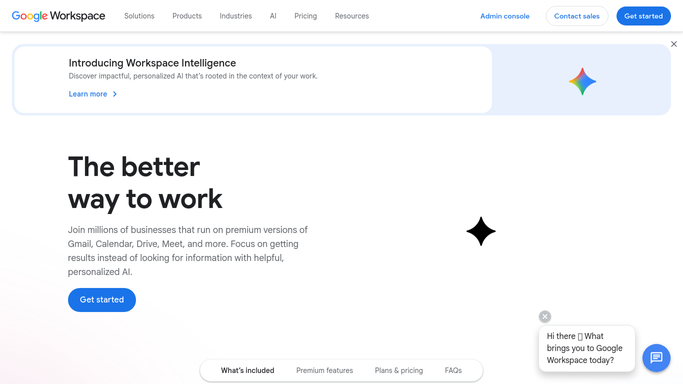
The drive.google.com homepage, the app these three jobs run in. Google Drive
Statements collected on time The monthly documents downloaded from each portal that holds them, before somebody needs them for a deadline.
Named the same way every time One naming rule applied to every file, so search works and nobody opens six documents to find the right one.
Filed where it belongs Straight into the client, month or job folder, instead of a downloads pile somebody sorts out later.

Drive organises files, it does not go and fetch them

Drive is more automatable than most people realise, and Workspace adds a fair amount on top.

Sharing can be set by folder and inherited. Shortcuts put one file in several places without copies. Version history means nothing is really lost. Apps Script runs on a timer against your Drive, so moving, renaming and tidying can genuinely be scripted by anyone willing to write a little code. Shared drives keep ownership with the company rather than an individual.

All of that operates on files that are already in Drive. The scripting reaches the folder structure, not the outside world.

The bottleneck is upstream of all of it. A script can file a statement beautifully once the statement is in Drive. Nothing in Workspace can log into your bank, open the statements section, and download last month's PDF.

The folder can fill and file itself

A login, a click and a download: that is the whole of collecting a statement. A person is only involved in it out of habit.

Every monthly statement pulled from each bank and card portal on the day it appears, named to one convention, dropped in the right year and month folder. Supplier invoices collected from the accounts area of each supplier you buy from. Signed documents pulled out of the e-signature tool and filed against the client they belong to. Certificates collected from the testing company before they expire.

The naming is worth as much as the collecting. One convention, applied every time, is the difference between search working and a folder of files called document.pdf.

It is worth pointing the collecting at a staging folder that only the automation writes to, then filing from there. If a portal changes and a run brings back the wrong thing, it is sitting in one place rather than mixed into folders your accountant is about to read.

Somebody still has to log into the portal

The filing rules can be written once. Logging into eleven different portals every month is the part that keeps costing a person an afternoon.

WebRun is an AI agent that works a real Chrome browser, signed in as you. It opens each portal, finds the document, downloads it, names it to your convention and puts it in the folder where it belongs.

It runs on your schedule in your own private environment, and you can watch a run and stop it. Sessions stay in your own environment rather than being shared with anything else.

The workflows below are already built, and each one names the sites it opens.

Questions people ask

Is it safe to give it access to our bank portal?

The session stays inside your own private environment and is not shared with the other tools in a workflow. A workflow can also be locked to an explicit list of domains, so it can only reach the sites you named.

What if a portal only keeps a few months of documents?

That is a good reason to collect on a schedule rather than at year end. A monthly run takes each document while it is still available, so the archive is complete when somebody finally needs it.

Can it handle a portal that needs a code from my phone?

A login that needs a one-time code needs a person the first time. Once that session is established in your environment it is reused on later runs, so the interruption is occasional rather than monthly.

905 ready-made Google Drive workflows

Each one names the apps it touches and the exact steps it takes. Open one to read what it will do, then turn it on.
Automated Verint Weekly QA Scorecard
Every week, WebRun compiles Verint quality-monitoring scores across the team into a scorecard, saves it to Google Drive, and texts the team lead when any agent's average drops below threshold.
Verint›Twilio›Google Drive
Automated Turing Developer Match Alerts
Every hour, WebRun checks Turing for newly matched developer profiles, saves each one to Google Drive, and texts the hiring manager through Twilio to review and decide.
Turing›Twilio›Google Drive
Automated Tresorit New File Alerts
WebRun checks Tresorit hourly for new files in shared folders, logs a reference note in Google Drive, and texts the responsible teammate through Twilio.
Tresorit›Twilio›Google Drive
Automated TorFX Weekly Transfer Scorecards
Every Monday, WebRun pulls last week's TorFX transfers and the exchange rate achieved on each, archives the report to Google Drive, and posts a scorecard to Slack.
TorFX›Google Drive›Slack
Automated TidyCal Daily Booking Digest
WebRun reads today's TidyCal bookings, saves any notes or files a client attached to Google Drive, and posts the day's schedule to Slack.
TidyCal›Google Drive›Slack
Automated Telstra Business Usage Scorecard
Every Monday, WebRun opens Telstra Business, checks data, call, and roaming usage plus the latest bill across every line, saves the breakdown to Google Drive, and posts a spend scorecard to Slack.
Telstra›Google Drive›Slack
Automated TD Bank Transaction Reconciliation
Every morning, WebRun matches your TD Bank business transactions against your bookkeeping records, archives the statement to Google Drive, and posts any mismatch to Slack.
TD Bank›Google Drive›Slack
Automated Synchrony Bank Dispute Handoffs
WebRun flags unusual or disputed looking charges on your Synchrony Bank account, archives the statement to Google Drive, and texts the teammate who should review it.
Synchrony Bank›Twilio›Google Drive
Automated SurveyLegend Weekly Response Export
WebRun pulls the week's SurveyLegend responses, saves a summary report to Google Drive, and drafts a Twilio text alert to the owner when a survey's response rate drops.
SurveyLegend›Twilio›Google Drive
Automated Status App Community Digests
WebRun checks your Status community group each morning, saves shared documents to Google Drive, and posts a digest of activity to Slack.
Status›Google Drive›Slack
Automated Stack Overflow Tag Monitoring
WebRun watches Stack Overflow for new questions tagged with your product, drafts an answer for your team to review, and saves recurring question themes to a Drive doc for Slack to flag.
Stack Overflow›Google Drive›Slack
Automated Splitit Failed Installment Alerts
Every morning, WebRun checks your Splitit merchant dashboard for failed installment charges, archives the report to Google Drive, and texts your billing team through Twilio.
Splitit›Twilio›Google Drive
Automated SocketLabs Reputation Issue Handoff
Every morning, WebRun checks SocketLabs for a drop in sending IP or domain reputation, archives the delivery report to Google Drive, and hands off the details to the deliverability engineer on Slack.
SocketLabs›Google Drive›Slack
Automated ShareFile Client Upload Alerts
WebRun checks ShareFile hourly for new client uploads, backs each one up to Google Drive, and texts the assigned staff member through Twilio.
Citrix ShareFile›Twilio›Google Drive
Automated ShareChat Weekly Performance Scorecard
Every Monday, WebRun checks your ShareChat posts and campaigns, saves a performance report to Google Drive, and texts you the highlights through Twilio.
ShareChat›Twilio›Google Drive
Automated Ryver Overdue Task Reminders
WebRun finds overdue Ryver tasks, saves a dated report to Google Drive, and texts each assignee a reminder through Twilio.
Ryver›Twilio›Google Drive
Automated Resend Weekly Deliverability Scorecard
Every Monday, WebRun pulls send, delivery, bounce, and open stats from Resend, archives the raw export to Google Drive, and posts a scorecard to Slack.
Resend›Google Drive›Slack
Automated Remote.co Listing Renewal Reminders
Every Monday, WebRun checks Remote.co for job listings nearing their expiry date, archives the current listing performance to Google Drive, and reminds the hiring team in Slack in time to renew.
Remote.co›Google Drive›Slack
Automated Postmark Delivery Reconciliation
Every Monday, WebRun pulls bounce and delivery stats by message stream from Postmark, archives the report to Google Drive, and texts the on-call engineer through Twilio only if the bounce rate crosses a critical level.
Postmark›Twilio›Google Drive
Automated Pika Render Failure Alerts
WebRun monitors Pika video generation jobs for failures, saves every successful render to Google Drive, and texts the creator on Twilio the moment a job fails so they can resubmit.
Pika›Twilio›Google Drive
Automated phpBB Moderation Queue Alerts
WebRun watches your phpBB forum for reported posts and pending approvals, texts the on call moderator through Twilio when reports spike, and archives a daily export of flagged threads to Google Drive.
phpBB›Twilio›Google Drive
Automated PayFit Payroll Validation Reminders
WebRun checks PayFit for the upcoming payroll validation deadline, archives the payslip batch summary to Google Drive, and texts the payroll admin a reminder via Twilio before the cutoff.
PayFit›Twilio›Google Drive
Automated ownCloud Sync Conflict Alerts
WebRun checks your ownCloud instance for failed syncs and file conflicts, cross-references the affected files in Google Drive, and texts IT through Twilio when a conflict needs a human decision.
ownCloud›Twilio›Google Drive
Automated Omny Studio Daily Download Digest
WebRun checks Omny Studio for yesterday's episode downloads, archives the published audio to Google Drive, and posts a daily digest to Slack.
Omny Studio›Google Drive›Slack

Want one of these running on your own Google Drive?

Show WebRun the process once and it will run it on schedule, in your own private browser environment.