How to Automate Trello

Trello automates through Butler, which moves cards, sets due dates, posts comments and runs rules on a schedule. Butler acts on cards that already exist. Creating the card in the first place, from an order or an email or a form in another system, is the step still done by hand.

The board is how a team sees its own work

Trello is a board of lists and cards, and its whole appeal is that you can understand somebody else's work in about four seconds of looking at it.

That visibility is why it spreads through the parts of a company that never adopted a project tool. A small agency runs client work on it. A landlord runs maintenance requests. A workshop runs repairs, one card per machine, moving left to right as the job progresses.

The unit that matters is the card. A card is one real thing: a job, a fault, an application, an order. The board is honest only for as long as the cards match the things that actually exist in the world.

Which puts all the weight on how cards get made.

Cards get made by whoever remembers

The work arrives somewhere else first. It arrives as an email, a form submission, a phone call, an order in a system, a fault logged on a portal.

Then a person reads it and makes a card. They type a title, paste an address into the description, set a due date and drop it in the right list. It takes ninety seconds and it happens forty times a week.

Two things go wrong, and both are quiet. Cards that never got made, because it was busy on Thursday and nobody wrote it down, so a job simply does not exist as far as the board is concerned. And cards that were made but never updated, sitting in Doing for a fortnight after the customer cancelled.

A board people have stopped trusting gets checked less, which means it drifts further, which is how a team ends up back on a group chat.
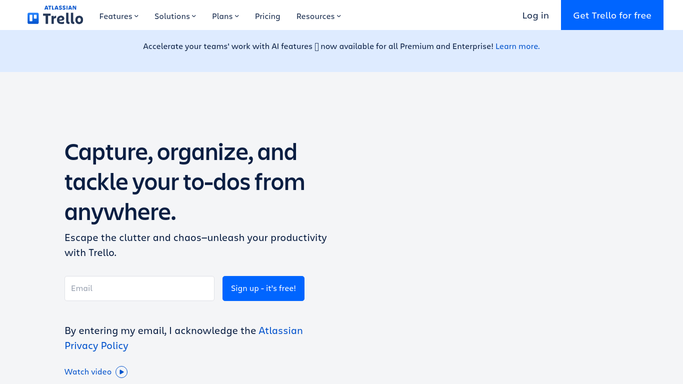
The trello.com homepage, the app these three jobs run in. Trello
Cards that create themselves A new order, application or fault becomes a card in the right list, without anyone transcribing it first.
Boards that match reality A job cancelled in the source system stops sitting on the board looking like work somebody still has to do.
Detail already on the card The reference, the address and the contact filled in, so nobody opens another system to start the job.

Butler acts on cards that already exist

Trello's automation is Butler, and it is genuinely capable for something included in the free plan.

Rules fire when a card is created, moved, labelled or has its due date arrive. Card buttons and board buttons run a set of actions on demand. Calendar commands run on a schedule, so every Monday you can sort, archive or move a batch of cards. Actions cover moving, copying, assigning, commenting, setting dates and posting to other lists.

Every one of those starts from something happening on the board. Butler is very good at what happens to a card once it exists.

It has no way to know that an order arrived in your ordering system, that a form was submitted on a site it cannot see, or that the job on that card was cancelled by a phone call this morning. The board can only react to itself.

The right card can appear on its own

The board reflects whatever was last typed into it, and nothing else. Everything missing from it was already recorded somewhere behind a login.

The overnight orders, each one a card in the intake list, with the reference and the delivery address already in the description. The faults logged on a customer's own portal, which is a site your team has a login for and no integration with. The applications submitted through a recruiting system, each becoming a card in the first column.

The updates matter as much. A job marked complete in the source system moves to Done rather than aging on the board. A cancelled visit gets archived instead of sending somebody out. A date that moved shows the date it moved to.

Worth deciding up front: let one system be the truth. If the board and the source system can both change a job's state, they will eventually disagree, and the disagreement will show up as an engineer standing outside a locked building.

Nobody has to transcribe the work first

Work arrives as an email, a form or a line in another system, and it becomes a card only when a person retypes it. That is not skilled work, but skipping it is how jobs get lost.

WebRun is an AI agent that works a real Chrome browser, signed in as you. It opens the ordering system, the customer portal or the inbox where work arrives, reads what is there, and creates or updates the cards on your board to match.

It runs on your schedule in your own private environment, and you can watch a run and stop it. Anything that would contact a customer drafts and waits for a person.

The workflows below are already built, and each one shows the steps it takes.

Questions people ask

Should we use this instead of Butler?

No, alongside it. Butler is the right tool for what happens once a card exists, and it is free. This handles the part Butler cannot reach: creating and updating cards from systems outside Trello.

Will the board fill up with duplicates?

Each workflow matches on a reference from the source system, so a second run updates the card it already made. Cards it has created can also be kept in their own list until someone triages them.

Does it work with a free Trello plan?

Yes. It works the Trello interface signed in as you, so anything you can do by hand on your current plan it can do too. There is no Power-Up to install.

1,079 ready-made Trello workflows

Each one names the apps it touches and the exact steps it takes. Open one to read what it will do, then turn it on.

Automated Webull Watchlist Breakout Alerts
WebRun checks your Webull watchlist every 30 minutes, posts an alert to Microsoft Teams whenever a stock crosses your price or volume threshold, and adds a Trello card so you remember to research it.
Webull›Microsoft Teams›Trello
Automated Wayfair Overdue Order Chasing
Every Monday, WebRun checks your Wayfair Professional orders for anything past its estimated delivery window, updates the matching Trello card, and pings the project lead on WhatsApp so a late delivery doesn't stall a job.
Wayfair›Trello›WhatsApp
Automated Warp New Hire Onboarding Checklist
WebRun checks that a new engineer has been added to the team's Warp workspace, tracks the setup steps on a Trello checklist, and announces the new setup in Microsoft Teams.
Warp›Microsoft Teams›Trello
Automated Walmart Marketplace Order Handoff
WebRun checks Walmart Seller Center for new orders every few hours, creates a Trello fulfillment card for each one, and sends your teammate a WhatsApp heads up on anything shipping within 24 hours.
Walmart Seller Center›Trello›WhatsApp
Automated Uphold Portfolio Review Handoff
Every month, WebRun reads your multi asset Uphold holdings, prepares a Trello card summarizing balances across crypto, metals, and cash, and pings your advisor on WhatsApp so the review is ready without you compiling it yourself.
Uphold›Trello›WhatsApp
Automated UpCloud Server Resource Alerts
Every hour, WebRun checks your UpCloud servers for high CPU, memory, or disk usage, creates a Trello card to track the fix, and sends you a WhatsApp ping so it does not wait until the server falls over.
UpCloud›Trello›WhatsApp
Automated Typesense Index Sync Reconciliation
WebRun compares your Typesense collection document counts against the source database every night, creates a Trello card for any mismatch, and pings the on-call engineer on WhatsApp.
Typesense›Trello›WhatsApp
Automated Trezor Firmware and Backup Checklist
Every month, WebRun checks Trezor Suite for a pending firmware update and reads back whether your recovery backup has been verified, tracks both on a Trello checklist, and sends a WhatsApp reminder if either is overdue.
Trezor›Trello›WhatsApp
Automated Treasure Data Sync Reconciliation
Every morning, WebRun opens Treasure Data, checks every connected source's ingestion and every segment's activation sync from overnight, posts failures to Microsoft Teams, and creates a Trello card for each one so customer data stays trustworthy before it reaches downstream channels.
Treasure Data›Microsoft Teams›Trello
Automated Trading 212 Portfolio Scorecard
WebRun reviews your Trading 212 Pies and holdings every Monday, checks how far each Pie has drifted from its target allocation, and sends you a WhatsApp recap while logging the numbers to a Trello card.
Trading 212›Trello›WhatsApp
Automated Trade Me Unsold Listing Tracking
WebRun checks your Trade Me listings that closed unsold every week, posts a summary to Teams, and creates a Trello card to track each relist.
Trade Me›Microsoft Teams›Trello
Automated TeamCity Broken Build Alerts
WebRun watches your TeamCity build configurations, and the moment one fails on a main branch, it creates a Trello card for the fix and pings the build owner on WhatsApp.
TeamCity›Trello›WhatsApp
Automated Spocket Supplier Price Change Alerts
WebRun checks your Spocket sourced products every day for supplier price and stock changes, creates a Trello card for each, and sends you a WhatsApp heads up.
Spocket›Trello›WhatsApp
Automated Spline Scene Performance Scorecards
Every Friday, WebRun checks each published Spline scene's views and load performance, updates its Trello project card, and posts the scorecard to Microsoft Teams.
Spline›Trello›Microsoft Teams
Automated Spacelift Plan Approval Handoff
WebRun watches your Spacelift stacks for runs waiting on approval, posts the plan summary to Microsoft Teams, and creates a Trello card assigned to the approver so nothing applies without a human sign-off.
Spacelift›Microsoft Teams›Trello
Automated Soldo Flagged Transaction Review
Every morning, WebRun flags Soldo card transactions over a wallet's budget or missing a receipt, creates a Trello card for each, and drafts a WhatsApp alert to the cardholder asking for the missing receipt.
Soldo›Trello›WhatsApp
Automated Soda Data Quality Failure Alerts
Every time a Soda scan runs, WebRun checks the results, creates a Trello card the moment a data quality check fails, and pings the data owner on WhatsApp with the table and rule so a bad batch of data gets caught before it reaches a dashboard.
Soda›Trello›WhatsApp
Automated Snowflake Credit Usage Alerts
WebRun checks Snowflake warehouse credit consumption against your budget threshold every hour, posts a Teams alert when a warehouse is running hot, and opens a Trello card to right-size it.
Snowflake›Microsoft Teams›Trello
Automated Shutterstock Download Quota Alerts
Every week, WebRun checks how many downloads are left on your Shutterstock plan, alerts Microsoft Teams when you're close to the limit, and creates a Trello card to review the plan.
Shutterstock›Microsoft Teams›Trello
Automated Shopee Flagged Order Review Alerts
Every hour, WebRun checks your Shopee seller center for orders flagged for manual review, such as an address mismatch or an unusually large order, creates a Trello card for each, and notifies the fulfillment lead in Microsoft Teams.
Shopee›Microsoft Teams›Trello
Automated Servers.com Resource Usage Alerts
WebRun checks your Servers.com dedicated and cloud servers for resource strain, posts a warning to Microsoft Teams, and logs it on a Trello card for follow up.
Servers.com›Microsoft Teams›Trello
Automated Secoda Undocumented Table Alerts
Every Monday, WebRun opens Secoda, finds tables with no description or no assigned owner in the data catalog, posts the list to Microsoft Teams, and creates a Trello card for each one so documentation debt gets assigned instead of piling up quietly.
Secoda›Microsoft Teams›Trello
Automated Sakura Internet Renewal Reminders
WebRun checks your Sakura Internet server and domain contracts for upcoming renewal, tracks each one on a Trello card, and messages you on WhatsApp before it's due.
Sakura Internet›Trello›WhatsApp
Automated Route Lost Package Claim Drafts
Every morning, WebRun checks Route for new lost or damaged package reports, drafts the claim details in Trello, and posts the day's claims to Microsoft Teams for review.
Route›Microsoft Teams›Trello

Want one of these running on your own Trello?

Show WebRun the process once and it will run it on schedule, in your own private browser environment.