How to Automate Calendly
Calendly automates the booking itself. Workflows send reminders and follow-ups, and Routing Forms qualify visitors and match known leads to an owner. Working out who should be sent a link, from a practice system, a portal or a report, is the part still done by hand, and the part an agent like WebRun handles.
 Written by
Marcus Deleon
Support operations
Written by
Marcus Deleon
Support operations
 Reviewed by
Julian Adeniyi
Retail operations
Reviewed by
Julian Adeniyi
Retail operations
Calendly replaced the back-and-forth with one link
Calendly is a scheduling tool, and what it really removed was a conversation nobody enjoyed. Six emails to find a Tuesday. A voicemail. A text asking whether three still works.
In its place there is a link. The other person sees the times you are genuinely free, picks one, and it lands on both calendars with the video details attached. Because it sits on top of your real calendar, it is one of the few pieces of software people trust straight away. It does not book you when you are busy.
That is why it spread far past sales teams. A clinic uses it for follow-up visits. A learning pod uses it for parent conferences. A foundation repair company uses it for site inspections. A lactation consultant uses it for rechecks. One link, and a set of businesses with nothing else in common.
Somebody still decides who gets sent the link
The link solved the negotiating. It did nothing about the deciding.
Somebody opens the practice system and works out which patients are due a recheck this month. Somebody reads yesterday's no-shows and sends each of them a rebooking link by hand. Somebody works through the discharge referrals that came in overnight and sends an intake link to every one. Somebody checks which trial accounts crossed the usage line that makes a call worth having.
Then, having decided, they paste the same link into thirty separate messages.
The pattern repeats in every business that uses it. The scheduling takes seconds and the deciding that comes first takes a morning, because the reason to book somebody almost always lives in a different system from the calendar.
Workflows run on the invitees Calendly already knows about
Calendly automates more of the surrounding work than most accounts have turned on.
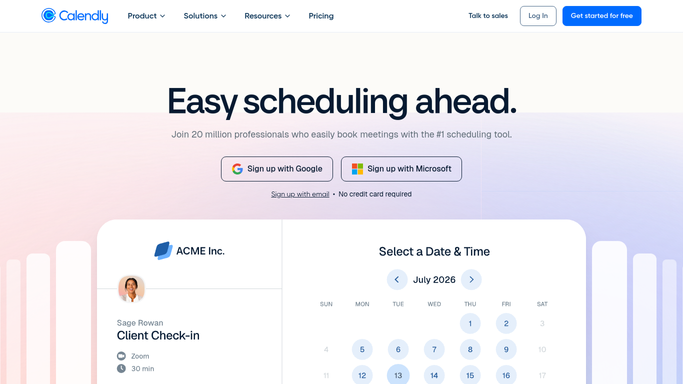
Workflows send email and text around a meeting: reminders that cut no-shows, follow-ups that share resources afterwards, and a nudge to someone who was sent a link and has not booked. Routing Forms qualify a visitor from their answers and send them to the right booking page, and they can look up a known lead in Salesforce or HubSpot and route to the assigned account owner. Meeting Polls find a time that suits a group. Managed Events keep one template consistent across a team. Calendly Analytics shows which days, times and hosts actually convert.
Every one of those starts with someone who has already arrived: an invitee filling in the form, a lead already sitting in the connected CRM, a recipient who was already sent a link.
That is the ceiling. Calendly does a great deal for a person who has landed on your booking page. It has no way of finding out that the person exists. When the reason to book is a recall date in practice software, a status in a referral portal or a line in last night's report, someone has to go and read it first.
The booking link can go out the moment the reason appears
A recall date that nobody reads is an appointment that never gets offered. The reading is what has been missing, not the booking page.
The patient whose recall date came up this week, found in the practice system and offered the right visit type with the right clinician. The inspection request that arrived through a form overnight, answered before nine with a link to whoever covers that area. Yesterday's no-shows, each offered the next two slots that suit the same person rather than a generic link.
It works past sending, too. The slots still open on Saturday can be read off the booking page and put in front of the people most likely to take them. A referral that arrived as a portal notification can become a booked intake instead of a queue somebody works through on Friday. The parents who have not booked a conference with three days left can be listed by name, for one message instead of thirty.
One line is worth drawing early. Working out who should be invited, and preparing what to say, can run unattended overnight. The message itself reaches a real person, and a booking link sent to the wrong patient is not a small mistake, so that stays a decision somebody makes.
The list of who to invite builds itself
Choosing who needs an appointment and pasting a link thirty times are two different jobs, and only one of them needs a person.
WebRun is an agent that works a real Chrome browser, signed in as you. It opens the practice system, the referral portal or the report that holds the reason, reads who is due, and prepares each invitation with the right event type and the right host.
It runs on your schedule in your own private environment, and you can watch a run and stop it. Messages to patients and customers are drafted and wait for you.
The workflows below are already built, and each one names what it opens.
Questions people ask
Can it work with the Calendly plan we already have?
Yes. It uses your booking pages through the browser exactly as you do, so whatever event types and Workflows your plan gives you are what it works with. There is nothing to upgrade and no API key to generate.
Will it book appointments for people without asking me?
No. It finds who is due and prepares the invitation, and a person sends it. Booking someone into a slot, or messaging a patient, reaches a real human being, so that step stays with you.
Our client list lives in software with no integrations at all. Does that matter?
No, and that is usually the case worth automating. It reads the recall dates or referrals off the screen the way your front desk does, then prepares the right link for each person, so software with no integration list is still workable.
18 ready-made Calendly workflows
Each one names the apps it touches and the exact steps it takes. Open one to read what it will do, then turn it on.







 Instagram›Instagram›

Want one of these running on your own Calendly?
Show WebRun the process once and it will run it on schedule, in your own private browser environment.