How to Automate ShiftWizard
ShiftWizard automates hospital staff scheduling: self-scheduling and mobile shift swaps hand routine changes to staff, Predictive Census forecasts what the coming days need, and the Acuity and Assignment Manager builds assignments on how sick the patients are. Agency and marketplace availability lives outside it, and an agent like WebRun gathers that.
 Written by
Priya Raghavan
Solutions lead
Written by
Priya Raghavan
Solutions lead
 Reviewed by
Yara Haddad
Data operations
Reviewed by
Yara Haddad
Data operations
The staffing grid decides how many patients a unit can take
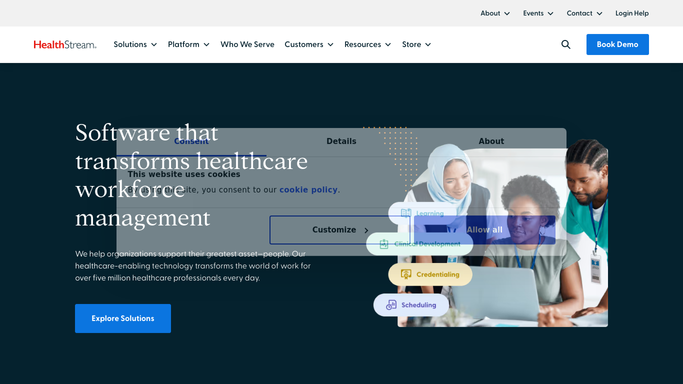
ShiftWizard is nurse and staff scheduling software, sold as ShiftWizard by HealthStream since HealthStream bought the Raleigh company in 2020. Hospitals, health systems and non-acute providers use it to build unit rosters, publish them, and then run the daily business of who is actually working.
A hospital schedule is not a calendar. It is a statement of capacity. A medical unit with four nurses and a sixth occupied bay is either a safe assignment or it is not, and that arithmetic is redone every twelve hours. The same grid decides who earns overtime, which shifts go to agency, and whether a nurse gets the weekend they asked for in the self-schedule window.
So the people in it are the manager who builds the roster, the staffing office balancing the whole house, the charge nurse fixing it at six in the morning, and every nurse checking the app on the drive home.
Filling tomorrow night is still a round of phone calls
Publishing a schedule and staffing a shift are different jobs, and only the first one happens inside ShiftWizard.
Somebody rings four agencies to ask who has a critical care nurse for Thursday, and each answers with a spreadsheet emailed at a different hour. Somebody signs into a vendor management portal to see whether the traveller starting Monday has cleared onboarding, or whether a document is sitting unsigned. Somebody opens a state board lookup because a licence renewal was due last week and nobody has heard. Somebody works out what the float pool has left by texting three people and waiting.
It is a day of small confirmations, and it is the reason a manager who is supposed to be on the unit is at a desk instead.
Predictive Census forecasts the demand, not the supply
The product is a good deal more than the calendar most units treat it as, and the parts that get skipped are the ones that paid for it.
Self-scheduling and mobile shift swaps hand the routine back to staff, so what used to arrive as a text arrives as a request. ShiftWizard Predictive Census forecasts what the coming days will need rather than leaving a manager to guess it. The Acuity and Assignment Manager builds assignments against how sick the patients actually are instead of against a headcount. Safeguards around fatigue rules, licensure and certifications can be built in, and a multi-facility view lets a staffing office see the whole house at once.
All of that works on what the hospital already knows about itself.
The supply side does not live in the hospital. Agency availability lives with the agencies, in inboxes and behind their own logins. Traveller onboarding status lives in a vendor management system somebody else operates. Licence and certification standing lives with the board that issued it. The per diem marketplaces your own staff pick up extra shifts on are somebody else's platform. Each was built for a person with a browser, and no one hospital is worth an interface to any of them.
The agency's list belongs on the board before the huddle
Read those sites to a timetable and the gaps in next week stop being a phone tree.
Every agency you use, checked each morning for who they have free against the shifts you still have open, sorted soonest first, so the call goes out to the agency that can actually cover Thursday rather than to all four in turn.
A traveller's onboarding status read from the vendor's own portal, so a start date that is quietly going to slip surfaces while the block can still be covered another way. Licence and certification standing pulled from the bodies that hold it and listed against the nurses on next month's grid, because a card found expired in March is a renewal and the same card in April is a hole.
Your own postings on the per diem marketplaces read back for what has been picked up and what has not, so an unfilled shift is escalated on the day it stops moving. And the small daily one: float pool and per diem sign-ups gathered into a single list of who is free tonight, by unit and by skill, ready before the staffing huddle instead of assembled during it.
The calling around goes, the assignment does not
Deciding who works a shift is a judgement about a unit, its patients and somebody's week. Finding out who is even free takes most of the day and is no judgement at all.
WebRun is an AI agent that drives a real Chrome browser, signed in the way your staffing office signs in. It opens an agency portal, a vendor management system, a board lookup or a marketplace listing, reads what the page says, and brings it back against the names and shifts already on your grid.
Nothing it does moves the grid. Reading happens on its own, at whatever hour suits you. Publishing a roster, committing a shift, approving a swap or sending a message to a nurse is written up and left for a person with the authority to release it.
Each workflow below names the sites it opens.
Questions people ask
Would it assign a nurse or publish a schedule on its own?
No. Assignment and publication stay with the manager or staffing office. A run collects availability, onboarding status and expiry dates and lays them against your open shifts, then stops. Anything that changes the roster is prepared for a person to release.
Two of our agencies send availability by email rather than a portal. Can it still help?
Yes, and both routes are handled. Where an agency has a portal it is opened and read the way a person would read it. Where availability arrives as an attachment, the message is read from the mailbox it lands in, and either way the result is one list against your open shifts.
A call-out at five in the morning needs a text. Who sends it?
The charge nurse or the manager. Messages to staff are drafted and held for a person to send, because a text about tonight's shift carries somebody's name on it. The gathering that works out who is worth asking runs on its own, overnight.
12 ready-made ShiftWizard workflows
Each one names the apps it touches and the exact steps it takes. Open one to read what it will do, then turn it on.


Want one of these running on your own ShiftWizard?
Show WebRun the process once and it will run it on schedule, in your own private browser environment.