How to Automate FacilityRF
FacilityRF automates the planning side of housekeeping: space unitization and work loading turn floor plans into duty lists, quality inspections standardise what a manager checks, and work orders route service requests from a QR code to closure. Distributor, contractor and equipment portals stay manual, and an agent like WebRun reads those.
 Written by
Yara Haddad
Data operations
Written by
Yara Haddad
Data operations
 Reviewed by
Owen Hartley
Workflow engineer
Reviewed by
Owen Hartley
Workflow engineer
Environmental services is the department every other one waits on
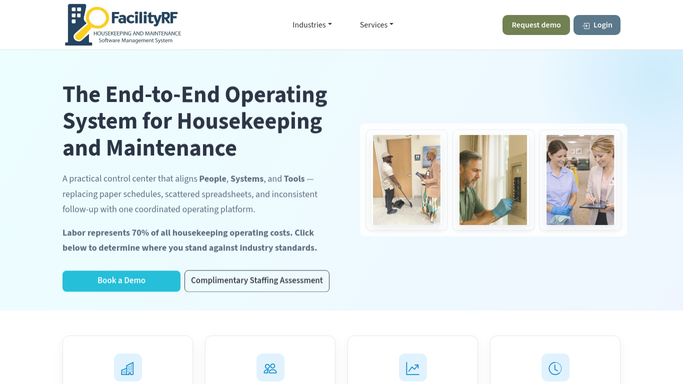
FacilityRF is housekeeping and maintenance operations software. Hospitals, senior living communities, universities, corporate campuses and food service operations use it to plan cleaning, inspect it, take service requests off the floor and see what the labour actually produced.
In a hospital that department is EVS, and it sits in a position nothing else does. A discharged room is not a bed until it has been cleaned and somebody has said so. An isolation room needs a terminal clean at a contact time no one may shorten. An operating room turnover sits between two cases, watched by a surgeon. The department is measured in minutes, mostly by people who have never worked in it.
So what lives in FacilityRF is the shape of the work: which spaces exist, how long each type takes, who is assigned to what today, what the last inspection found, and which requests came in from the floor since breakfast.
The supply cupboard is restocked through a distributor's login
The plan sits inside the system. Nearly everything the plan depends on does not.
A shift lead signs into a distributor's site to find out whether the disinfectant wipes shipped or went on backorder again. Somebody opens an equipment manufacturer's service portal to see where a repair ticket got to, because a burnisher out of action rearranges the project schedule for a fortnight. Somebody confirms the linen delivery, then confirms it a second time. Somebody checks the waste contractor's collection record, since a missed pickup is a corridor full of carts by Friday. Somebody looks up whether a product is still listed as approved for the organism infection prevention is worried about this month.
None of that is skilled work. All of it happens on a phone at the end of a shift, done by a person who was hired to run a floor.
Unitization plans the labour, it does not order the chemicals
The platform earns its place on the planning side, and it is worth being exact about how far that reaches before adding anything.
EVS space unitization and work loading tools turn floor plans into a defensible number of hours per space rather than an argument at budget time, and digital housekeeper schedules turn that number into today's duty list on a phone. Space quality inspections and quality assurance assessments standardise what a manager checks and record what they found. Service request management takes a request from a QR code on a wall through routing and escalation to closure, with photographs attached. A real time labour and task dashboard shows what is being produced while the shift is still running.
All of it describes work inside your own buildings.
The things that stop that work are outside them. The distributor holds your order status. The equipment manufacturer holds your repair ticket. The linen and waste contractors hold their own schedules and their own definitions of on time. The regulator holds the list that says which product is approved against which organism and for how long. Not one of them has any reason to appear on an EVS dashboard.
A backordered disinfectant is a failed clean three days later
An EVS director should not learn about a backorder from an empty cupboard, and once those sites are checked each morning, nobody has to.
Every open purchase order checked on the distributor's own site each morning, with anything short shipped or backordered set against the cleans that were going to need it, so a substitution is a decision taken on Monday rather than an improvisation on Thursday night.
Repair tickets read from each equipment manufacturer's service portal, so a floor project is scheduled around machines that will actually be working, and a loan unit is asked for while it still helps.
Linen and waste collections confirmed against the contractors' own systems, with a missed visit surfacing before the carts do. Pest control and specialist vendor visit reports collected as they post. Approved product listings checked for the disinfectants you actually buy and the contact times printed in your own procedures, so a label change is caught by somebody reading rather than by an assessor. Contracted service invoices read back against what was scheduled, so a visit that never happened is not quietly paid for.
A shift lead was hired to run a floor, not a phone
None of that chasing needs somebody who knows how to clean a room, and yet it lands on the supervisor who does, at the end of a shift, on a phone.
WebRun is an AI agent that drives a real Chrome browser, signed in with your own accounts. It opens the distributor's order page, the manufacturer's service portal, a contractor's schedule or a regulator's listing, reads what is there, and brings it back as a list you can work through at the morning meeting.
It runs on your timetable, in your own environment, restricted to the sites you name, and a run can be watched and stopped part way. Placing an order, approving an invoice, closing a work order or writing to a vendor is drafted and left for a person to send.
The workflows below each name what they open.
Questions people ask
Does it raise a purchase order when stock runs low?
Not on its own. It reads what the distributor's site says about orders you already placed and flags what is short. Raising a new order, approving spend or committing to a substitution is drafted and left for the manager who owns that budget.
Our inspections and duty lists already live in FacilityRF. What is left for an agent?
Everything outside your own buildings. FacilityRF plans the work and records how it went. This goes out to the distributors, contractors and manufacturers whose delays make a plan undeliverable, and brings their status back so the plan is built on what will actually arrive.
We order from several distributors and use two waste contractors. Does that scale?
Adding a vendor is adding a site. Each one is another login, opened in turn, and the findings come back in a single list rather than five browser tabs, so there is nothing to commission and nothing to integrate.
12 ready-made FacilityRF workflows
Each one names the apps it touches and the exact steps it takes. Open one to read what it will do, then turn it on.

Want one of these running on your own FacilityRF?
Show WebRun the process once and it will run it on schedule, in your own private browser environment.