How to Automate ThoroVet
ThoroVet handles the visit itself: equine medical record templates, a digital day sheet and batch examinations, offline iPad use that syncs later, split billing across multiple owners, invoicing through Stripe, QuickBooks Online sync and unlimited automatic reminders. Laboratory and insurer portals are outside it, which is where an agent like WebRun works.
 Written by
Devon Ruiz
Workflow engineer
Written by
Devon Ruiz
Workflow engineer
 Reviewed by
Samuel Adeyemi
Integrations writer
Reviewed by
Samuel Adeyemi
Integrations writer
The practice lives in a truck, not in a building
An ambulatory equine vet works out of a vehicle. The day is a list of barns, and the exam happens in an aisle or a paddock with the horse held by whoever happened to be around.
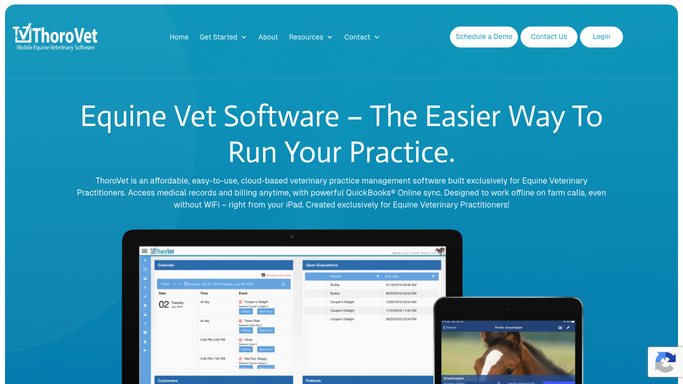
ThoroVet is cloud-based practice management software written only for equine practitioners, and the design follows from where the work happens. It runs on an iPad and keeps working without WiFi, because plenty of barns have none, then syncs when the truck is back in signal. Records, invoices and case documents are all created out there rather than back at a desk.
The rest is shaped by how horses are owned and paid for. Equine-specific medical record templates cover exams, treatments and vaccinations. A digital day sheet and batch examinations handle the mornings when twenty horses at one farm need the same thing. Split billing carries a horse with several owners on percentages. Invoices go out by email or text on the spot with payment through Stripe, billing syncs into QuickBooks Online, and unlimited automatic reminders run on any treatment or service, not only vaccinations.
Results come back to a website, not to the horse's file
The exam is the fast part of the day. What follows it is why vets do paperwork at nine at night.
Samples go out and results come back on somebody else's site. A Coggins goes through GVL. A chemistry panel, a culture or a fecal count lands on the laboratory's own portal, one submission at a time, with nothing on it that knows which horse in your file it belongs to. Somebody signs in, reads them, and works out which owner needs telling and in what words.
It keeps going after that. A referral hospital posts a discharge report on its own system once a colic case goes home. An insurer wants a claim form and a history, then goes quiet about whether it was approved. A distributor's ordering site holds what is genuinely in stock and what is on backorder for the drugs the truck is low on. If the practice does racetrack work, records go up to HISA as PDFs. Each of those is a browser tab and a person who has already done a full day.
The barn gate is where the integrations stop
What ThoroVet does at the barn is the part worth paying for, and a practice still on paper should hear that plainly.
The offline behaviour is the whole argument. Most of the app keeps working with no connection: exams recorded, an invoice generated and handed over before the vet leaves, images attached, prior history readable, all syncing when the signal returns. The day sheet and batch examinations let one farm visit be entered once instead of horse by horse. Automatic reminders run on their own, with copies to the office, and billing syncs into QuickBooks Online rather than being typed twice.
That covers the practice's own file and the systems it connects to. It does not reach past them. ThoroVet cannot sign in to the laboratory's portal and collect this afternoon's results. It cannot read an insurer's claim status, a referral hospital's report page, or a distributor's stock list. Even inventory is managed through QuickBooks Online rather than inside ThoroVet, so the reordering question starts in another system too.
Lab results ranked before the first stop of the day
A day sheet gets planned the night before, which is the exact moment when knowing a little more would change it.
Say the laboratory portal is checked twice a day and every returned result is matched to its horse and owner, with anything outside range put at the top. The vet opens one list instead of six logins, and knows before the truck moves which two owners need a call today rather than on Thursday.
The same habit covers the rest of the tail. The insurer's claim status read weekly for every open claim, so a request for more information is answered in days rather than found in a month. The distributor's site checked against what the truck is running low on, with backorders flagged before a farm call turns into an apology. Referral discharge reports collected as they publish and filed against the right horse, so the recheck is booked off what the surgeon actually wrote. Next week's dental and vaccination recalls assembled with each owner's outstanding balance beside them, so one message covers both.
A veterinarian still signs everything that matters
The gathering in all of that is mechanical work. What follows it is clinical, and the two should never leave the building together.
WebRun handles the first half. It drives a real browser, signed in as you, on the schedule you choose: the laboratory portal, the insurer, the referral hospital, the distributor. What it finds is waiting as a sorted list when you open the day sheet.
The reading runs unattended. Anything that writes into a medical record, changes a treatment, or reaches an owner is drafted and held for the veterinarian to release. A result is not a diagnosis and a reminder is not advice, so a qualified person makes both of those calls every time. The cards below are where equine practices usually start.
Questions people ask
Will it write anything into a horse's medical record?
No. Reading ThoroVet and reading the sites around it runs unattended, but any entry in a medical record, any change to a treatment and any message to an owner is drafted and held for the veterinarian. A record follows that horse for life.
The lab results only exist on the laboratory's own website. Can it reach them?
Yes, and it is the usual reason equine practices set this up. It signs in the way your technician does, opens each returned result and reads the values off the page, then matches them to the horse and owner. The laboratory does not have to build an interface.
Can it tell an owner what a result means?
No. It can draft a plain-language note and put it in front of you with the result attached, but the interpretation and the sending stay with the veterinarian. Explaining a result to an owner is clinical advice, and that is not something to hand to software.
10 ready-made ThoroVet workflows
Each one names the apps it touches and the exact steps it takes. Open one to read what it will do, then turn it on.

Want one of these running on your own ThoroVet?
Show WebRun the process once and it will run it on schedule, in your own private browser environment.