How to Automate Solventum
Solventum 360 Encompass already prioritises the CDI worklist, suggests queries and reports on the programme. Automating the rest means having something sign in on a schedule, collect the queries that passed their response window and the gaps still open, and hand that list to a specialist. WebRun runs that pass.
 Written by
Marcus Deleon
Support operations
Written by
Marcus Deleon
Support operations
 Reviewed by
Samuel Adeyemi
Integrations writer
Reviewed by
Samuel Adeyemi
Integrations writer
Documentation integrity is decided before the patient leaves
Solventum's health information and technology business makes the software a hospital uses to keep its record in step with the care it gave. The Solventum 360 Encompass System is the platform underneath: computer-assisted coding, clinical documentation integrity, professional coding and autonomous coding, with the Fluency platform handling ambient documentation and speech recognition alongside it.
The people inside it are clinical documentation integrity specialists, inpatient coders, physician advisors and the quality team. Their job is narrow and consequential: read the chart while the patient is still on the ward, and work out whether what is written down describes the patient in the bed.
The gap is rarely about the care. The severity of illness on the record sits two steps below the severity being managed at the bedside. Nothing clinical has gone wrong and the record still says the wrong thing, which is why somebody reads it before the chart closes.
Sending the query is the easy half
A specialist writes a query, sends it to the attending physician, and then waits.
What follows is not clinical work. It is a list, usually in a spreadsheet, of queries that went out and have not come back: which chart, which physician, how many days, whether the patient is still admitted. Somebody rebuilds it every morning, and works out that one consultant has eleven outstanding and has been on nights all week.
The programme is measured too, so the same people keep score. Response rate by physician. Agreement rate. Average turnaround. How often the coder's final assignment differed from what the review expected. Each of those numbers is assembled by hand from a screen that shows one chart at a time.
And the deadline is not a policy anybody set. It is discharge. Once the account moves to coding, a question that was easy to answer on Tuesday becomes a retrospective request about a patient the physician no longer remembers.
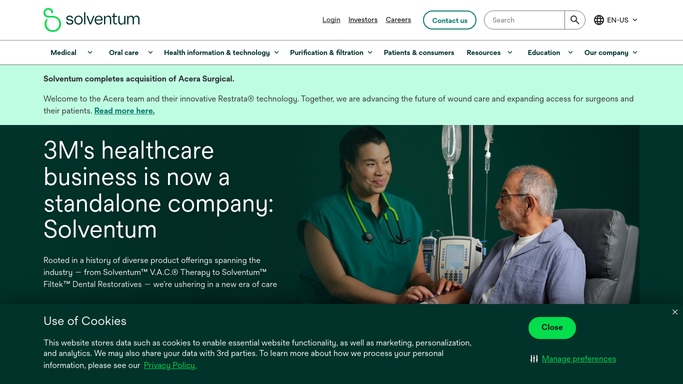
360 Encompass decides which chart a specialist opens first
It is worth being precise about how much of this the platform already carries.
The CDI system runs a prioritisation algorithm over unstructured notes using natural language processing, so the worklist a specialist opens is ordered rather than alphabetical. It surfaces the focus DRGs an organisation has chosen, documentation showing clinical indicators of a condition with no corresponding diagnosis, and early-warning quality indicators that deserve a look. Specialists get electronic query capability, auto-suggested queries and CDI edits in the same place, and CDI Engage One and CDI Physician Engage carry the query into the physician's own workflow.
All of that acts on the chart data 360 Encompass receives.
The physician does not live there. They live in an EHR inbox, on a rota somebody else maintains, in Teams, on a phone in a scrub pocket. The payer who will eventually agree or disagree with the assigned DRG lives somewhere else again. None of those is a place a documentation platform was built to go and look.
A stalled query can be surfaced the same day
Once the worklist can be read on a schedule by something that never gets pulled into a meeting, the gap between a query going out and an answer coming back stops being invisible.
Every query past its response window with no answer, gathered each morning with the chart, the physician and the day count attached, and put in front of the physician advisor rather than left in a report nobody opened. The same list split by whether the patient is still admitted, because only one of those two conversations can still change the record easily.
A weekly scorecard per physician that nobody had to transcribe: response rate, turnaround, agreement. Severity of illness gaps raised while the bed is still occupied. Charts where the coder's final DRG did not match what the review expected, collected for the two teams to work through on Friday rather than met at audit. Mortality reviews with steps still open, listed by age.
One boundary here cannot be traded for speed. Gathering, comparing and flagging runs unattended. Writing a query, answering one, or changing anything in a clinical or billing record is prepared and left for a qualified person, because the premise of the whole discipline is that a human read the chart.
The lists were never the reason to hire a specialist
A CDI team is hired for clinical judgement, and a real share of its week goes on assembling lists that describe how the judgement is going.
WebRun is an AI agent that works a real Chrome browser, signed in the way your team is. It opens 360 Encompass, reads the worklist and the query log, and brings back the overdue items, the open gaps and the scorecard into Teams or a sheet where the CDI lead already works.
It runs on your schedule inside your own private environment, sessions are not shared between tools, and a workflow can be locked to a named list of sites. You can watch a run and stop it at any point.
Each of the workflows below is already built, and every one names the screens it opens.
Questions people ask
Will it write or send a physician query?
No. It reads the query log and reports on what is outstanding. Writing a query, answering one or accepting a response stays with the specialist and the physician, because a query is a clinical question and it needs a clinician at both ends.
Does it change the priority order of the CDI worklist?
No. The prioritisation stays exactly as 360 Encompass produced it. The agent reads that worklist and reports on it, so what a specialist sees when they sign in is unchanged.
Our charts hold protected health information. What can it actually reach?
Only what the person whose login it uses can reach, and only on the sites you name. A workflow can be locked to an explicit list of domains, sessions stay inside your own private environment, and they are not shared with other tools in the run.
12 ready-made Solventum workflows
Each one names the apps it touches and the exact steps it takes. Open one to read what it will do, then turn it on.
Want one of these running on your own Solventum?
Show WebRun the process once and it will run it on schedule, in your own private browser environment.