How to Automate Tive
Tive covers the sensor side: standard and smart alerts on temperature, humidity, shock and light, geofence and route deviation alerts, ETA alerts, workflow automations and custom dashboards. Turning an excursion into a claim packet, a deviation record or a scorecard argument means reading other systems, which is what an agent like WebRun does.
 Written by
Marcus Deleon
Support operations
Written by
Marcus Deleon
Support operations
 Reviewed by
Owen Hartley
Workflow engineer
Reviewed by
Owen Hartley
Workflow engineer
The tracker is the only witness that travels with the freight
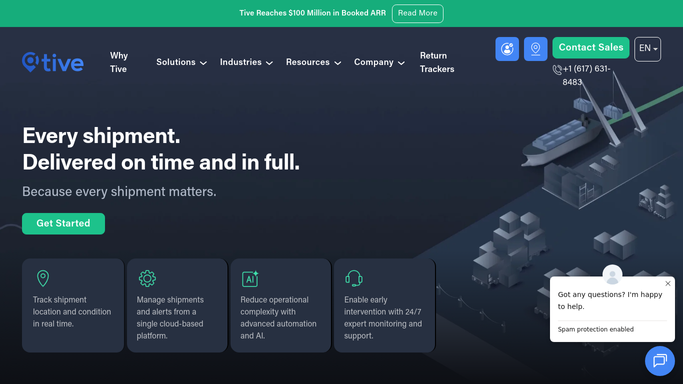
Tive makes shipment trackers and the software that reads them. A tracker goes in the carton, on the pallet or in the reefer, and it reports where the goods are and what is happening to them: location, temperature, humidity, shock and light, in motion, anywhere in the world.
The people who buy it are shipping things that can be ruined in transit and cannot be judged by looking at the box. A pharmaceutical batch, chilled produce, seafood, wine, semiconductors, a painting. Once a pallet leaves a dock it is inside somebody else's truck, aircraft or container, and until it is opened everyone is guessing.
A tracker ends the guessing. The Solo 5G fixes location from GPS, wifi and cell towers alongside its temperature, humidity, shock and light sensors, and the Tive platform turns that stream into a live map, a condition history and an alert the moment a reading goes out of range.
The sensor data still has to become a document
Knowing what happened is not the same as being able to prove it to the people who care.
A temperature excursion at three in the morning over Memphis becomes work the next day, and almost none of that work happens in Tive. Quality wants a deviation record with the sensor chart, the timeline, the lane, the carrier and a root cause, opened in the quality system with a due date attached. The carrier's own portal shows a delivery time that may not match the geofence exit the tracker recorded, and reconciling those two is a person with two browser tabs.
If the load is written off, the claim goes to an insurer or a broker on their portal, with the evidence attached in the order they ask for it. The customer, meanwhile, is scoring you inside their supplier portal on delivery performance you have to go and read, and a chargeback appears there long before anybody mentions it.
Smart Alerts fire on everything the tracker can measure
Tive automates the sensing side properly, and a shipper using it as a map and nothing else is leaving most of it unused.
Standard and smart alerts fire on temperature, humidity, shock and light thresholds, and the real-time alert map puts every active shipment and its condition on one screen. Geofence alerts mark arrival and departure at named sites, smart route deviation alerts flag a shipment that has left the path it should be on, and ETAs come with their own alerts when the arrival time slips. Workflow automations turn those events into a response rather than a notification somebody has to act on. Custom dashboards and custom shipment reports carry the numbers, branded public sharing links let a customer follow their own shipment without an account, and there is API and webhook access for teams with developers.
The boundary is clean, and it is the boundary of the sensor. Everything Tive can tell you is something a tracker measured. Everything else about that shipment lives in a system belonging to a carrier, a customer, an insurer or your own quality department.
An excursion can arrive with its own claim packet
A temperature trace is the first piece of evidence in a claim, not the last word on a shipment.
An excursion assembled into a packet the same night: the temperature trace either side of the event, the geofence timestamps, the air waybill or container number pulled off the forwarder's portal, and the carrier's recorded delivery time set next to the one the tracker logged. What normally costs a quality analyst half a day is waiting for them, and the half day goes on deciding rather than collecting.
Customer supplier portals read on a schedule, so the on-time and in-full numbers you are graded on are known before the quarterly review, and a chargeback is disputed while the sensor data still supports the argument.
Carrier and forwarder records compared with tracker history across a whole lane, which is how a pattern becomes visible: one origin, one handling agent, one flight, three excursions in six weeks.
Trackers themselves reconciled between what is in transit, what has come back and what is on the shelf, so a validated lane never ships unmonitored.
A claim gets assembled, not submitted
Gathering evidence and filing a claim are two different acts, and only one of them should happen while nobody is watching.
WebRun is an AI agent that works a real Chrome browser, signed in as you. It opens the forwarder's portal, the carrier's tracking site, the customer's supplier portal or your own quality system, reads what is on the screen, and builds what you were going to build: a claim packet with the evidence in it, a deviation record already populated, a scorecard you can argue from.
The claim itself, the note to the customer and the credit stay yours. Anything that commits money or speaks to a partner is drafted and waits for a person.
It runs on your schedule in your own private environment, and you can watch a run and stop it part way. The workflows below are already built, and each one names the sites it opens.
Questions people ask
Workflow automations already respond to our alerts. Where does this fit?
Alongside them. Tive's automations act on what a tracker measured, and they are the right tool for anything sensor-driven. This covers the systems holding everything else about the shipment: the forwarder, the carrier, the customer and your own quality records.
Can it file the cargo claim with the insurer?
No. It assembles the packet, with the sensor trace, the timeline, the documents and the value, then leaves it for a person to submit. Anything that commits money or speaks to a partner is drafted, not sent.
Our forwarder's portal is old and has no export. Does that rule this out?
No. It reads the portal the way your logistics coordinator does, in a browser signed in with your own account, so an old system with no API and no export button is exactly the case it is for.
12 ready-made Tive workflows
Each one names the apps it touches and the exact steps it takes. Open one to read what it will do, then turn it on.

Want one of these running on your own Tive?
Show WebRun the process once and it will run it on schedule, in your own private browser environment.