How to Automate Petpooja
Petpooja automates the restaurant itself: cloud billing across unlimited terminals, an inventory module costing consumption against item-wise recipes, a central kitchen module, in-built CRM and reporting, plus the Captain app, a Kitchen Display System and Zomato and Swiggy integration. Live ingredient rates and aggregator payouts still need an agent like WebRun.
 Written by
Rosa Lindqvist
Operations editor
Written by
Rosa Lindqvist
Operations editor
 Reviewed by
Hannah Vogel
Finance operations
Reviewed by
Hannah Vogel
Finance operations
A bill in Petpooja also takes the stock off the shelf
Ask anyone in an Indian restaurant what Petpooja is and they will point at the billing screen. That is the smallest part of it. The bill takes the order, the recipe attached to each dish tells the inventory module what left the store, and by close the day's covers, discounts, taxes and consumption are one record rather than four.
The restaurants on it run from a single quick-service counter to a group with a central kitchen feeding six outlets. The same company also sells Invoice for GST billing, Tasks for day-to-day staff jobs and Attendo for attendance and payroll, so a group often runs more than the POS.
The people are an owner watching the numbers, a manager on the floor, a captain taking orders at the table on a phone, and whoever counts the store on Monday.
Everything the restaurant decides comes off those screens.
Food cost is calculated from rates nobody has updated
The bill is fast. What sits behind the bill goes stale.
A recipe is only as good as the ingredient rate underneath it, and that rate was typed in once, on the day the item was created. Onions doubled in March. Oil moved twice. Paneer went up and came halfway back. The dish is still costed at last year's number, so the margin report is arithmetic performed on a fiction.
So somebody goes looking: the vendor's rate on a phone, the wholesale market, the cash and carry account, a second supplier for comparison. Then somebody opens the aggregator partner dashboards to see what the week's discounts and commission actually took, and what the rating did after Saturday.
Somebody checks whether the food licence is inside its renewal window. Somebody reads last night's reviews and decides whether to answer them.
None of it takes skill. All of it takes a morning the restaurant does not have.
Inventory tracks consumption, not the market
Petpooja covers more of the restaurant than most kitchens have switched on.
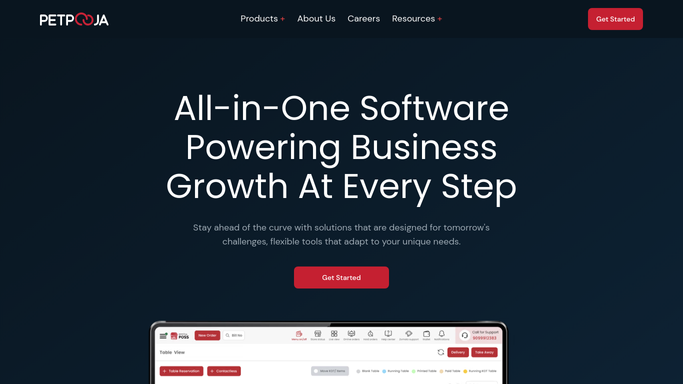
Cloud billing runs the counter across unlimited terminals with user rights per person, and a central kitchen module ties several outlets to one production point. The inventory module tracks consumption against item-wise recipes, including multi-stage ones, and warns before a stockout. Menu management holds those recipes and the item analysis behind them, the in-built CRM keeps the guest record, and reporting covers sales, orders, cash flow and customers. Around that core sits a marketplace of add-ons: the Captain ordering app for taking orders at the table, a Kitchen Display System, QR ordering and digital menus, Petpooja Purchase for procurement, and integration with Zomato and Swiggy so aggregator orders land in the same queue, with online order reconciliation available on top.
That is a genuinely complete restaurant system.
Every part of it works from numbers Petpooja was given. It knows the recipe and not what the ingredient costs this morning. It receives the aggregator's orders and does not open the partner dashboard to read what a promotion cost. It cannot see the licence portal, the bank, or the review that went up at midnight.
Tomorrow's prep can be decided on today's rates
A manager pricing a menu is working from whatever the ingredients cost the last time somebody checked. Today's rates are published on sites the business already has accounts with.
This morning's rate for the twenty ingredients that matter, read from the suppliers you actually buy from and set against the rate sitting in the recipe, so the three that moved are the only ones anybody looks at. Every dish carrying one of those three, listed with its new cost beside its menu price, so a plate that stopped paying is a decision on Tuesday instead of a discovery in the quarterly accounts.
The aggregator side reads the same way. Partner dashboards checked for the week's commission, the discounts you funded and the payout that actually landed, all against the orders Petpooja recorded, so a shortfall becomes a query while the platform still holds the record.
Then the ones that get forgotten. Ratings and reviews from the aggregators and the map listing in one place, with anything naming a member of staff pulled out first. Licence and registration renewal dates collected before the window shuts. Vendor invoices read against what the goods receipt says arrived, so a short crate is a credit while it can be claimed.
An agent can do the rate round before prep starts
None of that needs a chef, a developer or an integration somebody else has to build. It needs six pages opened and written down next to the numbers you already hold.
WebRun is an agent that works a real Chrome browser, signed in as you. It opens Petpooja for the recipes, consumption and sales already in it, then opens a supplier's page, an aggregator partner dashboard or a review listing, and hands back one short list: what moved, what a dish now costs, and what did not get paid.
It runs on your schedule in your own private environment, and any run can be watched and stopped. Changing a menu price, ordering from a vendor or answering a guest in public is drafted and waits for you.
The workflows below are already built, and each one names what it opens.
Questions people ask
Could it reprice a dish without us knowing?
No. It works out what a dish now costs, sets that beside the price you charge, and puts the ones that no longer pay in front of you. Changing a menu price, on the POS or on an aggregator listing, stays a person's decision.
Does this need Petpooja to have an API?
No. The agent signs in and reads the screens the way your manager does, in a real browser, so nothing has to be built or exposed first. That is also why it can read a supplier page or a partner dashboard that offers no integration at all.
What happens if an aggregator dashboard changes its layout?
It reads the page the way a person does rather than following fixed coordinates, so a moved button or a renamed column is usually handled. When a page changes enough that it cannot find what it needs, the run stops and tells you instead of reporting a wrong number.
12 ready-made Petpooja workflows
Each one names the apps it touches and the exact steps it takes. Open one to read what it will do, then turn it on.



Want one of these running on your own Petpooja?
Show WebRun the process once and it will run it on schedule, in your own private browser environment.