How to Automate MyApiary
MyApiary holds the hive record itself: offline visit entry, hive strength and apiary observations, a multi-team work planner, RFID asset tracking and custom reports. The packer's grades, the supplier's prices and the register your site numbers sit in are outside it, which is the layer an agent like WebRun reads.
 Written by
Dimitri Vasilev
Logistics analyst
Written by
Dimitri Vasilev
Logistics analyst
 Reviewed by
Ben Kirkwood
Solutions engineer
Reviewed by
Ben Kirkwood
Solutions engineer
The hives are out on other people's land
A commercial beekeeping business is a few thousand wooden boxes sitting on ground that belongs to somebody else. Farmers, foresters, orchardists and block owners host the sites, and the crews work a rotation that shifts every week with the weather and the flow. MyApiary is where that whole picture is written down.
It is a hive management application built for commercial operators rather than hobbyists, and it gets used in a beesuit as often as at a desk. The tablet app works offline, because most yards have no signal. A visit records hive makeup and strength, apiary observations including disease sightings and varroa threshold counts, the consumables that went on, and notes for whoever comes next.
Around that sit the parts a business needs. Site and Landowner Management holds the contact, the registration number, the floral source and what was agreed. Assets Tracking uses RFID tags or barcodes to follow individual boxes and hives between yards. Queen Rearing follows a line down to specific queens. The office and the truck read the same record.
The season's verdict arrives long after the drums leave
Beekeeping is the part of the year a beekeeper chose. The rest of it arrives from other companies, on their schedule and in their format.
Honey goes out in drums and the money comes back weeks later, once somebody else has tested it. The packer's portal holds the grade, the moisture, the test results and the price band each drum landed in. Somebody signs in, reads it, and works out which sites produced the good stuff. Nobody makes that connection at the time it would have changed anything.
The same shape repeats everywhere. Sugar and pollen substitute are ordered off supplier sites where the price moves between orders. Pollination work is agreed with an orchardist by email, then invoiced against hives the record says were placed. Fuel, freight and the register your site numbers came from all sit behind separate logins. Each one is five minutes, there are a lot of them, and they all fall in the weeks when the yards need working.
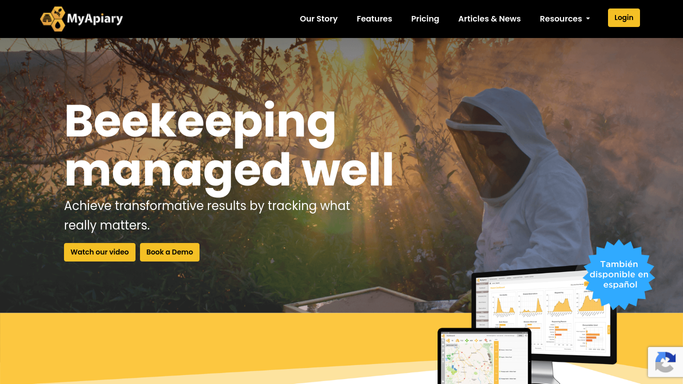
The tablet in the truck reaches everything except the packer
A beekeeper still running the season on spreadsheets should hear the case for the software before hearing any criticism of it.
The Work Planner is the strongest part: a multi-team, drag-and-drop planner where a manager schedules the week across crews and progress is tracked as jobs complete. The reporting dashboard turns that into hive trends, disease incidents and mortality causes, and customisable reports drill into site costs and yield. Assets Tracking means a box moved between yards is accounted for rather than remembered.
That is a real operations system, further along than most software written for a farm. But look at what all of it runs on: entries a person made, on a site a crew visited, about hives the business owns. The planner cannot open the packer's portal to see how last week's drums graded. The dashboard has no way to check what the sugar supplier is charging this month. The reports know exactly what the yards cost and nothing about what the honey earned.
Yard visits planned around what the packer just posted
Turn the hive record around and point it at the companies the honey and the money pass through, because that is the direction nothing currently travels in.
Say the packer's portal is read the morning a batch posts, and each drum's grade and price band is written back against the yard and the harvest date it came off. The sites that pay for themselves get named while there is still a season left to move hives off the ones that do not. Say the sugar and pollen substitute prices are pulled from your two or three suppliers on the day the autumn feed order is being sized, so the order goes out against this week's price.
There is a version of this for the parts nobody enjoys. The register the site numbers came from, checked so a lapsed entry is found in the office rather than by an inspector. Levy or membership statements read as they post. An orchardist's pollination agreement matched against the hives the record shows were actually placed and the dates they went in, so the invoice is built from movements rather than from memory.
Nobody has to come off the yard to read a portal
Not one of those is a hard problem. It is a login, a page and a person with ten spare minutes at the worst time of year to have them.
WebRun is that person's browser. It signs in as you and reads the packer's portal, the supplier's order page, the register and the forecast on whatever schedule you set, then puts what it finds where you will see it: a line in a sheet, a message on the crew's phone. No API, no export button, nothing the packer has to build first.
Reading runs unattended. Anything that writes into a hive record, or that sends a message to a landowner, an orchardist or the packer, is drafted and held for a person. A treatment entry and a pollination invoice both end up as evidence, so a beekeeper signs those off. The cards below are the jobs commercial operators tend to start with.
Questions people ask
Can it enter hive inspections into MyApiary on its own?
No. Reading MyApiary and reading the sites around it runs unattended, but an inspection, a treatment or a hive count written into the record is drafted and left for a beekeeper to confirm. Those entries are the traceability the business is later judged on.
Our packer only publishes grades on a portal with no export. Does that work?
Yes, and it is the usual reason to set this up. It signs in the way your office does, reads the grades, moisture and price bands off the screen, then splits them back to yards and harvest dates. The packer does not have to build or agree to anything.
Do we have to stop using the work planner?
No. The Work Planner stays exactly where it is and keeps scheduling your crews. This covers the sites it was never meant to reach: the packer, the suppliers, the register, the forecast. The two halves meet in the same weekly plan.
10 ready-made MyApiary workflows
Each one names the apps it touches and the exact steps it takes. Open one to read what it will do, then turn it on.
Want one of these running on your own MyApiary?
Show WebRun the process once and it will run it on schedule, in your own private browser environment.