How to Automate MicroBiz
MicroBiz already covers complicated retail stock: matrix products up to three variant factors, special orders and customer orders, purchasing and receiving, credit accounts, serial numbers, multi-store, plus WooCommerce and QuickBooks Online sync. Distributor stock pages, backorder dates and launch calendars sit behind supplier logins, and reading those is where an agent like WebRun works.
 Written by
Devon Ruiz
Workflow engineer
Written by
Devon Ruiz
Workflow engineer
 Reviewed by
Samuel Adeyemi
Integrations writer
Reviewed by
Samuel Adeyemi
Integrations writer
Matrix products are how a pen shop keeps its stock straight
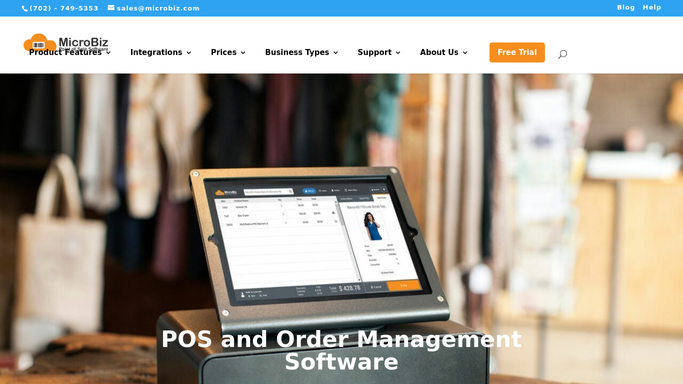
MicroBiz is a cloud point of sale and order management system for small retail and wholesale businesses. It sells to shops carrying awkward stock: appliance dealers, nurseries, feed and farm stores, furniture, pool and spa, uniform suppliers, firearms retailers and repair businesses.
Awkward stock is the point. A stationery and pen shop is a clean example. One fountain pen model exists in four barrel colours and three nib widths, which is twelve things to count and one thing to talk about. The same ink comes as a bottle and as a cartridge pack. A dated planner is worth full price in November and nothing in February.
MicroBiz calls that a matrix product and handles variants from a single factor up to three at once, applying the right SKU and price when the assistant picks the combination. Around it sits the rest of the shop: the customer who wants a nib nobody stocks, the school account buying on terms, the web store, and a till that has to agree with all of them.
A special order is chased through a distributor's own portal
The shop floor is the straightforward half. The other half is a set of questions whose answers live somewhere else.
A customer orders a pen the shop does not carry, and every week after that they ask when it will arrive. Finding out means signing into the distributor, looking up the line, and reading a date that may have moved twice since anyone last checked. Multiply that by the eleven other special orders open at the same time.
The brands do not help. A new collection is announced on a manufacturer's site with a launch date, and the shops that noticed get stock. An ink colour is discontinued, and nobody mentions it until a reorder comes back short. A delivery arrives with two boxes missing and a packing slip that does not match the purchase order, so somebody sits with both documents open and a pen.
Meanwhile the web store sells the same notebook the shop just sold, off the same shelf.
Purchase orders can only reorder lines the shop already carries
MicroBiz does more of this than most small-shop systems, and it is worth naming what is genuinely covered.
Matrix Products handles the variant problem up to three factors at once. The Special Order workflow and Customer Orders follow an item the shop does not stock from the moment it is promised to the moment it is collected, which is the exact record a stationery counter needs. Purchasing & Receiving raises orders and books deliveries in. Credit Accounts run terms for the school or the office buying on account, and Customer-based Pricing gives them their own price. Serial Numbers track individually identified goods, Work Orders cover repairs, and Multi-Store keeps stock straight across locations. The WooCommerce integration keeps the online storefront and the shop floor in step, and QuickBooks Online takes the day's register batch through to mapped ledger accounts.
Everything there works on records already inside MicroBiz, or inside the systems it is wired to.
The distributor's stock page is not one of them. Neither is the manufacturer's launch calendar, the discontinuation notice, the backorder date that moved this morning, or the price a competitor is showing on the same notebook. Those live behind supplier logins, and a purchase order cannot open a browser.
Distributor stock and launch dates arriving ahead of the shelf plan
Point something at those logins on a schedule and the shop stops being the last to know.
Open special orders checked against each distributor's own stock and backorder screen every morning, so the customer waiting on a nib gets a real date rather than a shrug. Manufacturer launch calendars read ahead of the season, so the collection everyone will ask about in September is ordered in July. Discontinuation notices caught while there is still stock in the channel to buy, because a line dying quietly is how a loyal customer starts shopping elsewhere.
The money side is just as mechanical. Distributor cost changes set against the current shelf price, so a pen now selling under margin surfaces the same week rather than at stocktake. Delivery discrepancies checked by reading the supplier's own dispatch record against what the purchase order said. Competitor listings on the handful of lines customers actually price-compare, gathered rather than guessed at.
No API, no developer, and no integration the distributor has any intention of building.
The waiting customer gets a real date
All of that is a person signing into supplier sites and writing down what they see. It is not skilled work, and it is the work that never gets done on a busy Saturday.
WebRun is an AI agent that works a real Chrome browser, signed in as you. It opens a distributor's ordering site, a manufacturer's dealer page or a competitor's shop, reads the screen, and brings the answer back beside the open orders and stock figures in MicroBiz.
Placing an order, emailing a customer about their special order and changing a shelf price stay yours. Each is drafted and waits for approval.
The workflows below are already built, and each one names what it opens.
Questions people ask
Will it place purchase orders with our distributors?
No. It reads availability, cost and backorder dates, assembles the order beside your stock and open customer orders, and stops there. Spending money with a supplier is your call, so the order is drafted for you to send.
Could it overwrite stock levels in MicroBiz?
Only if you set it up that way, and most shops do not. The usual arrangement is read-only: it brings outside answers in and sets them next to your figures, leaving every write to MicroBiz to a person at the counter.
Our distributor site is old and has no export. Is that a problem?
No, that is the normal case here. It reads the page in a browser the way your buyer does, so an ordering site with a login, no download and no feed is exactly the kind it was built for.
12 ready-made MicroBiz workflows
Each one names the apps it touches and the exact steps it takes. Open one to read what it will do, then turn it on.

 Shopify›



Want one of these running on your own MicroBiz?
Show WebRun the process once and it will run it on schedule, in your own private browser environment.