How to Automate Local Line
Local Line automates the selling side of a farm business: separate retail, wholesale, restaurant and distributor storefronts off one inventory, CSA subscriptions with box swaps, harvest and pack lists for every fulfilment day, restock alerts and one-click invoicing. Buyer portals, certifier registers and supplier price pages still need opening, which is where an agent like WebRun fits.
 Written by
Priya Raghavan
Solutions lead
Written by
Priya Raghavan
Solutions lead
 Reviewed by
Grace Okafor
Healthcare operations
Reviewed by
Grace Okafor
Healthcare operations
Local Line turned the farm gate into four storefronts
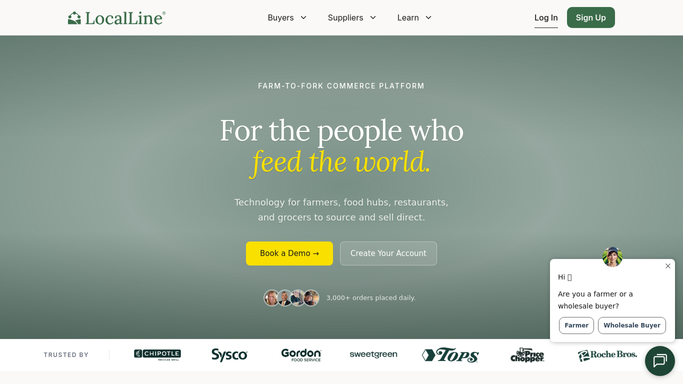
Local Line is the commerce platform a farm sells through when it sells direct. Farms use it, and so do food hubs, CSA operations and small producers who have outgrown a spreadsheet and a folding table.
It exists because one farm sells the same carrot four different ways. A box subscriber pays retail on Tuesday. A chef wants twelve cases at wholesale and thirty days to pay. A grocery buyer wants a price list and a delivery window. A distributor wants a pallet. Local Line runs separate storefronts for retail, wholesale, restaurants and distributors off the same inventory, so a case sold to a kitchen comes out of the same count as a bunch sold at the farm stand.
Around that sits the rest of the week: subscriptions, pick lists per fulfilment day, delivery zones and cutoffs, the invoice and the payment.
Selling four ways means four kinds of chasing
The storefront is the tidy part. Around it is a week made out of other people's systems.
The restaurant that has bought from you for three years still emails a list, because that is how the chef works, and somebody types it in. A wholesale invoice goes out on net thirty and nobody looks at it again until the balance is ninety days old. A grocery buyer's purchase orders live in their own procurement portal, so the account that pays best never touches your storefront. The market you have had a stall at for six years opens applications in January and closes them in February. Feed, seed, packaging and jar prices all moved somewhere last quarter, on four suppliers' own login pages.
None of that is growing anything, and all of it lands on the person who was up at five.
Local Line handles the orders that came through Local Line
That is not a complaint. It is a good share of the job, and a farm should have all of it running before adding anything.
Subscriptions cover CSA boxes, meat shares and standing orders, and Box Builder bundles products out of your existing catalogue so a member can see what is in the box before it is packed. Box Swaps let a subscriber trade out a product you have marked swappable, which removes the emails that used to arrive on a Sunday night. Pick and pack produces a harvest list and an individual pack list for every fulfilment day, and delivery stops export to Routific or Road Warrior. Restock alerts raise a product as it runs low rather than after it sells out. Instant Invoicing turns an order into an invoice with the lines already filled, and LocalPay takes cards and ACH. Price lists put wholesale, restaurant and retail customers on their own pricing without a second catalogue.
Every one of those works on an order that arrived through Local Line, from a customer with an account.
The buyers who cost the most to serve are the ones who never log in.
Wholesale buyers leave their trail on their own websites
The grocer who never signs in to your storefront runs a website of their own, and it is public.
A restaurant group's procurement portal read every Monday morning, so their standing order arrives in the same list as the storefront orders. Wholesale invoices past due, checked against the accounts package before the Tuesday run, so the driver knows which stop needs a conversation. The grocer you supply, checked on their own site: is your yoghurt still listed, at what price, and does it say in stock.
Input costs read where they change. This spring's price on the same feed, the same clamshells, the same half-pint jars, checked against last spring's invoice, with anything that crept up caught before you order. The organic certification renewal and the state licence status, read off the certifier's own register rather than remembered in April. Market stall and grant applications, which open and close on a calendar nobody keeps.
The deliveries too. A pallet that left with a freight carrier on Thursday, followed on the carrier's tracking page, so produce stuck in a terminal is a phone call on Friday rather than a credit note the week after.
Keep the sending human. A renewal note to a CSA member is written by a machine and sent by a person.
Nobody grows anything while logged into a portal
Every week, in the same order: the buyer's portal, the certifier's register, the supplier's price page and the accounts package. That is a procedure, and a procedure does not need a farmer.
WebRun is an AI agent that works a real Chrome browser, signed in as you. It opens Local Line, the buyer's portal, the carrier's tracking page or a supplier account, reads what is there and hands you the differences with the names attached.
Because it works the browser rather than an API, a chef's procurement site with no integration is just another page. It runs on your schedule in your own private environment, you can watch a run and stop it, and anything going to a customer is drafted and waits.
The workflows below are already built, and each one names the sites it opens.
Questions people ask
Will it change our inventory or our prices in Local Line?
Only where you point it. Most of what is useful here reads Local Line and reports, so a run produces a list rather than an edit. Where a workflow does write something back, it says what it writes before you turn it on.
Our biggest chef account orders by email and always will. Does that help?
Yes. An inbox is a site like any other, so an emailed order can be read, matched against that customer's price list and put in front of you as a draft order with the lines already in place. The chef never has to change how they order.
Can it log into a buyer's procurement site that offers no integration?
Yes, and that is the reason for doing this in a browser. It opens the site signed in as you, reads the purchase order page and reports what is there, exactly as a person would. No API, no export button and nothing for the buyer to install.
13 ready-made Local Line workflows
Each one names the apps it touches and the exact steps it takes. Open one to read what it will do, then turn it on.


Want one of these running on your own Local Line?
Show WebRun the process once and it will run it on schedule, in your own private browser environment.