How to Automate StoreHub
StoreHub already automates the counter: BackOffice inventory and staff management, Beep QR Order and Pay, Beep Cashback loyalty, Engage SMS campaigns, and e-Invoice submission to LHDN's MyInvois. Supplier price lists, e-wallet settlement and delivery marketplace takings sit on other companies' logins, which is where an agent like WebRun works.
 Written by
Grace Okafor
Healthcare operations
Written by
Grace Okafor
Healthcare operations
 Reviewed by
Dimitri Vasilev
Logistics analyst
Reviewed by
Dimitri Vasilev
Logistics analyst
Every outlet closes into the same BackOffice
In Malaysia and across Southeast Asia the counter often runs on StoreHub, a cloud point of sale used by restaurants and cafes, retail shops, service businesses, and chains and franchises running a whole group off one account. A bubble tea counter with three branches and a grocery with one are on the same platform.
What sits inside it is the trading day. Every receipt and what was on it, stock counts per outlet, the staff who were rostered and what they rang through, the customers collecting cashback, and the totals when each branch cashes up.
The people are an owner often still standing behind one of the counters, a manager per outlet, and, past three or four branches, one person whose entire job is looking at BackOffice.
Almost every decision the business makes comes out of that screen.
The day's other numbers get counted by hand after close
The till knows what crossed its own counter. It does not know the rest of the day.
So somebody opens the delivery marketplace back ends, because an order placed in a food app never touches the terminal and the day's real revenue is the till figure plus two or three dashboards. Somebody opens the bank to see whether yesterday's card and e-wallet payments settled, and for how much once the fee came off.
Somebody prices the reorder: the cash and carry account page, the supplier who quotes only over WhatsApp, this week's rate against last week's, line by line, hunting for the one that moved.
Somebody checks whether last month's consolidated e-invoice submission was accepted or rejected. Somebody reads the reviews. Somebody works out which of five outlets is quietly drifting.
None of it is hard. All of it happens after close, on a laptop, done by someone who opened at ten.
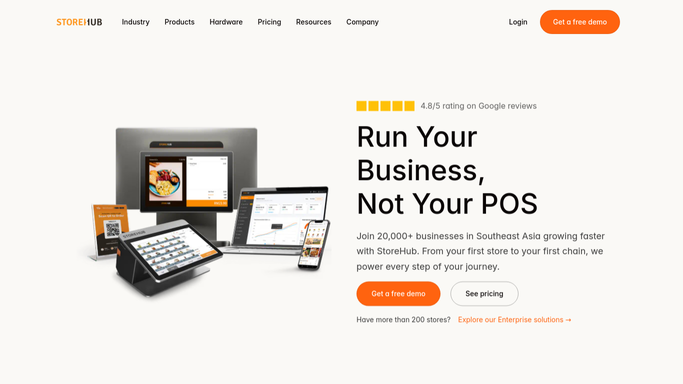
BackOffice reports on the receipts StoreHub printed
StoreHub covers a lot of the shop already, and an owner treating it as a till alone is leaving most of it switched off.
BackOffice is the centre of it: stock levels and low stock tracking per outlet, staff accounts and permissions, products and prices pushed to every branch at once, and sales reporting that rolls the group into one view instead of one login per shop. Beep sits on the customer side. QR Order and Pay lets a table scan, order and pay without a server carrying the ticket, and the order drops into the same POS queue. Beep Cashback runs loyalty off the receipt itself, so a customer scanning the code joins without a card. StoreHub Engage sends bulk SMS to those customers from the same BackOffice. And for Malaysian merchants, e-Invoicing is wired into LHDN's MyInvois, submitting sales, refunds and cancellations and consolidating unrequested transactions monthly.
That is a real back office, and it is built entirely out of what StoreHub itself recorded.
What a supplier charges this week, what the bank actually paid out on Friday, and what a delivery marketplace says yesterday was worth are facts on other companies' websites, behind logins that belong to you.
Every outlet's day can arrive as one finished number
The evening after closing can shrink to one page, written while the shop was still trading.
Yesterday's takings per outlet set beside the marketplace dashboards and the bank, so the day's real number is one figure and any gap between what was rung up and what settled is named that morning rather than found in a reconciliation six weeks later.
This week's price at each supplier against the rate on your last order, so only the rates that moved need reading, with availability next to them, because ordering something the wholesaler does not have costs a week and an empty shelf.
The e-invoice queue checked against the tax portal, so a rejected record is a Tuesday morning correction instead of a discovery next quarter. Reviews from the map listing and the delivery apps gathered together, since a bad week shows there before it shows in the takings. And the same checks run across all six branches, not only the one somebody visited on Thursday.
Then the boring, valuable one: the supplier invoice read against what actually came off the van, so a short case is a credit note while it is still arguable.
Those logins already belong to the shop
Each of those checks is a site you already have a password for and twenty minutes you do not. The only question is who does the opening.
WebRun is an AI agent that works a real Chrome browser, signed in as you. It opens StoreHub BackOffice, reads yesterday's sales and stock across every outlet, then opens the bank, a marketplace back end or a supplier's ordering page, and hands back one short list: what did not match, what is short, and what the group actually took.
It runs on your schedule in your own private environment, and any run can be watched and stopped. Anything that spends money, reaches a customer or reaches the tax authority is drafted and waits for a person.
The workflows below are already built, and each one names what it opens.
Questions people ask
Will it submit anything to LHDN for us?
No. It reads e-invoice status in BackOffice and on the tax portal and reports what was accepted, rejected or still pending. Submitting, cancelling or issuing a credit note stays with the person who answers for the company's filings.
Do we need our suppliers to provide any kind of feed?
No, and that is the point. The agent reads a supplier's page on screen the way you would, using your own login. No API, no export button and no integration built by somebody else has to exist first.
Are our outlet figures visible to anyone else while it runs?
No one. Each workflow runs in your own private environment with its own browser session, sessions are not shared between workflows, and a run can be watched live and stopped. Nothing about your sales is pooled with another business.
12 ready-made StoreHub workflows
Each one names the apps it touches and the exact steps it takes. Open one to read what it will do, then turn it on.



 Shopify›
Want one of these running on your own StoreHub?
Show WebRun the process once and it will run it on schedule, in your own private browser environment.