How to Automate Patient Focus Systems
Patient Focus Systems runs bed management and patient transport for medium-sized hospitals. Access Bed Control matches patients to beds, drives discharge cleaning and raises transport requests, while the transport system dispatches trips against time standards. Once a trip leaves the campus it goes dark, and WebRun reads the sites it ends up on.
 Written by
Marcus Deleon
Support operations
Written by
Marcus Deleon
Support operations
 Reviewed by
Ben Kirkwood
Solutions engineer
Reviewed by
Ben Kirkwood
Solutions engineer
A hospital runs on trips nobody outside it ever sees
Patient Focus Systems makes two pieces of software for medium-sized hospitals, and they are the two least glamorous systems in the building. Access Bed Control handles bed management and placement. The transport system handles trips. Its customers run from community hospitals to academic medical centres, and both products are built on industrial engineering standards, which is a plain way of saying everything in them is measured in minutes.
That measurement is the point. A bed turnaround has a target time. A trip from a ward to imaging has a target time. The department has benchmarks and so does each individual porter, and the reports exist so a manager can see demand by hour of the day and find where the queue forms.
It is unglamorous work that decides whether the hospital functions. A patient in the emergency department waits on a room that waits on a clean that waits on a porter. Nobody writes a press release about a bed turnaround, and every hour depends on one.
The dispatch phone rings for things it cannot fix
Inside the building the system answers the question. The transport desk can see the last known location, the transit status, the destination and the expected arrival time, and a nurse who calls to ask where their patient is gets a straight answer.
The calls that take the time are the other ones. A ward wants to know whether the specimen that went out at six actually reached the reference lab. Somebody in central supply wants to know how many infusion pumps are still out on hire, because the rental invoice arrived and nobody recognises half of it. A coordinator needs to confirm that the wheelchair van the vendor promised for eleven is actually coming, because the patient has been dressed since ten.
Each of those is a different company, a different website and a different login. So they get handled by a person with a phone wedged under one ear, in between dispatching the trips that are the actual job.
Access Bed Control already knows which bed is clean
It is worth saying clearly how much of the internal problem is already solved, because it is more than most people expect from software this quiet.
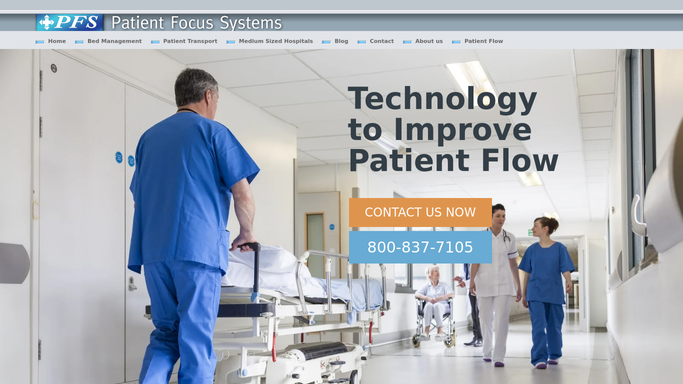
Access Bed Control gives real-time patient and bed visibility, with each bed marked clean, dirty, in process or occupied. Its Patient Placement module matches a patient to a suitable bed against their recorded characteristics, including isolation, telemetry, fall precaution, bariatric and behavioural needs. The Discharge Cleaning module pushes cleaning assignments to housekeeping with completion estimates and notifications, and passes on information about potentially infectious organisms. Transportation requests can be raised from the same screen, and the transport system then avoids scheduling conflicts, coordinates multiple trips and notifies testing areas of arrival times.
All of that describes movement between two points the hospital owns.
The moment a trip crosses the property line, the last known location stops updating, because the next system that touches the patient, the specimen or the pump belongs to somebody else. The courier company, the reference lab, the outpatient dialysis unit, the transport vendor and the equipment hire firm each have a portal, and none of them reports back.
A trip that leaves the building stops being visible
The trail ends at the loading dock because the hospital's own systems stop there, not because the information does. It carries on, on somebody else's screen, in plain sight of anyone with the login.
The courier's tracking page and the reference lab's portal checked after each evening run, so a specimen collected but never logged in is chased that night, while the sample is still good. Rental equipment read off the hire company's portal against your account, so the pumps and specialty mattresses being billed daily are matched against what is genuinely still on a ward.
The outpatient dialysis unit or imaging centre checked the morning of an off-campus trip, so a slot that moved is known before a patient is loaded into a van. Non-emergency transport bookings read back from the vendor's own dispatch board, with anything unconfirmed raised the night before the trip. Linen and sterile supply deliveries confirmed against the supplier's tracking rather than by walking down to the dock.
In a hospital, looking something up and changing something are not the same act. Gathering runs unattended on a schedule. Anything that changes a clinical or billing record, or that reaches a patient, is prepared and left for a qualified person. No decision is being automated here, only the looking up.
Porters should be moving, not waiting on hold
The transport desk is measured in minutes, and a good part of its day goes on hold music belonging to companies it does not work for.
WebRun is an agent that works a real Chrome browser, signed in the way your staff are. It opens the courier's tracking page, the reference lab portal, the hire company's account or the transport vendor's board, reads what is there, and hands back a short list with times against it.
It runs on your schedule in your own private environment, sessions are not shared between tools, and a workflow can be restricted to an explicit list of sites. You can watch a run and stop it.
The workflows below are already built, and each one names what it opens.
Questions people ask
Does it assign trips or dispatch a transporter?
No. Dispatch stays in your transport system and with the people running it. This reads the outside sites a trip touches and hands back a list, so a coordinator decides what to do about anything it finds.
Our reference labs each have their own portal. Is that a problem?
That is the normal case and the main reason to use it. It signs into each portal the way a courier coordinator does, so labs with no interface to the hospital still get checked on a schedule rather than by phone.
Can it tell us which equipment is still out on hire?
Yes. It opens the hire company's portal, reads what is listed as out against your account, and returns a list you can compare against what is actually on the wards. It does not close a rental or place an order.
12 ready-made Patient Focus Systems workflows
Each one names the apps it touches and the exact steps it takes. Open one to read what it will do, then turn it on.


Want one of these running on your own Patient Focus Systems?
Show WebRun the process once and it will run it on schedule, in your own private browser environment.