How to Automate M2X
M2X plans the livestock haul itself. Pen Loading works around animal types and pen sizes, Load-Dependent Routing keeps a loaded trailer off restricted bridges, and plant dashboards carry booking slots. The packer's settlement portal, the certification register and the producer's own count sit outside it, which is where WebRun works.
 Written by
Hannah Vogel
Finance operations
Written by
Hannah Vogel
Finance operations
 Reviewed by
Aiko Tanabe
Product researcher
Reviewed by
Aiko Tanabe
Product researcher
Livestock is the only freight that loses value in traffic
Most freight does not care how long the trip takes. A trailer of finished cattle does. Every extra hour costs condition, and a load arriving outside its window at a plant can lose its slot for the day.
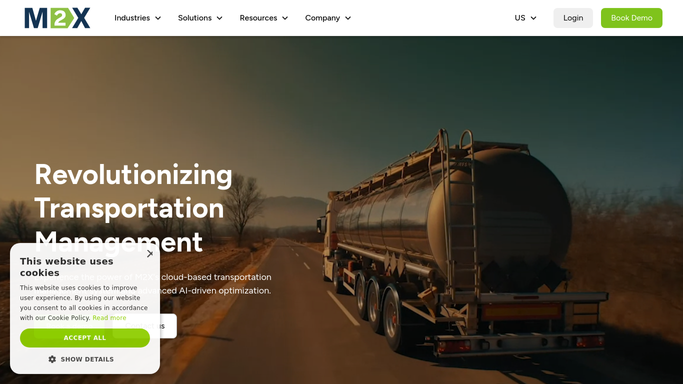
M2X is a cloud-native transportation management system built by M2X Group for exactly this kind of freight: livestock and cattle hauling, with dairy, bulk and general work alongside it. Shippers, carriers running their own trucks and logistics providers subcontracting to others all sit on the same platform, along with the planners, drivers, site operations staff, field agents and producers at either end of it.
The livestock parts are not a coat of paint on a general freight system. Pen Loading plans a load around animal types, pen sizes and loading constraints. Load-Dependent Routing navigates weight-restricted roads and bridges based on what is actually on the trailer. Plant dashboards show scheduled loads with booking slots to keep the yard from jamming.
A pen plan changes three times before the truck leaves
Livestock does not hold still, and neither does the schedule around it.
A producer counts a hundred and eighty head into the pens and a hundred and seventy-six get loaded, because four would not walk. The driver edits the count on his app, which is the easy part. The plant is still expecting a hundred and eighty, the settlement will be worked out on what crossed the scale, and the producer remembers what he wrote on Tuesday.
So the day fills with reconciling. Head counts from three sources that never quite agree. A mortality or a downer on arrival, recorded properly, because it moves the settlement and goes into a welfare record somebody will read later. A plant that pushed its slot times back an hour and told its own yard, not you.
And the settlements, which decide whether a driver stays. Miles, head, waiting time, deadhead, a rate that varies by customer, animal type and location, all of it assembled by hand on a Friday.
Pen loading and load-dependent routing solve the trailer
They solve it well, and a hauler still planning loads on a whiteboard has an easier win available first.
Pen Loading works in animal types, pen sizes and loading constraints rather than pallet spaces. Load-Dependent Routing keeps a loaded trailer off the bridges its weight rules out. The driver app is built for this job specifically: sign on glass, attach photos, send an ETA, edit the animal quantity when four do not walk. Plant arrival dashboards and booking slots give the processor its own view and cut congestion at the gate. A rating engine prices by customer, animal type and location, and the planning algorithms weigh animal time-in-transit, so welfare is a constraint in the schedule rather than something held in a planner's head.
Those are the loads that live inside M2X.
The plant's own scheduling board, when the processor runs its own system, does not. Neither does the packer's settlement portal, the register showing whether a hauler's certification is current, the state permit desk for the weights you are running, or the producer's own note of what he counted into the pens.
A haul that reports itself to the plant and the producer
A planned load has two ends, and both of them keep records nobody in dispatch ever sees.
Head counts reconciled across the loading sheet, the driver's edit and the plant's scale ticket, so three numbers arrive as one line with the difference marked. Mortality and downer events written up as they are reported, with the load, the leg and the time attached, so the welfare record is complete before anyone asks for it. Plant slot times read off the processor's own board each morning, so a truck already rolling hears about a changed window in time.
The office side follows. Driver settlements assembled from the miles, the head, the waiting time and the rate for that animal type, ready for payroll to check rather than build. Hauler certifications read on the register that issues them, with anything lapsing inside sixty days set against loads already booked.
Settlements are money and a welfare record is a document people rely on, so the split holds. Gathering and comparing run unattended. A payment, a filed record or a message to a producer waits for the person accountable for it.
Head counts get squared up overnight
Mechanical is the right word for all of it. Three screens opened in order by somebody who would rather be planning tomorrow.
WebRun is an AI agent that drives a real Chrome browser, signed in the way your planners and dispatchers are. It opens M2X, reads the loads and the driver entries, then opens the plant's board, the packer's settlement portal or the certification register and compares what it finds there.
It runs on your schedule in a private environment of your own, and a workflow can be limited to a named list of sites. You can watch a run while it happens and stop it part way.
The list underneath names, workflow by workflow, the screens it reads and where a planner takes back over.
Questions people ask
Can it release a driver settlement on its own?
No. It assembles the settlement from the miles, head, waiting time and rate, then hands it to payroll with the workings shown. Paying a driver is money leaving the business, so a person approves it, and the disputed lines are flagged rather than quietly resolved.
Livestock plans change all morning. Will it be working off stale numbers?
It reads live screens each run rather than a copy taken overnight, so a slot time changed at six is the slot time it reports at seven. Run frequency is yours to set, and the loads that changed since the last run are listed first.
Would a producer get an update nobody had read?
Never. Arrival notices, count differences and mortality summaries are drafted with that load's own numbers filled in and held for your team to send. Nothing addressed to a producer or a plant goes out without a person releasing it.
10 ready-made M2X workflows
Each one names the apps it touches and the exact steps it takes. Open one to read what it will do, then turn it on.


Want one of these running on your own M2X?
Show WebRun the process once and it will run it on schedule, in your own private browser environment.