How to Automate Karmak Fusion
Karmak Fusion automates the dealership's own floor, tying parts, service, accounting, sales and lease or rental to one ledger, with Karmak Mobile Service in the field and Truckmore facing customers. Supplier stock screens, manufacturer warranty queues and fleet approval portals sit outside it, and an agent like WebRun reads those each morning.
 Written by
Nora Whitfield
Editorial lead
Written by
Nora Whitfield
Editorial lead
 Reviewed by
Priya Raghavan
Solutions lead
Reviewed by
Priya Raghavan
Solutions lead
Downtime is the number a truck dealer gets judged on
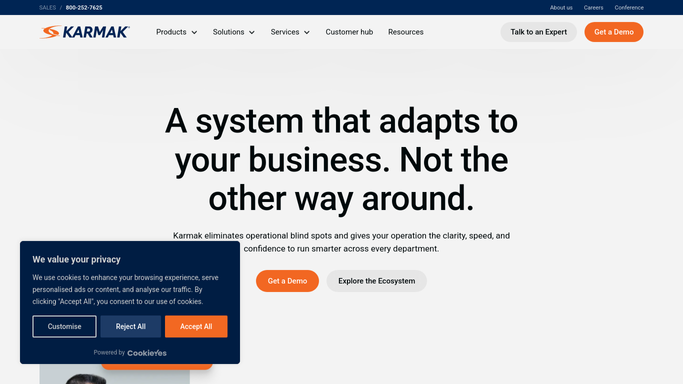
Karmak Fusion is the business system a commercial vehicle dealership runs on. Karmak builds for that industry and nothing else, is employee owned, and Fusion is its core platform: parts, service, accounting, sales, and lease and rental in one on premise system, usually across several locations.
The customers are heavy duty truck and trailer dealers, warehouse distributors, bus and construction equipment dealers, truck equipment upfitters and independent repair shops. What they share is the vehicle in the bay. A tractor unit that is not moving is not stock sitting quietly on a lot. It is a fleet's revenue stopped, a driver reassigned and a load somebody else is now hauling.
So a dealership gets judged on one number more than any other, which is how long a truck sat, and nearly every hour of that is a part, an approval or a claim.
The answers a service writer needs are on supplier portals
A dealership's own system knows exactly what it is waiting for. It does not know when the waiting ends.
A technician diagnoses a unit, the part is not on the shelf, and it becomes somebody else's question: is it at the manufacturer's warehouse, at a second supplier, at a dealer two states away, and what does each of them say about a ship date. Those answers sit on three or four portals and move during the day.
The money side behaves the same way. A warranty claim goes into the manufacturer's own system and its status changes there quietly, over a labour time or a missing photograph. Core return credits wait on somebody chasing them. A national account fleet approves estimates in its own service portal, and a truck can sit in a bay for two days because nobody refreshed a page.
None of that is diagnosis, and none of it sells anything.
Fusion goes deep on the parts counter and the bay
Karmak covers the inside of the business seriously, and a shop should have all of it working first.
Fusion ties parts, service, accounting, sales and lease or rental together with an integrated general ledger and role based financial controls, so a repair order, a part issued and a ledger entry are one chain rather than three. It carries real time inventory visibility across locations with demand forecasting and pricing tools over the top, which is what stops the same part being bought twice at two branches. Karmak Mobile Service puts the work order in a technician's hands in the field, and digital service approvals move an estimate along without paper. Truckmore, which Karmak acquired, handles the customer facing side, Blaze is the hosted option, and OEM integrations bring in what a manufacturer will send.
That is the dealership's own floor, covered properly.
The waiting, though, is almost never on the dealership's floor. It is on a supplier's stock screen, in a manufacturer's claim queue or in a fleet's approval portal, and each of those is a login somebody has to use.
A backorder date can reach the repair order before the customer rings
Read those portals every morning and a shop stops guessing about its own work.
Every open warranty claim checked in the manufacturer's system, so a rejection over a labour code is Tuesday's task rather than an ageing receivable found at month end. Core return credits followed until they actually post.
Availability and ship dates for the parts holding up open repair orders, read off each supplier's screen and landed against the job that is waiting, so a service writer gives a fleet manager a date instead of a promise to ring back. The same part priced across the suppliers who have it, before the counter commits.
Estimates waiting on a fleet's approval watched in that fleet's own service portal, so a unit is not parked for two days over a purchase order nobody chased. Annual inspection dates checked on the state's system against the units you maintain, so a compliance date becomes a booking rather than a roadside problem.
Units approaching a preventive maintenance interval matched against what a customer's own portal shows, so the reminder goes out while the truck is still due.
What gets promised to a customer stays the dealership's call. Anything reaching a fleet contact is drafted and waits for the service manager to send it.
A fleet manager wants a date, not an apology
The date exists. It is on a supplier's screen or in a manufacturer's queue, and somebody has to go and look at it, several times a day, for every unit in the shop.
WebRun is an AI agent that works a real Chrome browser, signed in the way your parts and warranty people sign in. It opens supplier stock screens, the manufacturer's claim system or a fleet's approval portal, reads what is on the page, and puts the answer where the work is: a ship date against a repair order, a rejected claim on a list, an approval that has landed.
It runs on your schedule, held to the sites you allow, and anything going to a customer is drafted for a person to send.
Each workflow below names what it opens.
Questions people ask
Will anything be ordered or committed to a supplier without us?
No. Checking stock, ship dates and prices is reading, and that runs unattended. Placing an order, accepting a price or approving a repair is a commitment, so those are prepared and wait for the parts manager or service manager. The buying decision does not move.
Fusion runs on our own server. Can an agent still work with it?
The outside portals are the work worth handing over, and those are all browser based. Whatever your team reaches in a browser, an agent reaches the same way. Findings can also be delivered into email, Teams or a sheet, so nothing has to be typed back into Fusion by hand.
A supplier redesigns its parts site overnight. Then what?
The run flags what it could not read rather than inventing an answer, and the workflow gets adjusted. That is the trade for needing no API: sites change, but any site your counter staff can use is one an agent can use, including the ones that will never publish a feed.
12 ready-made Karmak Fusion workflows
Each one names the apps it touches and the exact steps it takes. Open one to read what it will do, then turn it on.

Want one of these running on your own Karmak Fusion?
Show WebRun the process once and it will run it on schedule, in your own private browser environment.