How to Automate InnoVint
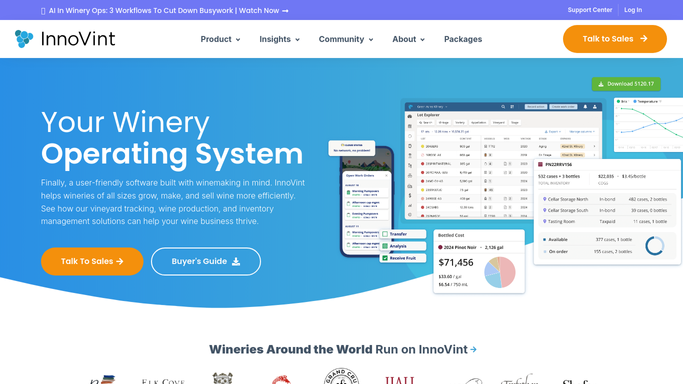
InnoVint is a winery operating system covering vineyard tracking, wine production, case goods and cost accounting. Work orders run the cellar, lab analyses and 3D tank maps keep the lots straight, and the TTB 5120.17 is generated for you. Outside labs, scale houses and club platforms still need opening, which an agent like WebRun does.
 Written by
Grace Okafor
Healthcare operations
Written by
Grace Okafor
Healthcare operations
 Reviewed by
Priya Raghavan
Solutions lead
Reviewed by
Priya Raghavan
Solutions lead
A winery gets one attempt at this every year
InnoVint calls itself a winery operating system, and the phrase earns its keep. It covers the vineyard, the cellar, the case goods warehouse and the cost accounting behind all three, for single-site producers up to multi-brand groups.
A winery is an unusual manufacturer because it gets one run a year. Harvest arrives over six weeks and what is decided in those weeks is fixed until the next one. A lot picked on the wrong day, a fermentation that stuck, a blend committed too early: none of it is fixable next month, and the wine will not be sold for another two years.
So the record has to be exact and it has to be made while the work is happening. InnoVint holds the fruit intake, the lot and its parentage through every rack, addition and blend, the tank or barrel it lives in, the lab numbers taken along the way, and the cost building up against it.
Harvest and the retyping season are the same six weeks
The winemaking is the part that gets done. The paperwork around it queues.
An outside laboratory runs the panel and posts a report, and somebody reads it off a screen and types it against a lot. The scale house at the crush pad issues weigh tags by grower and block, and those tonnages have to reach the production record and the grower payment both. A federal report has a period end that becomes urgent on the last available afternoon. The direct-to-consumer platform holds club allocations that need checking against case goods which may already be promised to a distributor. Glass, corks, capsules and labels carry lead times, and the bottling date does not move.
Each of those is a login and a retype, at the one time of year when nobody has an hour spare.
Work orders and 3D tank maps already run the cellar
InnoVint removes a good deal of that by itself, and a winery should have all of it running before adding anything.
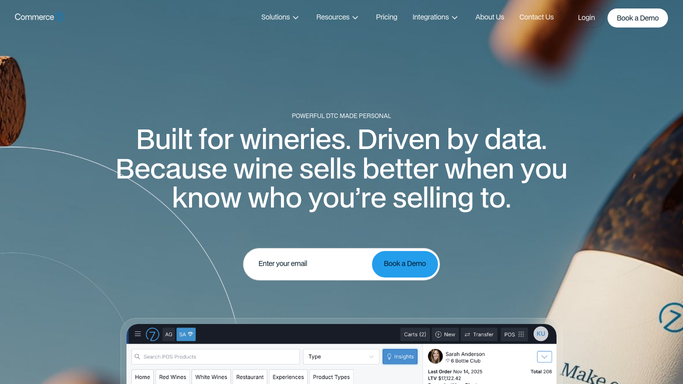
Flexible work orders run cellar operations online or printed, so an addition, a rack or a topping is dispatched and recorded rather than remembered. Lab and analyses management keeps the numbers attached to the lot they came from. Interactive 3D tank maps show what is where and how full. The InnoApp puts inventory and changes on a phone in the cellar, which is where the work actually happens. Compliance is generated rather than assembled: InnoVint produces the TTB 5120.17 for you, along with state-specific reports. Cost of goods sold tracking follows cost through to the case, and it integrates with tools like Commerce7 and QuickBooks.
All of that concerns wine the winery owns, in a building the winery controls.
The laboratory that ran your panel, the co-op scale house, the state that issues your shipping permit and the shop that stocks your bottle are somebody else's systems, and each publishes what you need on a page behind a login.
A lot can collect its own numbers from outside the winery
Give the winery something that opens the laboratory's site, the scale house system and the club platform on its own, and the record starts filling in while the crush pad is still running.
Lab results collected from the laboratory's portal the morning they are released and set against the lots that were sampled, so a volatile acidity number that moved is a Tuesday conversation rather than a Friday surprise. Weigh tags and tonnage read off the scale house or the custom crush facility's system and reconciled against what each grower contract said was due.
Club allocations checked against case goods on hand before an offer goes out, so nothing is promised twice. State shipping permits and their renewal dates tracked where they are published, because a lapsed permit closes a channel quietly and without telling anyone. Retailer and restaurant listings watched to see whether your bottle is still stocked and at what shelf price, and reviews for a new release gathered in the week it lands.
The cellar needs the winemaker more than the inbox does
Judgement is not what any of that takes. It takes somebody who will open eleven sites in the same order every week without losing interest, which describes nobody in a winery in September.
WebRun is an AI agent that works a real Chrome browser, signed in as you. It opens the laboratory's portal, the scale house system, the club platform or a state licensing page, reads what is there and gives it back against the lot, the grower or the case goods it belongs to.
Filing stays human. A federal return is assembled by a machine and submitted by a person, and an allocation offer reaches your club after you have read it.
The workflows below are already built, and each one names what it opens.
Questions people ask
Can it change a lot record in InnoVint?
It can be pointed at one, but the sensible default is a read. Lab numbers, tonnages and allocations come back as a list against the lots they belong to, and a person enters anything that alters a production or compliance record. Gathering runs unattended. Editing the vintage does not.
Our lab posts results to its own site on its own timetable. Can it watch for them?
Yes. It reads whatever the laboratory actually gives you, a portal page or a report you receive, and puts the numbers beside the lots that were sampled. The point is that nobody types them in a second time, not that your laboratory has to change how it works.
Will it email our wine club?
Only after you have read it. An allocation offer or a shipping notice is drafted and held, because a club list is the most valuable thing a small winery owns and a wrong offer to it costs far more than a slow one.
12 ready-made InnoVint workflows
Each one names the apps it touches and the exact steps it takes. Open one to read what it will do, then turn it on.


Want one of these running on your own InnoVint?
Show WebRun the process once and it will run it on schedule, in your own private browser environment.