How to Automate Hint Health
Hint automates the membership book itself. Recurring patient and employer invoices generate on flexible dates, expiring cards are flagged, failed charges retry on a set schedule with dunning behind them, and newly eligible employees are emailed to enrol. Employer rosters and payables portals suit an agent like WebRun.
 Written by
Elliot Nakamura
Platform writer
Written by
Elliot Nakamura
Platform writer
 Reviewed by
Priya Raghavan
Solutions lead
Reviewed by
Priya Raghavan
Solutions lead
In direct care the patient pays the practice, and that changes everything
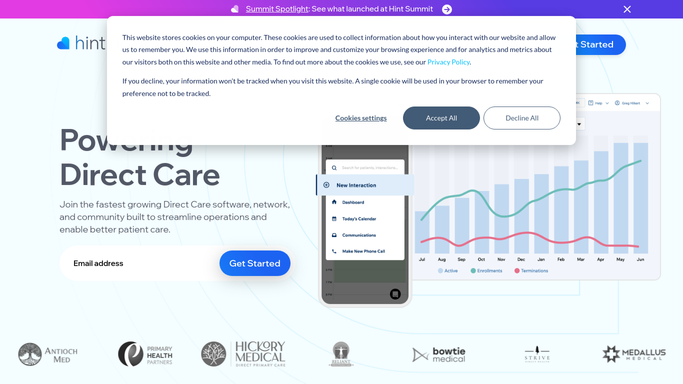
Hint is the platform direct care practices run on, and direct care means the money does not come from an insurer. Direct primary care and concierge practices use it, along with functional medicine, weight management, longevity and aesthetics clinics, onsite employer clinics, and the management organisations running several at once.
The revenue is a subscription. A patient pays a monthly fee, or an employer pays it for them, and in exchange gets a doctor who answers the phone. So the books look nothing like a claims ledger. They look like a membership book: plans, packages, renewal dates, cards on file, and a list of employers sponsoring a group of names.
Hint Core runs that book, Hint Clinical is the chart, and Hint Connect plugs a practice into employer health plans it would not reach alone. The practice itself is small: one or two clinicians, somebody at the front, and increasingly one person whose whole job is employer contracts.
Somebody spends Monday comparing two lists of names
The medicine in a membership practice is the straightforward part.
The week goes on names. An employer sends a roster in their own format and it does not match what Hint shows as active. Three people left in June, nobody told the practice, and the practice has been billing for them since. Two joined in July, have not been enrolled, and one has already tried to book. The HR contact who signs off the invoice has changed jobs.
Then the outside medicine. A panel from a lab that is not on the feed. An imaging report sitting in a radiology portal. A cardiologist's letter that will arrive when it arrives. Somebody logs in and looks, or nobody does, and the patient asks about it at their next visit.
Hint bills what it has been told about
Hint Core takes the administration of a membership book seriously, and most of the retyping a subscription practice expects has already been removed.
Recurring invoices generate for patients and for employers on flexible billing dates, one-off and ancillary charges drop onto the same member's bill, and the invoice goes out as a PDF. Payment sources about to expire are flagged before they fail. When a charge does fail, a retry schedule runs on its own over the following days and reports back each time, with a dunning sequence behind it. Newly eligible employees are emailed a reminder to sign up. Employers get a portal of their own to view and pay invoices and update who is enrolled, and sponsor billing bends to different schedules, adjustments and affiliate rates. On the clinical side sit charting, prescribing, labs and referrals, with dashboards and exports over the top.
Every one of those runs on a record Hint already holds. A membership, an invoice, a card, an eligibility list somebody uploaded.
Hint was not told what the employer's benefits system says today, whether the invoice sitting in that employer's accounts payable was approved or queried, what the radiology portal posted this morning, or what the wholesaler is charging this month for the medication the practice dispenses at cost.
A panel that keeps itself honest against the employer
The truth about who works at that company lives in the employer's own benefits system, which somebody can read every Monday morning.
Set it beside the active memberships in Hint and the three leavers stop being billed for in the same week rather than the same quarter, while the two new hires are enrolled before either tries to book. Enrolment windows watched on the employer's own calendar, so the practice is ready in the week that matters.
Sponsor invoices followed into each employer's payables system until they read approved, because a query raised at fifteen days is a phone call and the same query at ninety days is a relationship. Reports from an imaging centre or a specialist with no feed, collected from their portals as they post and filed against the right chart. Wholesale prices checked against what the practice dispenses, so a protocol is not built around something that has doubled.
Direct care changes who pays; it changes nothing about where the clinical line sits. Fetching a report, comparing a roster and spotting an unpaid invoice can run unattended. Reading a result, changing a chart, and anything that reaches a patient, waits for a clinician.
Reconciling a roster is not medicine
Comparing two lists of names decides whether a month's revenue is right, which is a strange thing to ask a clinician to do after the last patient leaves.
WebRun is an agent that works a real Chrome browser, signed in as your practice is. It opens the employer's benefits system, their payables portal or a radiology site alongside Hint, reads what each one shows, and puts the difference somewhere your team will find it on Monday.
It runs on your schedule in your own private environment, and a workflow can be restricted to a named list of sites. You can watch a run and stop it partway. No chart is changed and nothing reaches a patient without a clinician.
The workflows below are already built, and each one names what it opens.
Questions people ask
Every employer sends us a roster in a different shape. Does that break it?
No, and it is the reason to use it. It reads whatever that employer publishes on their own benefits system or sends across, compares the names against active memberships in Hint, and reports additions, terminations and mismatches. Nothing has to be standardised first.
Could it enrol or cancel a membership on its own?
No. A membership change moves money and changes what a patient is entitled to, so it is prepared as a list for your team and stops there. Hint Core is the right place for the change itself, once a person has decided it is correct.
Is it safe to let something sign in and see patient information?
It sees only what the person signing in sees, sessions run in your own private environment and are not shared between tools, and a workflow can be locked to a named list of sites. You choose which screens it opens, and you can watch a run and stop it.
11 ready-made Hint Health workflows
Each one names the apps it touches and the exact steps it takes. Open one to read what it will do, then turn it on.


Want one of these running on your own Hint Health?
Show WebRun the process once and it will run it on schedule, in your own private browser environment.