How to Automate Diversdesk
Diversdesk automates the dive centre's own paperwork: multi-trip and cross-location scheduling with real-time capacity, paperless registration carrying waivers and the Diver Medical, a rental module with service intervals, and staff calendars tracking workdays and tanks. Certification lookups, marine forecasts and agency sites sit outside it, which is where an agent like WebRun works.
 Written by
Owen Hartley
Workflow engineer
Written by
Owen Hartley
Workflow engineer
 Reviewed by
Priya Raghavan
Solutions lead
Reviewed by
Priya Raghavan
Solutions lead
The manifest decides who gets in the water tomorrow
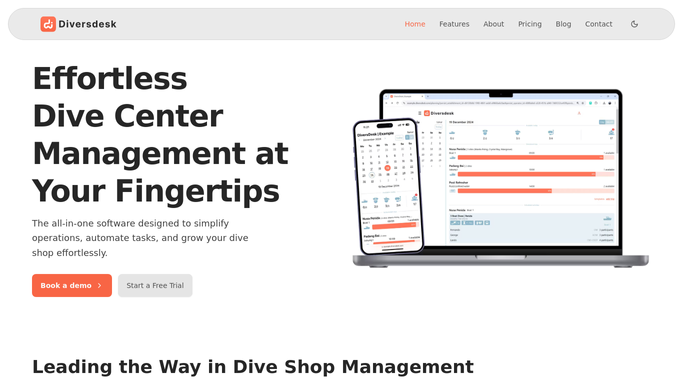
Diversdesk runs the day at a dive centre: the trips, the courses, the gear and the people booked onto them, whether that is one shop or several locations.
A dive centre is not really a shop. It is a boat with a departure time, an instructor roster, a compressor and a rack of gear that has to fit the people who booked. Each of those is a fixed quantity for a given morning. Twelve tanks filled is twelve tanks, and a wetsuit in a size nobody booked is a wetsuit nobody wears.
So Diversdesk holds what decides the morning: which trips and courses run, who is on each one, whether they registered, whether they signed, whether the Diver Medical came back clean, which gear is assigned to them from the day manifest, and which instructor is working. Get the manifest wrong and the boat leaves without somebody's regulator.
The hour before a boat leaves belongs to paperwork
Nobody opens a dive shop to sit at a desk, and the desk is where the morning goes anyway.
Somebody reads the certification level a diver typed at signup and works out whether it is real, which means finding the card, or the agency, or the diver, or all three. Somebody chases the Diver Medical that came back with a yes on it and now needs a doctor's signature before Saturday. Somebody checks the marine forecast for the site the trip is going to, then for the backup site in case the first one is blown out. Somebody counts wetsuits back in and works out which one did not return. Somebody looks at whether the cylinder due its visual inspection is on tomorrow's manifest.
None of it is diving. All of it has to be finished before the boat leaves, and the boat leaves at seven.
Paperless onboarding stops where the diver's card begins
Diversdesk covers the centre's own paperwork properly, and a shop paying for it should have all of this switched on first.
Registration is paperless and multi-language, carrying custom forms, the waiver and the Diver Medical in one flow, stored against the customer record, with pre-registered divers moved through faster on arrival. Waivers are yours to write, including rental agreements, either as standalone signed documents or as an acknowledgement checkbox inside the form. Scheduling handles multi-activity, multi-trip and cross-location bookings with visual capacity, a boat swap when the plan changes, and a block on overbooking. The rental module holds each item with its brand, size and storage location, warns when something is double booked, and raises a service interval set by time or by number of uses. Staff calendars carry availability, workdays and tanks used per instructor, and feed wage calculation.
Every one of those runs on something a diver did inside Diversdesk. The certification card is not one of them. That number belongs to PADI, SSI, NAUI or CMAS and is checked on their site, not yours. Nor is the forecast, the marine park permit, or the hydrostatic test date held by the shop that services your cylinders.
A certification claim can be verified before the boat is loaded
A card number takes seconds to look up, and there are nine of them booked onto Saturday.
Every diver registered since yesterday taken in turn, the agency, level and card number read off the registration and looked up where that agency publishes it: DiveChek on the PADI Pros site for a recreational card, the NAUI diver verification page, an SSI record. What comes back sits beside what the diver typed, and the ones that disagree are the only entries anybody has to read.
Tomorrow's boat dives listed with the marine forecast for each site next to them, wind and swell against the thresholds your centre actually uses, so a trip that needs moving gets moved on Thursday instead of argued about at six in the morning. Students on a course starting Monday whose medical questionnaire is still outstanding, named with the course and the date. Wetsuits and regulators that went out on Tuesday and have not come back, listed by size. Cylinders approaching a visual or hydrostatic date, matched against the trips they are already assigned to.
What a lookup returns is information. Deciding that a diver may do the deep dive is judgement, and it belongs to whoever will be in the water with them.
An instructor still signs the diver off
Reading a card number off one screen so it can be checked on another is neither instruction nor judgement. It is twenty minutes before a boat leaves that nobody has.
WebRun is an agent that works a real Chrome browser, signed in as you. It opens Diversdesk, the agency verification pages, the marine forecast and the cylinder testing site, reads what is on each, and leaves one list with the mismatches and the missing forms named.
It runs on your schedule in your own private environment, and you can watch a run and stop it. Nothing that clears a diver, moves a trip or reaches a customer happens without a person. The workflows below are already built, and each one names what it opens.
Questions people ask
Can it decide whether a diver is qualified for the dive?
No. It reads the agency, level and card number off the registration, looks each one up, and reports what came back. Clearing a diver for a particular dive is an instructor's judgement and stays one, because that call is a safety call rather than an admin one.
Our registration form runs in three languages. Does that break it?
No. It reads the screen the way your front desk does, in whichever language the diver completed the form, and hands back one list in the language you ask for. Nothing has to be re-keyed or exported first.
Will it chase divers about a missing medical form on its own?
No. The chase is drafted with the diver, the course and the outstanding form already filled in, then read and sent by someone at the shop. A note about a medical questionnaire is easy to word badly, so it waits for a person.
10 ready-made Diversdesk workflows
Each one names the apps it touches and the exact steps it takes. Open one to read what it will do, then turn it on.


Want one of these running on your own Diversdesk?
Show WebRun the process once and it will run it on schedule, in your own private browser environment.