How to Automate Chargeflow
Chargeflow automates the dispute itself. Chargeflow Automation collects and enriches evidence, builds the package and submits the response to the processor on your behalf, ChargeScore predicts the odds of winning, and Chargeflow Alerts catches disputes early. Gathering proof from systems it does not connect to is where an agent like WebRun fits.
 Written by
Devon Ruiz
Workflow engineer
Written by
Devon Ruiz
Workflow engineer
 Reviewed by
Nora Whitfield
Editorial lead
Reviewed by
Nora Whitfield
Editorial lead
A chargeback arrives with a clock already running
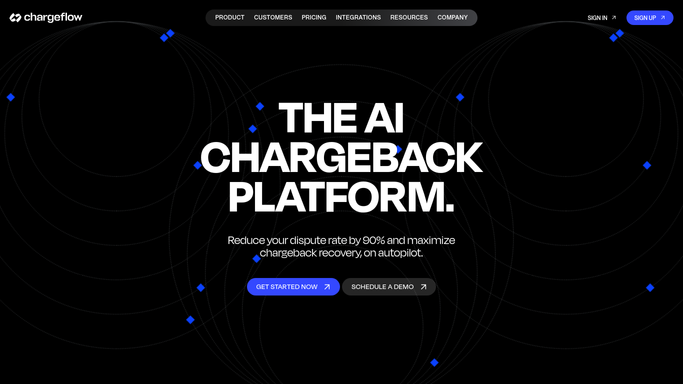
A chargeback is not a refund. It is a customer going to their bank instead of to you, and the bank pulling the money back out of your account while it works out who was right. The merchant gets a reason code, a window to answer in, and a fee either way. Chargeflow is the platform a merchant runs that fight through.
It sits on top of the places the orders and the money already live: processors like Stripe, PayPal and Klarna, stores on Shopify, WooCommerce, BigCommerce and Wix, subscription tools, and the helpdesks where the customer conversation actually happened, Gorgias and Zendesk and Intercom among them.
The people watching it are rarely a dedicated risk team. In most companies disputes belong to whoever owns payments, which means a finance manager, a head of support or the founder. And they matter past the money itself: a dispute rate that climbs far enough turns into a conversation with the processor about whether you keep the account at all.
Support agents end up doing forensics between tickets
Every disputed order is a small investigation, and the material is scattered across half the company.
Someone opens the store admin for the order, then the courier's tracking page for the delivery scan, then the helpdesk for the thread where the customer said the parcel had arrived, then the mailbox for the shipping confirmation. If the product was digital it is login timestamps and download logs from a system support has no account for. If it shipped out of a third party warehouse, the signed proof of delivery is in the warehouse portal.
Each piece becomes a screenshot pasted into a document, in a hurry, because the window is short and nobody wants to be the one who let it lapse. It gets done between tickets, by whoever saw the notification, and how good it is depends entirely on how busy that Tuesday was.
The dispute engine sees whatever the integrations show it
The fight itself is largely handled already, and a merchant should switch on every part of it first.
Chargeflow Automation runs recovery end to end: it collects and enriches the data, collates it into an evidence package and submits the response to the processor on the merchant's behalf, with Complete Control over which disputes it takes. ChargeScore predicts the odds of winning a given chargeback from its models, so effort lands where it can pay. Compelling Evidence 3.0 shapes submissions against Visa aligned models. Chargeflow Alerts, powered by Visa and Mastercard, catches disputes before they harden into chargebacks, and Chargeflow Prevent works on friendly fraud. Chargeflow Insights gives a free view across payments and disputes, and it all plugs into the stores, processors and helpdesks a merchant already runs.
What every piece of that depends on is connection. The evidence it assembles is the evidence its integrations expose. A courier's tracking page, a warehouse portal, an installer's app, a call recording, a marketplace message thread: those sit outside the circle, and so does everything that should happen in your own business once a dispute lands.
Proof of a delivery can be collected long before anyone disputes it
The dispute is only the first event. What it ought to set off happens in systems that never hear about it.
Delivery evidence gathered as orders ship rather than after a complaint: the courier's scan, the signature image, the proof of delivery sitting in the warehouse portal, filed against the order while it is easy to find. The helpdesk thread for a disputed order pulled and read, so a message where the customer confirms receipt gets attached instead of half remembered.
Then the downstream work nobody has time for. The chargeback and the recovery written into the ledger against the right order, so the month reconciles without a hunt. The same buyer's other open orders found before one of them ships to somebody who already took the money back. Repeat disputers listed by email and card for a person to decide about. Access to a digital product checked, so an account that charged back is not still logged in and using it.
Once a week, one page: what was disputed, what was recovered, what is still open, and which products the disputes keep arriving from.
Evidence is a fetch, a refund is a decision
Pulling an order, a tracking scan and a support thread into one place is clerical work that happens to be urgent. Deciding to ban a customer or hold a shipment is not.
WebRun is an AI agent that drives a real Chrome browser, signed in as you. It opens the store admin, the courier's site, the warehouse portal, the helpdesk and Chargeflow itself, reads what is on the screen, and hands back the evidence pack, the ledger entry or the list worth a look.
It runs on your schedule inside your own private environment, and you can watch a run and stop it. The boundary is deliberate: it gathers, reconciles and drafts. It does not issue a refund, block a buyer, cancel a subscription or email a customer on its own. Those wait for someone who can weigh a customer against a loss.
Each workflow below names the systems it opens.
Questions people ask
Does it answer a chargeback or refund a customer by itself?
No. Submitting a dispute response is Chargeflow's job, and refunding, banning or messaging a buyer is yours. It collects the evidence, writes the reconciliation and prepares the list, then stops at anything that moves money or reaches a customer.
If Chargeflow already builds the evidence package, what is missing?
Whatever its integrations do not reach, plus everything after the dispute. A courier's proof of delivery page, a third party warehouse portal, an installer's app and a call recording are outside the connected set, and so are the ledger entry, the blocklist and the shipment that should be held.
The proof of delivery only exists inside our 3PL portal. Can it reach that?
No, that is the usual reason to reach for this. It signs into the portal in a real browser the way a warehouse clerk does, opens the consignment, reads the delivery scan and the signature, and saves them against the order. No integration has to exist first.
10 ready-made Chargeflow workflows
Each one names the apps it touches and the exact steps it takes. Open one to read what it will do, then turn it on.



 Shopify›Shopify›
 Shopify›
Want one of these running on your own Chargeflow?
Show WebRun the process once and it will run it on schedule, in your own private browser environment.