How to Automate Traction Ag
Traction Ag automates farm bookkeeping that general ledgers never handled: one-click Schedule F and 1099s, land agreements that invoice landlords from field records, and imports from John Deere Operations Center and Climate FieldView. Elevator, co-op and lender portals stay outside it, which is the gap an agent like WebRun fills.
 Written by
Marcus Deleon
Support operations
Written by
Marcus Deleon
Support operations
 Reviewed by
Marta Ellison
Automation strategist
Reviewed by
Marta Ellison
Automation strategist
A farm's profit is measured by the field, not the month
Ask a farmer how the year went and the answer is not a profit and loss statement. It is a number per acre, or a number per bushel, and it is different on the ground behind the house than on the rented eighty across the road.
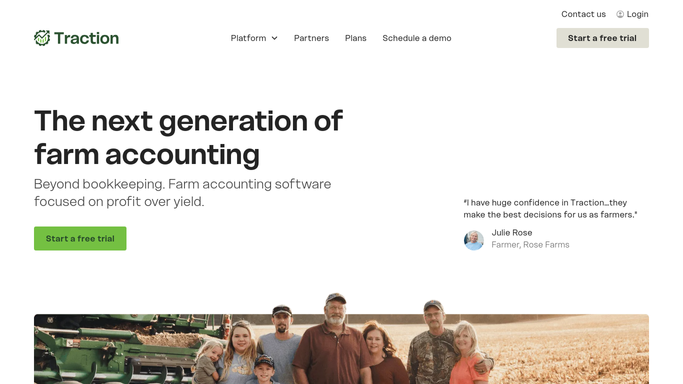
Traction Ag is farm accounting built around exactly that. It keeps the books, but the books are wired to the fields: seed, chemical and fertiliser costs allocate to specific fields, harvest records come back from the machine, and what falls out is a cost per acre and a break-even per bushel a grower can stand behind.
It also carries the parts of farm bookkeeping that a general accounting package never had. Several entities and several crop years running at once. Land agreements with landlords on cash rent or crop share. Prepay balances at the co-op. Grain in the bin and grain already sold forward. A Schedule F at the end of it.
Grain paperwork lands in the middle of harvest
Then there is the paper, and it turns up at precisely the times of year nobody is at a desk.
The elevator settles a load and posts a settlement to its grower portal, carrying the moisture discount and the shrink, and it needs matching to the contract it was priced against and to the deposit that hit the bank. The co-op statement shows a prepay balance that has to square with what Traction says is left. A chemical invoice covers four products across nine fields, and someone has to split it.
Landlords need W-9s before January and a rent bill on time. The lender wants an operating note balance and a current inventory. At year end the 1099s need names, numbers and totals that live in four different places.
Most of it gets done in the evening, or on a rain day, or in February, which is to say later than it should be and all at once.
Schedule F takes one click, the elevator takes a login
Traction handles a great deal of this natively, and it is genuinely better at farm work than a general ledger bolted onto a farm.
Schedule F generates in one click, filtered by entity and date range, and updates as transactions go in. So do the 1099s. Land agreements are crop-year specific and can pull the inputs actually applied to a sharecropped field, work out the landlord's share and produce an invoice without anyone adding up line items by hand. Field records flow in from John Deere Operations Center and Climate FieldView through the import queue. Bank and card feeds, FS bill import and Paylocity payroll all connect.
The pattern is that Traction is excellent at everything it has been wired to, and blind to everything else.
The elevator's grower portal is not wired to it. Neither is the co-op account page, the lender's online banking, the seed dealer's statement or the crop insurance portal. Those hold the numbers the farm is actually judged on, and each one is a person with a password.
Break-even can be compared with today's bid
The cost side already lives in Traction. The price side lives on somebody's website, and nothing joins them but a person with two tabs open.
New-crop bids at the three elevators you actually haul to, read each morning and set against the break-even per bushel Traction already calculates, so the fields sitting underwater are obvious on the day the board moves rather than in November.
Settlements pulled from each grower portal as they post and matched to the contract and the deposit, with the discount and the shrink named, so a load priced against the wrong contract is caught in a week instead of at year end. Prepay at the co-op checked against the balance in the books. Input invoices read off the supplier's portal and entered against the right field and crop year while the applicator's ticket is still fresh.
And the landlords: which ones are missing a signed agreement or a W-9, listed in November with a request drafted for each, rather than discovered on the tenth of January.
Bookwork should not wait for a rain day
Marketing grain takes nerve and a view on the board. Collecting the numbers behind that view takes neither.
WebRun is an AI agent that drives a real Chrome browser, signed in as you. It opens Traction Ag, the elevator's grower portal, the co-op account and the bank, reads what each one shows, and sends back the comparison: today's bids against break-even, the settlements that did not tie, the landlord who still owes a W-9.
Because this is money and tax work, only the reading runs on its own. A bill, a payment run or a request to a landlord is drafted and left for you. Nothing is sold, paid or filed by an agent, and you can watch any run and stop it.
The cards below are where most farms start.
Questions people ask
Will it sell grain or move money?
No. Marketing decisions and payments stay with you. WebRun reads bids, settlements and balances and puts them beside your own numbers. Bills and payment runs are drafted in Traction or QuickBooks and left unpaid until you approve them yourself.
Does it work if my elevator has no API?
Yes, and that is the usual case. WebRun signs into the grower portal in a browser exactly as you would, opens the settlements page and reads what is on it. No API, no export button and no integration built by anyone else is required.
What if I farm under three entities?
Each entity is handled separately. Traction already filters by entity, and a run is told which entities and crop years it covers, so settlements, prepay balances and landlord lists come back split the same way your books are.
10 ready-made Traction Ag workflows
Each one names the apps it touches and the exact steps it takes. Open one to read what it will do, then turn it on.


Want one of these running on your own Traction Ag?
Show WebRun the process once and it will run it on schedule, in your own private browser environment.