How to Automate Petrofly
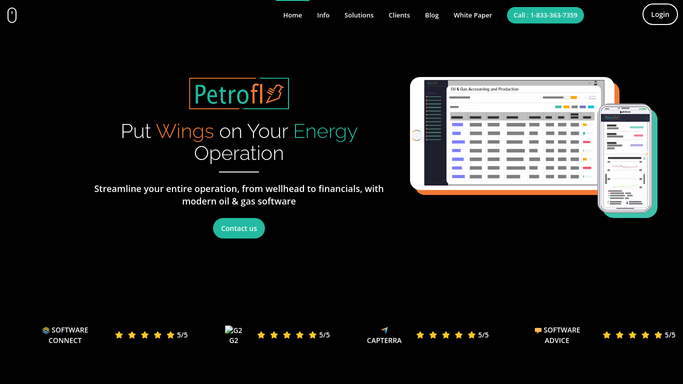
Petrofly automates the division. Its Owner Relations Suite computes joint interest billing and royalty shares as purchase statements and invoices are recorded, holds interest partners, division orders and title, manages suspense, and produces owner 1099s. Collecting the purchaser statements and owner documents that feed it is what an agent like WebRun does.
 Written by
Tom Kessler
Field operations analyst
Written by
Tom Kessler
Field operations analyst
 Reviewed by
Julian Adeniyi
Retail operations
Reviewed by
Julian Adeniyi
Retail operations
A barrel sold has to be split before anyone gets paid
Oil and gas revenue accounting is division. A well produces, a purchaser buys what came out of it, and the money coming back has to be split among everyone with an interest in that lease: the operator, the working interest partners, the royalty owners, the people who inherited a fraction of a mineral right decades ago. Petrofly is the software an upstream producer runs that split through.
It covers the ground from the wellhead to the financials in one system: daily production, run tickets and well allocation on one side, general ledger, payables and receivables on the other, and the owner relations work between them. Users run from family operations with a few dozen wells to larger producers, plus non-operating interest owners.
The part that generates phone calls is owner relations. A royalty owner who cannot follow their check, an heir who has moved, a partner querying a joint interest bill: they all land on one desk, and every answer traces back through a division order.
Revenue week runs on paperwork nobody controls
Production gets measured on the lease. Almost nothing about the money starts under the producer's own roof.
A purchaser's check detail arrives in their own owner portal, in their own layout, on their own day of the month, and somebody signs into each one to pull it. The volumes rarely match what the field reported, so the gap gets chased back through run tickets. Price adjustments turn up months later for a period already closed and distributed.
On the owner side it is documents. A division order comes back signed, or comes back with the interest crossed out. A W-9 never arrives, so the owner sits in suspense. A letter comes back undeliverable, and the address in the system is now wrong with nobody recording it. A death becomes a probate document, a new name and a decimal to recut.
Every one arrives by post, by email or in somebody else's portal, and every one gets keyed by hand.
Petrofly does the arithmetic, not the collecting
The arithmetic is where Petrofly is genuinely strong, and a producer should run everything through it before adding anything alongside.
The Owner Relations Suite computes joint interest billing and royalty shares automatically, allocating revenue and expense as purchase statements and invoices are recorded, so a JIB or royalty statement is a single click rather than a workbook. Interest Partners and Division Orders hold the ownership record, Title Management accounts for changes in title, and Suspense Management holds back what cannot be paid yet. Royalty Reconciliation distributes purchase statement amounts, Automatic Withholding and Shut-In Royalty carry the standing rules, and 1099 Assistance produces Copy B for interest owners at year end.
The condition sits inside Petrofly's own description of the work: the allocation happens as purchase statements and invoices are recorded into the system. It divides correctly on what has been entered. Getting the purchaser's statement out of their portal, the signed division order out of the mail and the corrected address off a returned envelope is still a person at a keyboard.
Every purchaser statement can be reconciled the week it lands
Let the recording end look after itself and revenue week changes shape.
Each purchaser's owner portal opened as the statements post, the check detail read off the page, and the volumes and prices set against what the field reported for the same month, so the lines that disagree are a short list by the time anyone sits down with them. Prior period price adjustments caught when they appear rather than when a partner asks about them.
Owner records watched instead of remembered. Division order packets prepared, and read back as they return, with the ones an owner altered separated out for a land person to look at. Addresses tested against the postal lookup, and returned mail matched to the owner it came from. Missing W-9 forms and identification numbers listed with the suspense balance sitting behind each one, so the reason an owner has not been paid fits on a line.
And the standing checks: regulatory reporting sites read for what they show as filed, county records checked for the conveyance behind a claimed interest, and every suspense balance aged so nothing sits quietly for years.
The owner desk gets its mornings back
Opening six purchaser portals and typing out what is on them is the same job every month. Deciding whether an interest is good, and whether an owner can be paid, is not.
WebRun is an AI agent that drives a real Chrome browser, signed in as you. It opens each purchaser's owner portal, the mailbox, the county and regulatory sites and Petrofly itself, reads what is on the screen, and hands back the reconciliation, the exception list or the draft package.
It runs on your schedule inside your own private environment, and you can watch a run and stop it. The line is fixed: it gathers, compares and drafts. It does not release a distribution, pay an owner out of suspense, change a decimal interest or send anything to an owner. Those wait for the land or revenue person accountable for the interest.
Each workflow below names the systems it opens.
Questions people ask
Will it pay an owner or change a decimal interest on its own?
No. Releasing a distribution, paying out of suspense and recutting an interest all stay with a person. It reads the purchaser portals, the mail and the county records, compares what it finds to what Petrofly holds, and puts the differences in front of the revenue or land desk.
Each purchaser publishes check detail in its own layout. Can it cope?
No, because it reads pages rather than files. Each purchaser site is opened the way your revenue clerk opens it, the check detail is read off the screen in whatever layout that purchaser uses, and the figures come back in one consistent shape for comparison.
Owner records include personal details. How is that handled?
It runs inside your own private environment, under a policy listing exactly which sites it may open and what it may type. Runs can be watched and stopped, and most producers start it read-only, reporting differences before it is allowed to write anything into Petrofly.
10 ready-made Petrofly workflows
Each one names the apps it touches and the exact steps it takes. Open one to read what it will do, then turn it on.


Want one of these running on your own Petrofly?
Show WebRun the process once and it will run it on schedule, in your own private browser environment.