How to Automate GoTab
GoTab automates the order and the tab around it. The Manager Dashboard tracks performance from a phone, Online Order Aggregation pulls third-party orders into the same POS, and Loss Prevention reauthorizes an open tab as it grows. Vendor settlement, distributor pricing and marketplace payout statements sit outside all of that, which suits an agent like WebRun.
 Written by
Marcus Deleon
Support operations
Written by
Marcus Deleon
Support operations
 Reviewed by
Aiko Tanabe
Product researcher
Reviewed by
Aiko Tanabe
Product researcher
The tab travels with the guest, not with the table
GoTab is built around the idea that the guest orders from a phone they already own. A bartender opens an Easy Tab with a swipe or dip of a card, GoTab sends a link to that tab to the guest's mobile number, and the tab follows them from the bar to the patio to a second kitchen on the other side of the room. Self-ordering kiosks, the Pocket handheld and an ordering page cover whatever the phone does not.
It turns up where a table number has stopped meaning much: breweries and taprooms, food halls with a dozen kitchens under one roof, eatertainment venues, family entertainment centres, movie theatres, hotels and multi-vendor sites. A Kitchen Display System puts each order in front of whichever kitchen owns it, and an on-premise server keeps the place trading when the connection drops.
By closing time GoTab holds every order, the kitchen that fired it, the tab it sat on and the card that paid for it.
Every operator under one roof wants its own numbers
A food hall is not one business. It is ten businesses sharing a lease, a dish pit and a point of sale.
So the morning after is a settlement exercise. Each vendor's share of the night has to be worked out and paid, and each vendor wants to see the working before they accept it. The venue's own bar sits on top of that. The third-party marketplaces pay on their own timetable, minus a commission and minus adjustments nobody itemised. The distributor's portal has this week's keg price on it, behind a login the beer buyer keeps in a notes app.
Meanwhile there is an event on Saturday and the headcount for it lives on a ticketing platform that has never heard of the kitchen. All of it ends up in one spreadsheet, built by hand, usually by the general manager, usually on a Monday when the hall is shut.
The Manager Dashboard answers for the tab, not the keg
On the order and the money around it, GoTab is already thorough. Nothing below is an argument for turning any of it off.
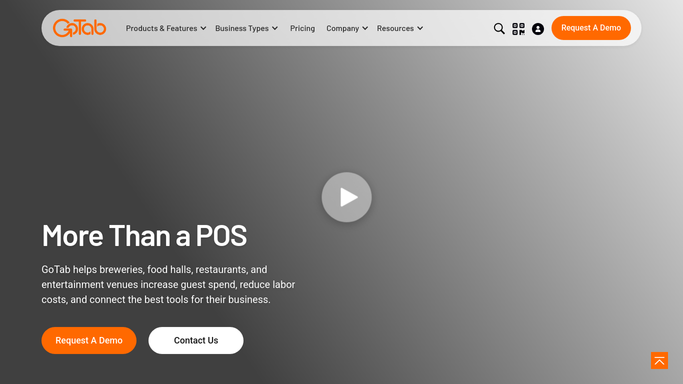
The Manager Dashboard lets a manager view tabs, close them, issue refunds and adjust menus and products on the fly, and tracks daily, weekly and monthly performance from a phone. Online Order Aggregation consolidates orders from your third-party marketplaces into the GoTab POS, with full integration to the KDS and printers, so nobody is retyping a delivery order off a tablet. Loss Prevention does something different again: an automatic authorization when a guest opens a tab on a card, repeated as each new order lands, so the balance is always covered. Gift cards, loyalty and memberships hang off the same guest record.
Every one of those is fed by something that happened on a GoTab order. That is the boundary, and it is a fair one. The distributor delivering the kegs is not a GoTab channel. Neither is the bank, the marketplace's payout statement, the landlord's percentage-rent report, the ticketing platform selling Saturday, or the health department that inspected the hall in March. The revenue side is instrumented. The cost side is a stack of logins.
The night can be settled with every vendor by morning
Monday changes shape once those logins get opened while the hall is still empty.
Each operator's share worked out from the orders GoTab recorded, set against what the venue actually paid out last cycle, so a stall owner's question is answered before it gets asked. The marketplace payout statements read and matched against the orders aggregation brought in, with the commission and every adjustment named rather than assumed.
The distributor's portal opened for this week's keg and case prices against what the last delivery was invoiced at, so a pour cost that moved shows while the menu can still change. Kegs tapped compared with pints rung up, so the difference is a figure rather than a suspicion. Saturday's ticket count read off the ticketing platform and put in front of whoever writes the prep list. Last night's reviews collected, with a reply drafted and the tab it refers to attached.
Keep the line where hospitality already keeps it. Reading, matching and listing can run while the hall is dark. Paying an operator, ordering from a distributor and answering a guest in public wait for somebody who works there.
Splitting the night between ten kitchens is arithmetic
Nobody opens eight sites at seven in the morning because it is interesting. They do it because the split has to be right, and it has to be right before the operators start asking.
WebRun is an AI agent that works a real Chrome browser, signed in as your venue is. It opens GoTab, the marketplace dashboards, the distributor portal and the bank, and leaves the night's settlement where your managers and your operators already look for it.
It runs on your schedule in your own private environment, and a workflow can be locked to a named list of sites. You can watch a run and stop it. Nothing that pays anybody or replies in public goes out without approval.
Each workflow below names what it opens and what it brings back.
Questions people ask
Can it pay our vendors once it has worked out the split?
No, and that is deliberate. Paying anybody is kept behind a person. What you get is the split calculated, the working shown and any discrepancy flagged, in a form a manager can check in two minutes and then approve through whatever you already pay with.
We run a food hall with separate operators. Can each get their own version?
Yes. A workflow can produce one statement per operator from the same run, so each kitchen sees its own orders, refunds and share without seeing anybody else's. The venue gets the consolidated view alongside it, built from the same figures.
Does this sit on our terminals or the kitchen screens?
Neither. It works in a browser in your own environment, so nothing is installed on a Pocket handheld, a kiosk or the KDS. A workflow running at six in the morning has no effect on the floor, and service is never waiting on it.
11 ready-made GoTab workflows
Each one names the apps it touches and the exact steps it takes. Open one to read what it will do, then turn it on.



Want one of these running on your own GoTab?
Show WebRun the process once and it will run it on schedule, in your own private browser environment.