How to Automate Credit Repair Cloud
Credit Repair Cloud already automates the round: one-click Credit Data Import, a Dispute Wizard that finds negative items, Letters by AI and the Dispute Letter Library for wording, CloudMail for posting, and Automated Progress Emails for clients. Watching bureau results, failed cards and state bonding still means a browser, which suits an agent like WebRun.
 Written by
Elliot Nakamura
Platform writer
Written by
Elliot Nakamura
Platform writer
 Reviewed by
Hannah Vogel
Finance operations
Reviewed by
Hannah Vogel
Finance operations
A credit repair business runs on rounds, not on hours
Almost everything a credit repair company owns lives in Credit Repair Cloud, the software those businesses are run on: the client, their imported credit reports, the negative items being challenged, every letter sent on their behalf, and the money they pay each month. Its users are the owners of those companies, and the mortgage brokers, real estate agents, car dealers and tax preparers who added credit work to something they were already selling.
The unit of work is a round. A letter goes to a bureau or a furnisher disputing specific items on a specific report. Then nothing happens for about thirty days, because that is how long the other side has. Then a fresh report comes in, gets compared with the last one, and whatever came off is the result.
That rhythm shapes the whole business. Clients are billed monthly, results arrive in bursts, and the file in Credit Repair Cloud is the only place the two are visible side by side.
The thirty days between rounds is where clients quietly leave
A client pays at the start of the month and then, from their side, nothing visible happens. They cannot see a letter in transit. The bureau's response goes to the company, not to them. What they can see is a charge on a card.
So the job is half communication, all of it chased by hand. Somebody pulls the new report, reads it against the previous one, finds what came off, and tells the client before the client decides nothing is happening. Somebody notices the card that declined on the third while letters still go out on the twelfth.
Around that sits the intake work. The agreement sent and never signed. The identity documents a bureau will demand and the client has not photographed. The lead who filled in the form on Tuesday and heard nothing since. And behind all of it the company's own compliance file, because credit repair is registered and bonded work in a lot of states, and none of those dates announce themselves.
The Dispute Wizard writes the letter and then waits
The platform does the round itself properly, and a company doing any of this by hand is losing time it will not get back.
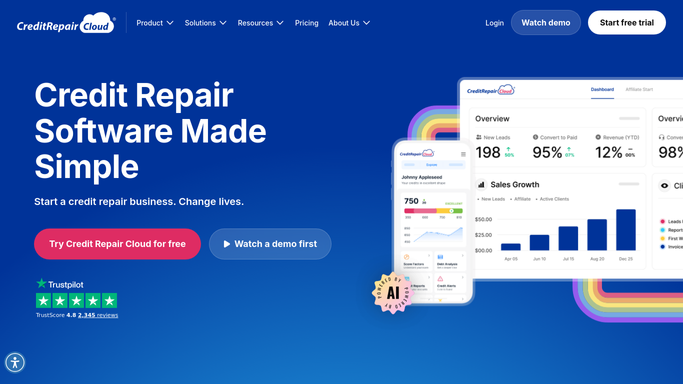
Credit Data Import brings the bureau data in with one click. The Dispute Wizard identifies the negative items and builds the letters against them, with Letters by AI generating unique wording that is less likely to draw a stall response. CloudMail prints and posts the finished letters. Progress Tracking and one-click re-importing handle the next round, and Automated Progress Emails tell clients when an import finishes or a challenge goes out.
Every one of those starts from something already inside the account: a report that was imported, a client who has already signed. The payment processor, the state registration record, the surety bond, the leads sitting in whatever form captured them and the responses arriving in the office inbox are somewhere else, behind their own logins, and none of them will speak up.
A deletion should reach the client before the invoice does
An assistant who opened those accounts every morning would change what the month feels like from the client's side of it.
Each client's newest report compared line by line with the one the round was built from, so an item that came off is known within days and reaches the client while it still feels like progress. Card failures and cancelled subscriptions read from the processor and set against who is still receiving letters, because a client in arrears with a round in the post is postage spent on nobody.
Signed agreements and identity documents checked as received before the next round is prepared, not discovered missing when a bureau rejects the dispute over them. New leads gathered from wherever they arrived and set against who actually booked, so the ones who went quiet on Tuesday still get a follow-up on Thursday.
And the company's own paperwork. State registration status and surety bond expiry read off each state's register and listed by date, because the fastest way to stop a credit repair business is a lapse nobody diarised.
A dispute is a legal claim, and a person signs it
Comparing two credit reports line by line is the first thing dropped in a busy week, and it is exactly what the client is paying to have noticed.
WebRun is an AI agent that works a real Chrome browser, signed in as you. It opens Credit Repair Cloud, reads the clients and rounds you point it at, then opens the payment processor, a state register or your own inbox, and puts what it found next to the file it belongs to.
Gathering and comparing run unattended on a schedule you set, and a run can be watched and stopped. Anything that changes a client record, sends a letter or reaches a client or a bureau is drafted and waits for someone qualified to approve it. A dispute is a legal assertion made on another person's behalf, and this is regulated work.
The workflows below are built already, and each one names what it opens.
Questions people ask
Will it send dispute letters or contact a bureau for us?
No. Letters stay with Credit Repair Cloud and with the person responsible for them. This reads and compares: new reports against old, payments against clients, documents against what a round needs. Anything sent to a bureau, a furnisher or a client is prepared and held for approval.
Could it overwrite a client's file by mistake?
Not if it is only pointed at reading, which is the normal setup. It compiles findings and hands them over. Where a workflow does write, it writes what you specified and nothing more, and the run is visible while it happens so a wrong turn can be stopped.
We are registered and bonded in several states. Does it help with that?
Yes, by watching the dates. It reads each state's own register for your registration status and your bond expiry, then lists what falls due and when. It does not file a renewal or make a compliance judgement. It puts the deadline in front of the person who owns it.
12 ready-made Credit Repair Cloud workflows
Each one names the apps it touches and the exact steps it takes. Open one to read what it will do, then turn it on.





Want one of these running on your own Credit Repair Cloud?
Show WebRun the process once and it will run it on schedule, in your own private browser environment.