How to Automate Computrition
Computrition automates the hospital kitchen through its Hospitality Suite. Foodservice Operations Management runs inventory, vendor ordering and production, Nutrition Care Management holds diet orders and tray delivery, and the Automated Menu Planning Suite writes the menus. Distributor order guides, allergen spec sheets and recall notices sit outside it, and an agent like WebRun reads those.
 Written by
Priya Raghavan
Solutions lead
Written by
Priya Raghavan
Solutions lead
 Reviewed by
Nora Whitfield
Editorial lead
Reviewed by
Nora Whitfield
Editorial lead
The tray is where a diet order finally lands
Computrition is foodservice and clinical nutrition software, used by hospitals and by military foodservice operations across North America. Its platform is the Hospitality Suite, and it sits between two worlds that otherwise never meet: the physician who wrote a renal, two gram sodium diet, and the cook who has to plate four hundred lunches by half past eleven.
A hospital kitchen is a production operation with a clinical record attached. Every tray belongs to a named patient in a named bed, carries a diet a doctor ordered and a dietitian interpreted, and has to be right on the day it is served. A wrong tray is not a complaint about the food. It is a patient on a thickened liquid diet handed something they cannot safely swallow.
So the software holds the recipes, the master menu, the diet orders, the census by unit, the production forecast, the stock in the store rooms, and the record of what was served to whom.
Somebody retypes the order guide into the recipe file
The clinical side of this operation is watched closely. The purchasing side is where the week quietly goes.
Food cost is built from ingredient prices, and those sit in a distributor's order guide behind a login, moving week to week. Somebody is meant to keep them current. In practice they get updated when a food cost report looks wrong.
Around that sits everything else the kitchen does not control. An item is discontinued and the substitute arrives in a different pack size. A manufacturer reformulates a product and the allergen statement on its spec sheet changes with it. An enteral formula goes on backorder at the distributor while eleven patients are ordered on it. A recall notice goes out and somebody has to work out whether that lot number is on your shelf. A purchasing agreement moves tier and the price you budgeted is not the price you pay.
Hospitality Suite already holds the recipe, the diet and the count
Computrition covers a great deal of this, and a kitchen should have all of it running first.
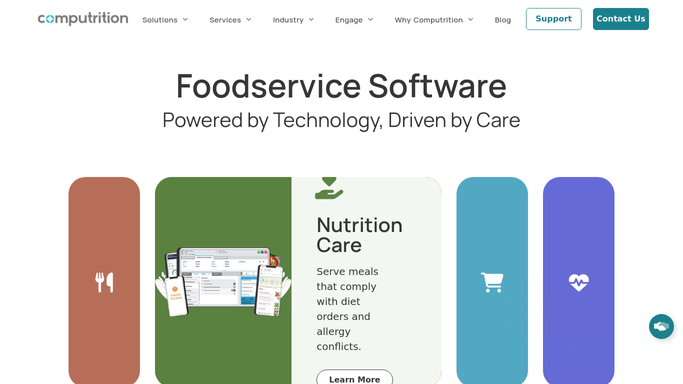
Foodservice Operations Management tracks inventory, handles vendor ordering and runs production and forecasting. Nutrition Care Management holds the diet orders, the patient nutrition data and tray delivery, with the Automated Menu Planning Suite writing menus from an established master menu. HS inStock takes floor stock and physical inventory counts on a mobile device. On the patient side, HS onTray lets patients order their own meals while tracking nutrient limits as they do it, and Room Service Connect Plus runs on demand and bedside ordering through a central call centre. SuitePoint! POS handles the retail cafe and DataArc reports across the lot.
That is a full operating system for a hospital kitchen, and all of it runs on what is already inside the Hospitality Suite or arrives through an interface it was built to receive.
A distributor's order guide is not such an interface. Neither is a manufacturer's spec sheet, a recall notice or a group purchasing portal, and those are the things that change without telling anybody.
The substitution gets caught before it reaches a tray
Put the order guide, the spec sheets and the recall notices on a schedule, and a kitchen stops learning about them from an empty shelf.
This week's case prices read off the order guide and set against the ingredients they belong to, so the recipes whose cost moved are flagged before the next food cost report rather than after it.
Discontinuations caught at source: an item pulled from the order guide, matched to every recipe that uses it and to the therapeutic diets those recipes feed, so a renal menu is not quietly altered by a substitute nobody analysed. Allergen statements re-read on the manufacturer's spec sheet, so a reformulated product is noticed before it reaches the patient it would harm.
Enteral formula availability checked at the distributor against the tube feeds currently ordered, so a backorder is a fortnight of warning rather than a Friday scramble. Recall notices matched against the lot numbers on your shelf and in the nourishment rooms.
Feeding a ward is clinical work, and the boundary that goes with clinical work applies in the kitchen too. The gathering runs unattended, overnight, as often as you want. Anything that changes a diet order, a recipe or a patient's tray, or that reaches a patient, waits for the dietitian or manager whose call it is.
The distributor site gets opened either way
Somebody in that kitchen signs into the distributor and reads a price off a screen. The only question is whether that happens every week, or when a margin finally looks wrong.
WebRun is an AI agent that works a real Chrome browser, signed in the way your buyer signs in. It opens the order guide, the manufacturer's spec sheet or the recall notice, reads what is on the page, and hands back a list set against the items and recipes you carry in Computrition.
It runs on your schedule in an environment of your own, no session is shared with another workflow, and a workflow can be held to a named list of sites. Any run can be watched and stopped.
Every workflow below says which sites it will open.
Questions people ask
Will it change a diet order or a tray ticket?
No. Reading a distributor site or a spec sheet runs unattended, but anything that touches a diet order, a recipe, a label or a patient's tray is written up and waits for a dietitian or a manager to approve it. The clinical decision stays where it belongs.
Our diet orders come in from the EHR. Does this go near that?
Only if you point it there, and most kitchens do not. The work worth handing over sits on the purchasing side: order guides, spec sheets, recall notices and vendor portals. A workflow can be locked to a named list of sites, so the interface between your EHR and Computrition is untouched.
Our distributor gives us no price file. Can the prices still be collected?
Yes. An agent signs into the order guide the way your buyer does and reads the prices off the screen, so no export, feed or integration has to exist first. If a purchasing site needs a login and a few clicks, that is the sort of thing it handles.
12 ready-made Computrition workflows
Each one names the apps it touches and the exact steps it takes. Open one to read what it will do, then turn it on.



Want one of these running on your own Computrition?
Show WebRun the process once and it will run it on schedule, in your own private browser environment.