How to Automate Common Ground
Common Ground automates the record shop's own catalogue: listings and tracklists import from Discogs, the iOS point of sale and the Eshop share one inventory, and sales from every channel land in one Sales Manager. Reading the Marketplace for what a copy is worth today suits an agent like WebRun.
 Written by
Tom Kessler
Field operations analyst
Written by
Tom Kessler
Field operations analyst
 Reviewed by
Hannah Vogel
Finance operations
Reviewed by
Hannah Vogel
Finance operations
One copy sells in the shop and has to vanish from five listings
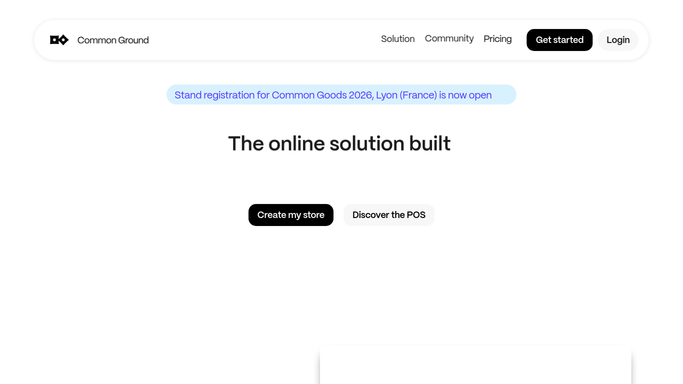
Common Ground, which most sellers write with the domain attached as common-ground.io, is an online manager, eshop and point of sale made for independent record sellers. Vinyl, CDs, merch, and books if you carry them.
A record shop's stock is odd in one particular way: most of it is one copy deep, every copy carries a condition and a pressing, and the same album can be four products depending on which press is in the sleeve. Common Ground keeps that catalogue in the Backoffice, sells it through the Eshop, rings it up on the iOS point of sale, and publishes it to Discogs, Bandcamp, eBay, Meta and Google Merchant.
So the shop exists in five places at once. The record on the wall behind the counter is also a Marketplace listing and a product page on your own site, and all of them have to agree by Saturday evening.
Buying a collection is an afternoon of looking things up
Selling a record over the counter is the quick part. Buying one is not.
Somebody brings in two crates to sell, and pricing them means going title by title through what copies in that condition have actually been going for. A regular is hunting one pressing and has asked you to keep an eye out. A distributor's pre-order sheet arrives as a PDF with a Friday deadline on it. Record Store Day allocations come back and do not match what people reserved. Twelve mail orders need packing, and one buyer says his parcel never came.
Hardly any of that is typing. It is opening a page, reading a number off it, and writing that number down somewhere else.
The Discogs import means nobody types a tracklist
Common Ground takes a lot of the keying out. The Inventory Manager imports listing and release information from Discogs, tracklists included, or from the Creators database with audio snippets attached, and books can be pulled in by ISBN from ISBNdb and Google Books. A CSV import handles a migration off another marketplace.
From there, bulk edition finds, replaces, appends or removes properties across the whole inventory rather than item by item, and sticker printing runs QR or barcode labels off in bulk so a checkout is a scan. Sales arrive in one place whether they happened in the shop, on the Eshop or on a connected channel, and a packing list gets them out of the door. The Sales Report covers amounts, tax and what sold over a period, and exports can be filtered by supplier, customer, label or listing.
What all of that keeps in step is your own inventory and your own orders.
It does not go out and read the Marketplace for you: what other sellers are asking for that pressing this week, what a copy in the condition you are being offered actually sold for last month, whether the distributor has posted the pre-order sheet yet, or what a label announced this morning.
Every title in the crate has a public price already
What a copy is worth is not a secret, but it changes from week to week.
The two crates on the counter, every title checked against recent sold prices and against what is already in your bins, so an offer is made from a screen instead of from memory. The rare pressing a regular has been after, watched at the condition and price you set and flagged the moment a copy appears. A label announcing a repress of something you are holding three copies of at the old price.
The calendar matters too. A tour routing published this week that puts an artist in town in October, so the back catalogue is in the racks the week they play. The distributor's pre-order sheet read the day it goes up rather than the day it closes.
Then the end of the trade nobody enjoys. A courier's tracking page for the parcel a buyer says never came, checked before you answer him. Reservations for Record Store Day counted against the allocation you were actually given, so the awkward conversations happen early. Bins that have not moved since March, ranked by what they cost you rather than by how tired they look.
The tabs can be opened by something that does not get bored
That is an hour of tabs, and tomorrow it will be another one. The looking up is repetitive by nature, which is exactly why it slips.
WebRun is an AI agent that drives a real Chrome browser, signed in as you. It opens Common Ground, the Marketplace, a distributor's page or a courier's tracking site, reads what is on the screen and writes the answer into the sheet or the channel your shop already uses.
It runs on your schedule in your own private environment, and you can watch a run and stop it half way. Anything that would change a price or a listing, and anything going to a customer, is drafted and waits for you.
Every workflow below says which sites it signs into and what it brings back.
Questions people ask
Will it reprice or relist anything by itself?
No. It gathers what the Marketplace is showing and puts the suggestion next to your current price, and you decide. Repricing a rare pressing is a judgement about your own shop, and a machine that guesses at it will cost you more than the twenty minutes it saved.
Our Discogs account is our shopfront. Is it safe to sign in?
It signs in as you, in your own private environment, the same way you would in a browser. Nothing is shared with a third party, and you can watch a run and stop it. For accounts that carry your reputation, start it on read-only jobs and widen from there.
Can it watch a pressing we do not have listed anywhere?
Yes. Give it the release, the pressing and the condition and price you want, and it checks the pages a person would check, then tells you when a copy shows up. Nothing needs to exist in your inventory first, which is the point when you are hunting stock.
10 ready-made Common Ground workflows
Each one names the apps it touches and the exact steps it takes. Open one to read what it will do, then turn it on.
 Instagram›
Want one of these running on your own Common Ground?
Show WebRun the process once and it will run it on schedule, in your own private browser environment.