How to Automate BizEquity
BizEquity automates the valuation itself. An advisor enters a client's financials and the platform calculates a value, applies the discounts a partial stake needs, and produces a client-ready report in minutes. Watching which engagements have stalled, and which valuations have gone stale against a lender's date, is still someone's job.
 Written by
Yara Haddad
Data operations
Written by
Yara Haddad
Data operations
 Reviewed by
Grace Okafor
Healthcare operations
Reviewed by
Grace Okafor
Healthcare operations
A private company has no share price until somebody calculates one
Most of a business owner's net worth sits in a thing that has never been priced. There is no ticker for a plumbing contractor with eleven vans, and the owner's estimate is usually a number they heard a competitor sold for years ago.
BizEquity is where an advisor puts a defensible figure on that business. It is a cloud valuation and planning platform sold to the people who sit across the table from owners: financial advisors, accountants, insurance agents, business coaches and bankers, who value a privately held company from its financials and its industry. There is an owner-facing side as well, CEO Advisor, for people who arrive without a professional already in the room.
The figure matters because of everything hanging off it: a buy-sell agreement, an estate plan, how much life insurance is enough, whether a bank covenant is met, and whether the owner can retire when they said they would.
The valuation waits on paperwork nobody has sent
Almost none of the work in a valuation engagement is the valuation.
It starts as a request for documents. Two or three years of profit and loss, the balance sheet, the tax returns, sometimes an add-back schedule covering the owner's vehicle and the salaries paid to family. Those arrive late, or in pieces, or as a photograph of a printout taken at an angle. Somebody chases them. Somebody chases them again a fortnight later, having first checked whether they turned up while nobody was looking.
Then the engagement sits. An advisor with sixty business-owning clients cannot hold in their head which four are waiting on documents, which two are ready for review, and which one has a bank asking for a current valuation by the end of the month. It goes on a spreadsheet or it goes nowhere, and the quiet client is the one who gets remembered only when they ring.
Report Builder finishes the report and stops there
BizEquity does the analytical part properly, and an advisor should push it as far as it goes.
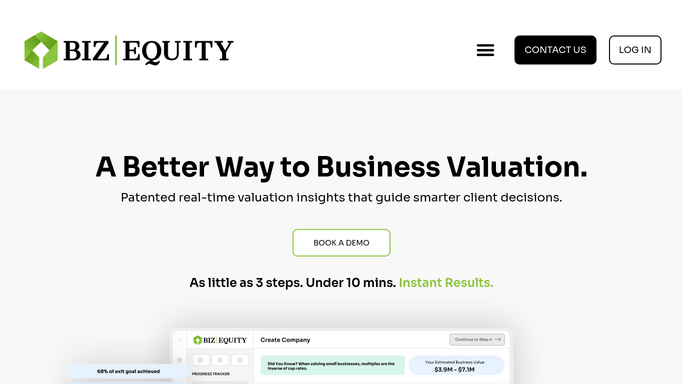
Hand the platform a set of financials and both a valuation and a client-ready report come back in minutes, which is the difference between a conversation this afternoon and a project next quarter. Report Builder generates personalised client reports quickly. The Officer Compensation Worksheet handles owner pay, which is the adjustment that moves the number most in a small company. The Minority Interest Discounts Module applies lack of control, marketability and liquidity, so a partial stake is not valued as if it were the whole business. Advisor Office is where the engagements live, and the platform carries forecasting and exit planning tools that show what a decision would do to enterprise value, plus an insurance view that sets cover against the business's worth.
Every one of those works on figures already entered. The platform values what it is handed. It cannot open the client's accounting system and see that last year closed three weeks ago, read the letter that set the covenant date, or notice that documents it is waiting on landed in an inbox on Friday.
A book of clients that flags its own stale numbers
Read the engagements on a schedule and the book starts telling you which client needs you next.
Engagements that have sat at awaiting documents for three weeks, listed with the client, the missing item and a chaser drafted for the advisor to review. Valuations old enough that a lender will not accept them at the next covenant check, raised with weeks to spare rather than in the week it falls due. A buy-sell agreement whose review window opens next quarter, set against the last value on file, so two partners are not still trading on a figure from four years ago.
Then the quieter ones. A client whose insurance cover was sized against a value the business has since grown past, listed as a gap instead of discovered at a claim. Owners approaching the age they said they would sell, with no current valuation behind the plan. A client's accountant filing a new return, which is the moment last year's figures exist and the number on file becomes history.
None of that needs an export, an API or a developer. It is the same screens the advisory team already reads, read more often than a person can manage.
The number reaches a client when an advisor says so
A stale valuation does not announce itself. Finding it means going down the engagement list, client by client, on the kind of quiet Monday a busy advisory practice stops having.
WebRun is an AI agent that works a real Chrome browser, signed in as you. It opens BizEquity the way your team does, reads the engagements, the dates and the values, and brings back a worklist with the clients named.
It gathers and it drafts. Every chaser to a client, every change to an engagement, and anything that would put a valuation in front of an owner waits for a qualified person. A valuation is advice with a number attached, and advice is not something a schedule should deliver.
Each workflow below names what it opens.
Questions people ask
Will it send a valuation report to a client on its own?
No. Reports, chasers and anything an owner would read are drafted and left for a qualified person to approve. A valuation carries advice with it, and advice is not something an unattended run should ever deliver.
Can it change an engagement or the figures inside one?
Not by default. Reading the engagement list, the dates and the values runs unattended. Entering financials, editing an engagement or marking work complete is prepared for a person, because the report that comes out carries your name.
Does BizEquity have to build an integration first?
No. It works a browser signed in as your own user, the same way an advisor does, so it reaches BizEquity and the systems beside it without anything being connected or approved first.
12 ready-made BizEquity workflows
Each one names the apps it touches and the exact steps it takes. Open one to read what it will do, then turn it on.

Want one of these running on your own BizEquity?
Show WebRun the process once and it will run it on schedule, in your own private browser environment.