How to Automate Tank Track
Tank Track automates service-due reminders, waste manifests, invoices and the QuickBooks Online sync by itself. What it cannot do is deliver those records elsewhere: a city's FOG reporting site, a restaurant chain's facilities portal, a customer's inbox. Carrying each finished job to those places, and drafting what gets filed, is work for an AI agent like WebRun.
 Written by
Sofia Marchetti
Marketing operations
Written by
Sofia Marchetti
Marketing operations
 Reviewed by
Hannah Vogel
Finance operations
Reviewed by
Hannah Vogel
Finance operations
Every pump-out in Tank Track leaves a manifest behind
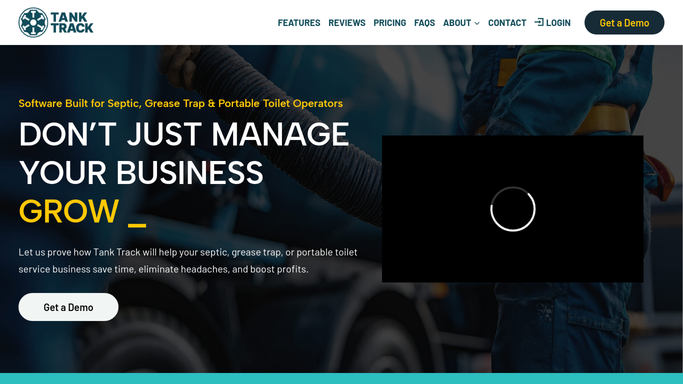
Tank Track is business software for septic, grease trap and portable toilet operators, sometimes written as TankTrack. It holds what a pumping company runs on: every customer and property, the tanks and interceptors at each one, the service history, the date each trap is next due, and today's jobs for every truck.
The office schedules from it, and the schedule accounts for each truck's capacity and the waste stops in its day. Drivers open Tank Track in the phone's browser at the site, with no separate app to install, and complete the job's checklist, which the customer sees too. As the job is completed, Tank Track writes the waste manifest: where the load was pumped, how much was pumped, and where it was disposed of.
The customer keeps the manifest for their files, the disposal site wants one, and on grease traps the city may ask for it too.
Grease trap paperwork keeps landing on other people's websites
The office manager logs into a restaurant chain's facilities portal each morning, copies the new work orders into Tank Track, and later goes back to check each job out and enter the invoice on the chain's system as well. Cities with a fats, oils and grease (FOG) program want pump-outs reported on their own form or website, and a restaurant manager with an inspection on Thursday emails for proof of the last three services. Answering means finding the last three manifests in Tank Track and attaching them to a reply.
A trap came due last month. The reminder went out, nobody at the restaurant answered, and the restaurant's permit may not allow a trap to run that far past due.
Tank Track keeps the records, but other systems still want them
Tank Track's Automatic Service Reminders text and email a customer when service is due, remind the team, and can create the work order. Tank Track builds the waste manifest from the job itself, so it is finished before the truck leaves, and generates pump reports to give the waste facility. It tracks every gallon from the tank to the disposal site, and operators who spread septage log land application sites and volumes against each disposal. Invoices go by text or email with an online payment option, and the QuickBooks Online integration carries the billing into the books.
When a regulator asks where a load went, the answer is already in Tank Track, but those records stay in Tank Track and QuickBooks Online. The city's reporting site, the chain's facilities portal and the county's permit records each need their own sign-in, and the restaurant manager wants an email, so the office types the manifest into each one.
A completed job can reach the city, the chain and the customer the same day
Each evening, the office manager submits the city's pump-out reports for the day's grease traps, every figure on them copied from a Tank Track manifest.
Dispatch schedules the chain's new work orders the morning they appear in its facilities portal, with the site notes and access details carried over into Tank Track. After the driver finishes, the dispatcher reviews the check-out and invoice on the chain's portal and submits them.
A restaurant manager with an inspection coming gets proof of the last three services by email before asking for it. Each Monday the office rings the most overdue restaurants first, from a list of traps whose reminder went unanswered, sorted by how far past due they are. For septic work, the office submits the pumping or inspection report on the county's permit site without copying it from paper.
The agent carries finished Tank Track jobs to city and chain portals
Signed in to Tank Track, the city's reporting site and the chain's portal, the AI agent WebRun reads each completed job and its manifest in Chrome and enters the figures where each site asks for them. It needs no API from the city and no connection between the chain's portal and Tank Track.
On the city's form and the chain's portal it fills in every field and leaves the submit button to the office manager. In Tank Track it only reads: a manifest with odd gallons or a missing disposal site goes on a list for the office to correct.
Grease trap operators will find cards below for FOG permit renewals, missed services and disposal compliance reports.
Questions people ask
What about septic and portable toilet jobs?
The agent starts from the completed job in Tank Track, whichever of the three services it was. For septic, the report usually goes to the county's permit site rather than a city FOG program.
Tank Track users: does the agent need a paid one?
No. Tank Track does not charge extra for additional users, so the office can create one for the agent.
Does it touch the QuickBooks Online sync?
No. Tank Track's integration carries billing into QuickBooks Online on its own. The agent's work is on the other side of the job, on customer portals, city sites and inboxes that neither Tank Track nor QuickBooks reaches.
Which cities' FOG reporting can it handle?
Any city whose FOG form or reporting site opens in a web browser. A city that still wants a paper form in the post is outside what the agent can reach.
Sources
- Tank Track | Software for Septic, Grease & Portables Operators Tank Track's own feature list: Automatic Service Reminders by text and email that can create the work order, waste manifests created as work is completed, invoices by text and email with online payment, and unlimited users on every plan.
- Tank Track FAQs Confirms the QuickBooks Online integration and that company data can be imported from spreadsheets or accounting programs and downloaded again.
- Tank Track vs. Other Software: Comparison Guide Tank Track's description of its scheduling by truck capacity with waste stops, auto-generated pump reports for waste facilities, and disposal tracking.
- How Tank Track Simplifies Scheduling and Operations | Tank Track Technicians complete checklists during service visits, and the completed checklists are shared with customers.
9 ready-made Tank Track workflows
Each one names the apps it touches and the exact steps it takes. Open one to read what it will do, then turn it on.



Want one of these running on your own Tank Track?
Show WebRun the process once and it will run it on schedule, in your own private browser environment.