How to Automate Produce Pro
Produce Pro covers the perishable supply chain end to end: lot-level traceability, sales order processing, pricing, purchasing, inventory control and warehouse mobile apps, with EDI and web ordering around them. The recall notice, the market report, the carrier's tracking page and the grower's portal sit outside it, and an agent like WebRun reads those.
 Written by
Owen Hartley
Workflow engineer
Written by
Owen Hartley
Workflow engineer
 Reviewed by
Grace Okafor
Healthcare operations
Reviewed by
Grace Okafor
Healthcare operations
Produce Pro tracks a pallet that is losing value by the hour
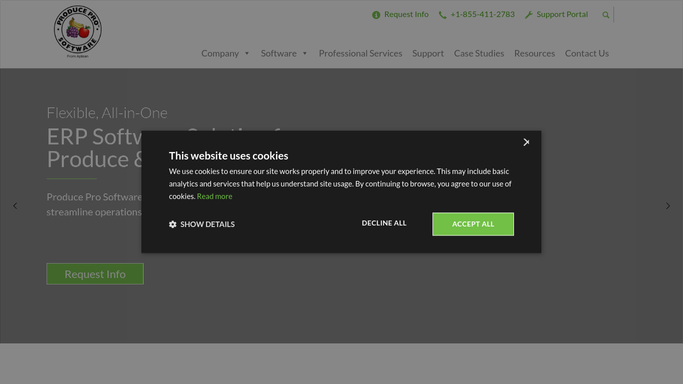
Produce Pro is an ERP built for one industry: fresh produce and perishables. It runs the wholesalers and distributors on the terminal markets, the growers, packers and shippers, the processors and repackers, and the foodservice houses delivering to restaurants.
Produce is a business where the product argues back. A pallet of berries is worth less this afternoon than this morning. A load can be rejected on arrival over pulp temperature. A commodity's price moves in a week because of weather two thousand miles away, and the money you are owed sits under a federal trust rather than an ordinary credit agreement.
So the system carries more than orders. It holds the lot, the grower, the costs rolled into it, the pack and the date, because in produce those are one conversation. Sales order processing, picking, routing and accounting all sit on top of that lot record rather than beside it.
Every load in transit is a phone call waiting to happen
Ask anyone in a produce office what the morning consists of and it is not order entry.
It is calling the carrier about the truck of romaine that should have been at the dock at five. It is opening the grower's portal to see what shipped against what was ordered, because the pack-out is never exactly the order. It is reading the market report to see what everyone else is paying today, then deciding whether the price on your quote sheet holds until lunch.
Then the paperwork that follows the food. Deliveries that came back without a signed proof of delivery. Short ships and backorders a salesperson needs before the customer rings. A recall notice that has to be checked against your own lot records now, not this afternoon.
None of it is skilled work. All of it is one person, a browser and a deadline measured in hours, because the product is too.
Lot tracking was in the first version and it shows
Produce Pro has been built around lot-level traceability from the beginning, and that decision runs through the rest of the product.
Lot tracking follows a lot from purchase through processing to delivery, carrying the materials, labour and other costs that attached along the way, so the history is a lookup rather than an investigation. Sales order processing and pricing handle the arrangements this industry actually uses, which most general ERPs cannot: price after sale, consignment and direct shipment are first-class. Purchasing tracks vendor rebates and forecasts demand, from simple pars up to methods that read history and seasonality. The warehouse management system puts the floor on mobile apps, with separate ones for quality control, food safety, checkout and the driver, so an inspection is recorded where it happens.
Around that sit web ordering, a managed EDI service for the chains that insist on it, document imaging for signed invoices, and analytics dashboards.
Every one of those runs on what Produce Pro already holds, or on what a trading partner agreed to transmit. The lot record is complete. The world the lot came from, and the one it is heading into, is not in there at all.
A recall can start with the pallets already named
The checking was never difficult. It was a race, run every morning against a market that had already moved, on sites that post their notices whether anyone is reading or not.
Public recall and withdrawal notices read every morning and matched against the lots you are holding, so a response opens with a list of customers and pallets instead of an afternoon of searching. Inbound loads tracked on each carrier's own site, with anything that stopped moving flagged before a delivery gets promised on it. Terminal market and shipping point prices for what you actually trade, sitting next to what the load cost you and what the salesroom is asking this morning.
Then the smaller ones that never get done. A grower's portal checked for what shipped against the order. A chain customer's vendor portal compared with your delivery record, so a short is queried while there is still a window. Certificates that quietly expire, the food safety audit, the organic certification, a carrier's insurance, watched where they are held.
Produce moves on a clock, so the value is in when the answer lands. A recall matched at seven in the morning is a set of phone calls. The same match at four in the afternoon is a truck that has already gone.
The shelf life runs whether the checking gets done or not
None of that is a judgement call about produce. It is one person opening the same eight sites in the same order every morning, before the market has moved.
WebRun is an AI agent that works a real Chrome browser, signed in as you. It opens Produce Pro the way your office does, opens the carrier's tracking page, the market report or the grower's portal beside it, and returns one list with the lot and order numbers already attached.
It runs on your schedule in your own private environment, and you can watch a run and stop it. Anything that reaches a customer or commits money, a price change, a claim, a purchase order, is prepared and left for a person.
Each workflow below names the sites it opens and the figures it moves.
Questions people ask
Will it change prices or send anything to a customer?
No. Price changes and customer messages are drafted with the commodity, the lot and the account details already filled in, then left for a person to send. In produce a price that goes out wrong is a claim, so that stays a decision somebody makes.
How does it match a recall notice to our own lots?
By reading both sides and comparing them. It takes the product, brand, date codes and lot identifiers off the published notice, then looks up what you are holding and what you shipped in Produce Pro, and reports the lots and customers that overlap.
Our carrier and grower sites have no export. Is that a problem?
No, and it is the usual reason to run this. It reads the numbers off the screen the way your buyer would, so a portal with an odd layout and no download button works the same as any other. Nothing has to be built by the carrier or the grower first.
12 ready-made Produce Pro workflows
Each one names the apps it touches and the exact steps it takes. Open one to read what it will do, then turn it on.


Want one of these running on your own Produce Pro?
Show WebRun the process once and it will run it on schedule, in your own private browser environment.