How to Automate Peblla
Peblla already runs the counter: self-ordering kiosks, a label system carrying every drink modification, live inventory that pulls a sold-out topping off the online menu, loyalty tiers and drip campaigns, and delivery orders pulled into one list. Marketplace payout statements, supplier prices and reviews sit elsewhere, which is where an agent like WebRun works.
 Written by
Hannah Vogel
Finance operations
Written by
Hannah Vogel
Finance operations
 Reviewed by
Rosa Lindqvist
Operations editor
Reviewed by
Rosa Lindqvist
Operations editor
A boba order is thirty decisions in one cup
Peblla is a restaurant point of sale, and the room it fits best is a bubble tea shop. Its own site carries a page for boba specifically, because a drink counter is a different problem from a dining room.
Almost nothing sold across it is a single item. A milk tea is a base, a sweetness level, an ice level, a milk swap and two or three toppings, and the customer changes one of those at the window. Peblla's label system prints that back out with the order number, the item and the modifications underneath, so whoever is on the sealer is not reading somebody's handwriting off a cup.
Around that counter sits a self-ordering kiosk taking its own queue, a branded app and web ordering, delivery orders landing in the same list, and a loyalty account hanging off a phone number. The staff are two or three people on shift and an owner who may have a second shop across town.
The supply side of a drink never reaches the till
Ninety seconds of work goes into the cup. Days go into everything around it: what had to be bought to fill it, and what each marketplace did with an order after it left the counter.
Tapioca, tea leaf, powder, syrup, jelly and cups come from wholesalers who have no ordering feed and sometimes no website worth the name. A price gets quoted in a message thread. A case of pearls is out and nobody finds out until the delivery arrives short on a Friday.
On the other side, each delivery marketplace keeps its own account: the payout statement with commission taken out, the error charges for orders a driver never collected, the promotion spend, and the rating that quietly decides how high the shop sits in the app.
Somebody is also supposed to be reading the reviews.
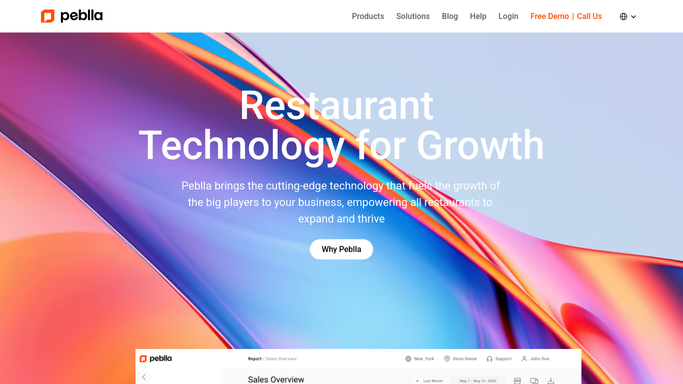
Peblla runs the queue, the kiosk and the label
Peblla covers the counter thoroughly, and a shop treating it as a card reader never turned most of it on.
The kiosks take orders on their own, in more than one language, and suggest a topping or a second drink while the customer is still choosing. The Report Center collects the day into sales, payment, cash management, employee performance and loss management reports. Promotion settings run buy X get Y free, promo codes and upsells. Loyalty gives points and tiers a customer reaches by spending or by coming back, with drip campaigns behind it. Third-party integration pulls DoorDash, UberEats and Grubhub orders into one list instead of three tablets. Inventory runs live, so a topping that runs out comes off the online menu rather than being sold and apologised for.
All of that works on what happened at the shop's own counter, or on an order a marketplace handed across.
What it does not hold is the rest of each marketplace's account. The payout statement, the commission, the error charges, the promotion spend and the star rating live in a merchant portal that sends the order over and keeps the arithmetic. Nor the supplier side: this week's pearl price, the case that is out of stock, the date the pallet arrives.
The margin on a cup can stop being a guess
Give the shop somebody who opens those accounts each morning and the numbers behind a drink stop being folklore.
What each marketplace actually paid, read off the payout statement and set against the orders Peblla recorded, so the gap between the two is a figure rather than a suspicion. Error charges and refunded orders listed with the reason attached, because a driver who never arrived is money the shop can ask about and usually does not.
This week's cost for pearls, jelly, powder and the tea base, collected from each wholesaler's ordering page and set against what the drink they go into sells for. A case that has gone out of stock flagged on Wednesday rather than discovered on Friday, while the prep list is still being written.
Reviews from the map listing and every delivery app gathered into one list with the drink each one mentions, so a run of complaints about sweetness gets noticed in a week instead of a quarter.
Collecting all of that can happen before anybody unlocks the door. Answering a customer is a different job.
The prep list still belongs to whoever opens up
Four logins stand between the shop and a straight answer about what last week actually earned. In a shop running three people on a shift, the person who opens them is the owner, doing it after close.
WebRun is an AI agent that works a real Chrome browser, signed in as you. It opens a delivery marketplace's merchant portal, a supplier's ordering page or a review listing, reads what is on the screen, and brings it back beside the sales and item figures out of Peblla.
Runs go on a schedule you set, in your own private environment, and you can watch one and stop it mid-way. Replying to a review, disputing a charge or placing an order is drafted and held for a person.
The workflows below each name the accounts they sign into.
Questions people ask
Peblla already pulls our delivery orders in. What is left to collect?
The money side. Orders arrive through the integration, but commission, error charges, refunded orders, promotion spend and the store rating stay in each marketplace's merchant portal. Those are the figures that decide whether a delivery order made anything, and they are read from the portal rather than the order feed.
Our pearl supplier quotes prices in a chat, not on a website. Does that work?
Partly. Anything on a screen behind a login can be read, so a wholesaler with an ordering page is straightforward. A price that only exists in a message thread still needs a person to record it once, after which it can be tracked against your menu prices like any other cost.
Could a run change our menu or turn items off?
No. It reads Peblla the way a manager does and makes no changes to the menu, availability or prices. Sold-out toppings and cost changes come back as a list with the item named, and switching anything off in the portal stays a decision somebody makes on purpose.
12 ready-made Peblla workflows
Each one names the apps it touches and the exact steps it takes. Open one to read what it will do, then turn it on.


 Instagram›
Want one of these running on your own Peblla?
Show WebRun the process once and it will run it on schedule, in your own private browser environment.