How to Automate OptiMantra
OptiMantra automates the clinic's own record. Custom questionnaires reach patients through the portal before a visit, reminders go out for appointments and lab tests, e-prescribing covers controlled substances through SureScripts, and the dispensary module flags low and expiring stock. Wholesaler pages and credential renewals sit outside it, which WebRun opens.
 Written by
Owen Hartley
Workflow engineer
Written by
Owen Hartley
Workflow engineer
 Reviewed by
Nikhil Bhatt
Automation strategist
Reviewed by
Nikhil Bhatt
Automation strategist
A ketamine clinic charts a chair, an infusion and a score
A ketamine infusion clinic is a small room with a recliner in it, wrapped in paperwork. A patient is screened, consented, scored on a depression scale, put on a drip with somebody watching their blood pressure, and seen again a few days later for an integration session. The unit of work is a series, not a visit: a run of infusions, then boosters, then a decision about whether to keep going.
OptiMantra is the EMR and practice management system underneath that. It is used across integrative and functional medicine, naturopathic practice, medspas, acupuncture and behavioural health, which is much the same population of clinics that ended up offering ketamine. In one of them it holds the chart with its custom SOAP notes, the intake questionnaires, the schedule with its rooms and practitioners, the point of sale, the dispensary and the claims.
The staff are a prescriber, a nurse or medical assistant who sits with the infusion, and a front desk.
The controlled substance paperwork lives outside the chart
Ketamine is a controlled substance, and controlled substances bring a second set of records the EMR never sees.
The registration that lets the clinic hold the drug renews on a government site, on a cycle with nothing to do with the practice. The credential that lets a prescriber send a controlled prescription electronically has its own expiry and its own provider. The drug is bought from a wholesaler or a compounding pharmacy with its own ordering page, and what arrived has to be squared against what the record says was given, vial by vial.
Then there is the referring therapist. Most ketamine patients come from one, and that therapist is not in the EMR. They are an email address who would quite like to know how their client is getting on, and who sends the next referral to whoever answered last time.
Every line on that list is a person signing in somewhere and carrying a number back.
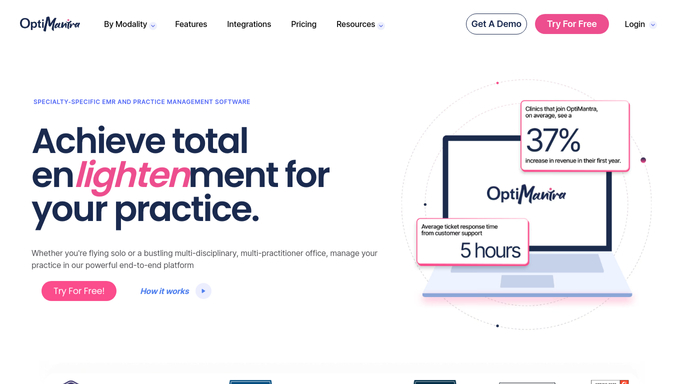
OptiMantra collects everything the patient hands it
The EMR side of this is well covered, and a clinic that has left the patient-facing parts switched off is doing avoidable typing.
Templates & Questionnaire supplies a library of SOAP formats plus custom questionnaires patients complete through the portal or an emailed link before they arrive, which is how a screening or a mood score reaches the chart without anyone reading it down a phone. Reminders, Alerts & Tasks sends customisable email and text reminders for appointments, intake forms and lab tests, and hands staff a personalised to-do list.
Electronic Prescription covers controlled substances through the SureScripts network via MDToolbox. The dispensary module tracks stock on hand with its vendors and suppliers, flags low and expiring items and raises purchase orders. Insurance Billing files claims and posts EOBs back against them.
What all of that shares is that the patient or the staff member came to it first. The questionnaire only helps if the patient opened the link. The dispensary knows what was keyed in. The registration renewal, the wholesaler's order status and the therapist's inbox sit outside every one of those features.
The count, the credential and the referral can stay current
There is a version of this week in which nobody has to remember any of it.
Screening questionnaires sent and never opened, listed the day before the appointment with a chase already written, so nobody arrives unscreened. Mood scores read across a patient's whole series rather than one visit at a time, so a run that has stopped improving is visible before the last infusion rather than after it.
The wholesaler's ordering page read against the infusions already booked. What was received squared against what the record says was given, with the discrepancy named rather than discovered at the next count. Registration and prescribing credentials listed with their expiry dates far enough ahead that renewing is an errand. Package balances checked, so a patient with one infusion left hears about it while the series still means something. An update for the referring therapist drafted from the patient's own progress, ready for the prescriber to read.
The rule in a clinic that hangs a controlled drug on a stand does not bend. Collecting, comparing and flagging run unattended. Changes to the record, changes to a dose, and anything that reaches a patient or a referrer stay with a qualified person.
The judgement is small and the typing is large
Almost all of that work is reading. The reading takes the afternoon; the decision at the end of it takes a minute and needs a clinician.
WebRun is an AI agent that operates a real Chrome browser from a private environment of your own, signed in the way your team is. It opens the wholesaler's site, the credentialing page or OptiMantra itself, reads what is there, and leaves a list where the prescriber and the front desk will find it. A workflow can be locked to an explicit list of domains, and any run can be watched and stopped partway.
Nothing is written into a chart, and nothing goes to a patient or a referrer unsent by a person. Each workflow below names what it opens.
Questions people ask
Could it adjust a dose or sign a prescription?
No. Dosing and prescribing are clinical acts and stay entirely with the prescriber. It gathers, compares and flags, then stops. A change to the record, or anything going to a patient, is prepared and left for a qualified person.
Our referring therapists sit outside the EMR. How would an update reach them?
As a draft. Progress notes for a referrer are written up from the patient's own record and held for the prescriber to read, edit and send. Nothing about a patient goes to an outside clinician without someone deciding it should.
Where does it actually run, and who can see it?
In a private environment belonging to your clinic, signed in as your staff are, and locked to an explicit list of domains if you want it. You can watch any run live and stop it partway, and nothing about it is visible to patients.
12 ready-made OptiMantra workflows
Each one names the apps it touches and the exact steps it takes. Open one to read what it will do, then turn it on.



Want one of these running on your own OptiMantra?
Show WebRun the process once and it will run it on schedule, in your own private browser environment.