How to Automate Mindbody
Mindbody automates the booking itself: confirmations, reminders, waitlist moves and late-cancel fees run on their own, and the Ultimate plan adds automated email and text campaigns, built as Journeys. The work that spills outside it, such as review sites, ad accounts, member emails and competitor timetables, is still done by hand, or by an agent like WebRun.
 Written by
Yara Haddad
Data operations
Written by
Yara Haddad
Data operations
 Reviewed by
Priya Raghavan
Solutions lead
Reviewed by
Priya Raghavan
Solutions lead
Timetable, class packs and cards on file live in Mindbody
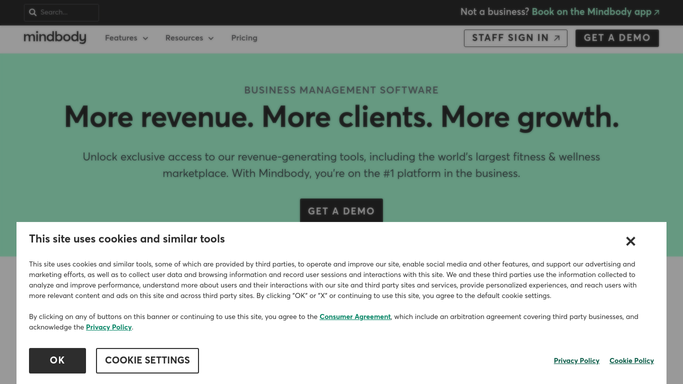
Mindbody, still called Mindbody Online after its web address, sells booking and payments software to fitness studios, spas and salons. A boutique reformer pilates or indoor cycling studio, often with a waitlist most mornings, keeps nearly everything the front desk touches in Mindbody.
The timetable sits in it, and so do the class packs, the monthly memberships, the intro offer every newcomer starts on and the card each client keeps on file. Clients book on the studio's website or in the Mindbody app, where people looking for a class nearby can find a studio they had never heard of.
For an owner with two or three locations, Mindbody is also the record of the business: who came, what they paid, which instructor taught, and which classes are full by Wednesday.
Late-cancel emails and stalled intro offers take the first hour
A member books the 6am class, cancels at 5:40 because a child woke up sick, and Mindbody charges the late-cancel fee as it should. By nine there is an email explaining, and the studio manager has to find the charge, decide whether to waive it and write back.
A newcomer buys two weeks unlimited as an intro offer, comes to one class and goes quiet. Whether they booked again is on their profile, but nobody opens forty profiles to check. The same is true of the pack down to its last credit, and of the regular whose Tuesday booking stopped appearing three weeks ago.
Outside Mindbody, a new Google review names an instructor and waits for a reply. The manager checks the ad account that paid for this month's intro offers when there is a spare minute, and hears from a member that the barre studio round the corner has cut its prices.
Journeys and waitlists act only on what Mindbody records
When a class reaches capacity, Mindbody offers clients a place on the waitlist, and when someone cancels, it moves the next waitlisted client onto the roster. It charges late-cancel and no-show fees automatically, or deducts a visit instead if the studio's settings say so, and updates expired cards without manual follow-up.
On the Ultimate plan, Journeys send automated email and text campaigns, such as a welcome message for new clients or a win-back message when someone has not visited in a while. AI Insights can email the owner a weekly summary in plain language and flag Clients at Risk, a list of who is likely to stop coming.
Each of these acts on what Mindbody has recorded. A Journey can message everyone who has not visited in a month, but it cannot read the email a member sent about a fee or the review they left on Google. A class with empty spots and nobody on the waitlist stays that way, and no Mindbody report covers the studio across the road. The automated campaigns also sit in the Ultimate plan, so a studio on Starter or Accelerate does that follow-up by hand.
Each follow-up starts from a name on yesterday's roster
In one sitting, the studio manager decides yesterday's late-cancel waivers, with each fee, the member's email about it and their visit history on the same page. A regular of three years with one missed class reads differently from a fourth miss this month.
Each instructor gets the names of intro-offer newcomers from their class who have not booked a second one, along with this week's classes that still have space, so the note they send can offer a real spot.
The instructor who taught the Saturday reformer class hears the same day when a Google review mentions it, and the owner's reply can name the class the reviewer took. Each month the owner can set intro-offer sales against what the ad account spent to find them. And the manager hears on Monday if the new barre studio down the road has changed its prices or timetable.
The agent reads Mindbody rosters under a staff login you set up
Yesterday's rosters, the client profiles behind them and the studio inbox get read before the first class by an AI agent, WebRun, working a real Chrome browser logged into Mindbody as a staff member whose permissions you set. From there it goes on to the review pages and the ad account.
Waiving a fee or refunding a card stays with the studio manager, who does it in Mindbody after reading the page. Replies to reviews and notes to members arrive in the manager's email as drafts the manager edits before sending.
For Mindbody studios, the cards below deal with package balances, renewals and lapsed members.
Questions people ask
Should we keep our Mindbody Journeys running?
Yes. Journeys are good at sending the same welcome or win-back message to everyone who meets a rule. A Journey cannot see the email a member sent about a fee or the review they left on Google; the agent reads both, and it drafts rather than sends.
We are on the Starter plan. Is that a problem?
No. The agent reads what a staff login can open, such as rosters and client profiles, so it does not depend on the automated campaigns that come with Ultimate. On Starter or Accelerate, where those campaigns are not included, it takes on follow-up the studio would otherwise do by hand.
Does AI Concierge already do any of this?
No. AI Concierge talks to clients: it answers their questions by text and webchat, books, reschedules and cancels classes, and texts back after a missed call. The agent handles the studio's back-office reading, such as fees against emails and reviews against bookings, so the two sit side by side.
How much of our Mindbody account will it be able to see?
Only what its staff login can see. Mindbody sets a permission level for each staff member and lets you keep payments and reports to the roles you choose, so the usual setup is a dedicated login that opens the schedule, client profiles and the reports it needs, and nothing the studio would rather keep closed.
Sources
- Scheduling for Classes & Appointments | Mindbody Mindbody's own description of automatic waitlist moves when someone cancels, automatic booking confirmations and reminders, and late-cancel and no-show fees applied by the software.
- Marketing Tools | Mindbody Describes automated email and text campaigns built through the Journeys feature, including win-back messages sent when clients have not visited in a while.
- Business Pricing | Mindbody Lists automated email and text campaigns and the 24/7 AI front desk under the Ultimate plan, above Starter and Accelerate.
- Business Reporting & Analytics | Mindbody Covers AI Insights, including Clients at Risk and a weekly summary delivered to the inbox for owners who opt in, and report exports as CSV and PDF.
- Payments | Mindbody Mindbody charges no-show and cancellation fees automatically, processes recurring payments and updates expired cards without manual follow-up.
- AI Concierge | Mindbody AI Concierge answers client questions by text and webchat, books, reschedules and cancels bookings, follows up missed calls, and is included in the Ultimate plan.
- Staff Management Features | Mindbody Staff roles and permission levels, so each staff member sees only what they are allowed to, with payments and reports limited to chosen roles.
8 ready-made Mindbody workflows
Each one names the apps it touches and the exact steps it takes. Open one to read what it will do, then turn it on.
 Instagram›
Want one of these running on your own Mindbody?
Show WebRun the process once and it will run it on schedule, in your own private browser environment.