How to Automate MenuMetric
MenuMetric automates the F&I presentation itself. Smart Menu Builder assembles the menu, eRating and eContracting through ProviderLink rate and contract across providers, and eSignatures close it. The work that follows a signed deal, chasing funding, matching provider remittance and catching chargebacks, happens in other portals, which is where an agent like WebRun fits.
 Written by
Grace Okafor
Healthcare operations
Written by
Grace Okafor
Healthcare operations
 Reviewed by
Yara Haddad
Data operations
Reviewed by
Yara Haddad
Data operations
The menu decides what a deal is worth
A vehicle deal earns twice. Once on the unit, and once in the business office, where the customer sits down with an F&I manager and works through a menu of service contracts, GAP, tire and wheel and paint protection.
MenuMetric is the cloud platform that builds and presents that menu. It runs in car stores and in RV, marine, powersports and equipment dealerships, anywhere a finance office sells aftermarket products against a signed buyer's order.
The presentation is the product. A menu carrying the right products, priced for that vehicle and that term, put in front of a buyer who has already been in the building for three hours. Printed, or on a screen, or through MenuConnect on a screen share with a buyer sitting at home.
What comes out the other side is not just a signature. It is a contract with an aftermarket provider, a lender waiting on a funding package, and a line of income the store will not actually collect for weeks.
The paperwork outlives the handshake
The customer drives away and the file stays behind.
Somebody works the contracts-in-transit list, the deals signed but not yet funded, logging into each lender to find which stipulation is holding the money. Somebody else checks which eContracts went out and never came back signed. When a buyer pays off early or cancels a service contract, the F&I income on that deal is clawed back, and the store usually learns about it from a provider statement weeks later.
Then there is remittance. Each month the aftermarket providers report what they owe, and someone matches those statements against the products actually sold and against what accounting posted. Unwound deals leave live contracts behind that nobody cancelled. Funding documents get chased by email, one buyer at a time.
None of that is F&I. It is filing, done by people whose job is closing.
Rating and contracting stop at the signature
MenuMetric covers more of the F&I workflow than most stores configure, and it is worth exhausting first.
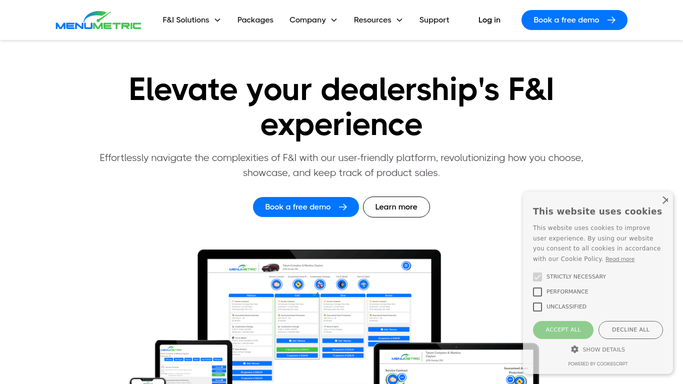
Smart Menu Builder assembles the menu using an algorithm trained on what the dealership actually sells. eRating and eContracting, through ProviderLink, rate and contract across the aftermarket providers from one screen instead of a separate portal login for each. eSignatures capture the buyer's signature on the spot. Metrics reports the store's own F&I performance back to the desk, and the DMS integrations push the deal across so nothing is keyed twice.
That is a lot, and all of it is pointed at one window of time: the hour the customer is sitting there.
The moment the contract is submitted, the deal leaves. The lender's portal decides when it funds and posts its own stipulations. The provider's portal shows what was remitted and what was cancelled. The DMS accounting screens hold what was posted against the reserve. MenuMetric reports faithfully on what the store did. It does not go and read what the lender and the provider did next, because those are other companies' websites behind other companies' logins.
A deal list that has already checked the lender
Everything that needs chasing starts as a deal in MenuMetric, which means the chasing can start there too.
Picture the unfunded list arriving each morning already aged: every deal, its days in transit, and beside it whatever the lender's own portal says is missing, so the finance director reads reasons instead of collecting them. Picture the month's provider remittance lined up against the products contracted, with the two that were never paid named rather than noticed at year end.
An early payoff shows on the lender's site before anyone in the store hears about it, which is early enough to see the chargeback while the reserve is still on the books. A deal that unwound can be checked against the products still live on it, so the cancellation gets filed instead of forgotten. Friday's eContracts can be checked against the signature service on Monday, with a reminder drafted for each buyer who has not signed.
And penetration and PVR by manager can be sitting in the Monday meeting, already read off the Metrics screens rather than assembled during it.
The F&I desk should be with the next customer
An F&I manager earns their keep in the hour the buyer is sitting there. Everything after it is retrieval: finding out which of this week's deals the lender is sitting on, and why.
WebRun is an AI agent that drives a real Chrome browser, signed in as you. It opens MenuMetric, the lender portals and the provider sites, reads what each one says, and puts the aging list, the remittance match or the chargeback exposure in front of a person.
Because F&I is regulated work, only the gathering runs unattended. A reminder to a buyer, a product cancellation, a change to a deal record: each of those is drafted and waits for the F&I manager to read and approve it. It runs on your schedule in your own environment, on a list of sites you name, and you can watch a run and stop it.
The cards below are the runs dealers set up first.
Questions people ask
Our store runs an older DMS. Would that be a problem?
No. WebRun signs into whatever web screens your people already use, so a DMS with no MenuMetric integration is simply another site it opens. It reads and copies the same fields a person would, which is why a published integration is not a prerequisite for any of this.
Will it cancel a contract or change a deal on its own?
No. If it would change a record or land in front of a buyer, it is drafted and held. WebRun assembles the cancellation request or the funding reminder, then waits for your F&I manager to approve it. Only the reading and matching run without someone watching.
Lender portals hold customer credit data. What stops it leaking?
It runs in your own private environment, signed in as you, restricted to an allowlist of the sites you name. Shell commands and file uploads are blocked, every typed character is guardrailed, and you can watch any run live and stop it mid-way.
10 ready-made MenuMetric workflows
Each one names the apps it touches and the exact steps it takes. Open one to read what it will do, then turn it on.

Want one of these running on your own MenuMetric?
Show WebRun the process once and it will run it on schedule, in your own private browser environment.