How to Automate ShipHero
ShipHero automates the floor. Automation Rules tag and route orders on import, Multi-Warehouse Allocation decides which building ships, and light-directed picking and packing move the work along. Inbound arrivals, retailer routing portals and vendor deductions sit outside the walls, where an agent like WebRun signs in and reads them.
 Written by
Julian Adeniyi
Retail operations
Written by
Julian Adeniyi
Retail operations
 Reviewed by
Elliot Nakamura
Platform writer
Reviewed by
Elliot Nakamura
Platform writer
ShipHero is the operating system of the four walls
ShipHero is warehouse management software, run by ecommerce brands that ship their own orders and by the third-party warehouses shipping for them. It is the system a building actually runs on: bins and pick paths, orders released in waves, associates on scanners, cartons on a pack bench.
What lives in it is the state of the floor at this minute. Which orders are allocated. Which pick face is empty. What was received this morning and where it went. Who is picking, how fast, and how often they are wrong.
A warehouse is judged on one number, which is whether the orders went out before the carrier cutoff. Everything in the software exists to make that number happen: cutting the walking, filling the pick face before it runs dry, getting the right label onto the right box. It is a genuinely operational system, and on a good day it runs the building without anybody typing anything.
The two doors are where the guessing happens
Between the receiving door and the shipping door, ShipHero knows everything. On either side of them, the building is on the phone.
Inbound, somebody is chasing a purchase order. The supplier says the container sailed. The forwarder's site says a vessel arrived, the drayage company has not confirmed a delivery day, and next week's receiving plan is built on a guess with a labour booking made against it. When the trailer does arrive, what is on it may not be what the purchase order said.
Outbound, the wholesale side is worse. A retailer wants a routing request submitted on its own portal, then issues a delivery appointment, then expects labels to a spec published somewhere else again. Miss any part of it and a deduction appears six weeks later in a vendor portal, with a dispute window measured in days.
And the agency labour that made the day happen sits on a timesheet system nobody reconciles until the invoice turns up.
Multi-Warehouse Allocation decides between shelves it can see
Inside those doors ShipHero automates a great deal, and all of it should be running before anything is added around it.
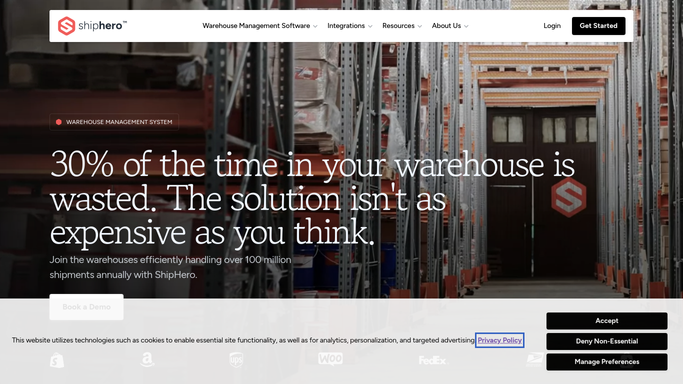
Automation Rules work on triggers and actions and fire when an order is created or imported, before a warehouse is assigned, so an order can be tagged, held, routed or given a shipping method without anyone touching it. Multi-Warehouse Allocation goes further, applying its own conditions and actions to decide which building fulfils an order and whether it splits across two. Pick-to-Light and Pack-to-Light direct the hands rather than the eyes, and the picker and packer performance dashboards show who is quick and who is accurate. Live carrier rate shopping picks the service at the moment of packing.
Every one of those decisions rests on two facts: an order that has already arrived, and stock already on a shelf.
Neither fact covers the doors. Whether the container really lands on Thursday, whether the appointment was moved, whether a carton spec changed last month: all of that is published on somebody else's website, to whoever signs in and looks.
The dock can know what is coming before it arrives
The forwarder publishes the real arrival date, and Thursday's container is on that page today.
Every open purchase order checked against the supplier's portal and the forwarder's arrival notice each morning, so the receiving plan and the agency booking for Tuesday are made against a date somebody actually published. A container that slipped four days known on the day it slipped, not on the day the trailer fails to turn up.
Retailer routing portals watched for appointments granted, moved or refused, so a pallet is built for a slot that exists. Vendor portals read weekly for deductions and compliance charges, with the receipt, the photographs and the appointment record gathered while the dispute is still allowed. Carton and labelling specs checked against the current published version before a wholesale order is built, because those change without an email.
Agency timesheets pulled and set against the hours the floor actually ran, so the invoice is checked before it is approved rather than after.
Reading and comparing can run overnight without supervision. Submitting a routing request, filing a dispute or approving an invoice commits the business, so each of those is prepared and left for a person.
Refreshing a forwarder's page is not warehouse work
Somebody in the building spends part of every day signed into a supplier portal, a forwarder's tracker or a retailer's vendor site, reading a screen and retyping it. That is not a warehouse skill, and it falls to whoever is most senior and least available.
WebRun is an AI agent that works a real Chrome browser, signed in as you. It opens the supplier's portal, the forwarder's tracking page, the retailer's routing system or the agency's timesheet site, reads what is there, and hands back a receiving plan, an exception list or a dispute pack.
It runs on your schedule in your own private environment, and you can watch a run and stop it. Anything that commits you to a retailer, a carrier or a supplier is drafted for approval.
The workflows below are already built, and each one names the sites it opens.
Questions people ask
Our Automation Rules already handle order routing. What is left?
Everything at the two doors. Automation Rules and Multi-Warehouse Allocation act on orders that arrived and stock on a shelf. This covers inbound purchase orders, forwarder arrival notices, retailer routing portals and vendor deductions.
Can it book a delivery appointment with a retailer?
It reads the portal, reports what changed and prepares the request, then leaves the submission to a person. Booking a slot commits the building to a day, so that stays a human decision.
Do we need API access to a supplier or forwarder site?
No. It signs into the site the way your team does, which is the point: most suppliers, drayage companies and regional retailers have a web portal and nothing else, and those are the ones that never appear on an integration list.
13 ready-made ShipHero workflows
Each one names the apps it touches and the exact steps it takes. Open one to read what it will do, then turn it on.


Want one of these running on your own ShipHero?
Show WebRun the process once and it will run it on schedule, in your own private browser environment.