How to Automate Exactera
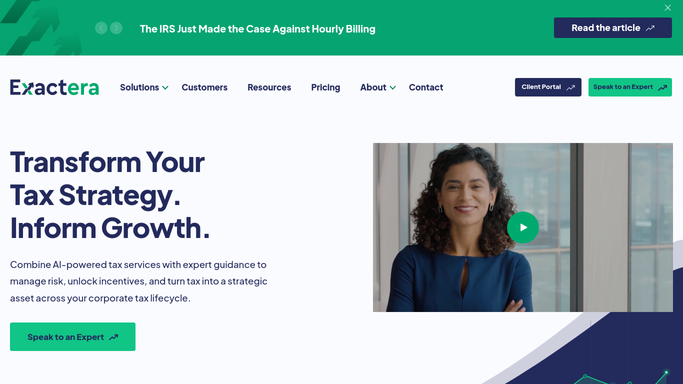
Exactera automates the analysis. Its AI-Benchmarking Engine builds comparable sets by functional profile, the Global Regulation Tracker follows local rule changes, and Localized Documentation produces master and local files in each jurisdiction's format. The gathering it cannot do, pulling figures out of your ERP and reading authority portals, is what an agent like WebRun handles.
 Written by
Clara Bennett
Revenue operations
Written by
Clara Bennett
Revenue operations
 Reviewed by
Rosa Lindqvist
Operations editor
Reviewed by
Rosa Lindqvist
Operations editor
Transfer pricing turns internal invoices into an argument with tax authorities
When one part of a group sells to another part of the same group, someone has to set the price. That price moves profit between countries, so every tax authority involved has a view on it, and the group is expected to show its working: which entity did what, what an unrelated company would have charged, and why the margin ended up where it did. Exactera is where a multinational assembles that showing.
The people in it are the group's tax and transfer pricing team, often three or four covering dozens of jurisdictions, plus the advisers they lean on. Exactera sells more than the transfer pricing side, with R&D credit, fixed asset and indirect tax work alongside it, and it owns RoyaltyStat, the royalty rate and license agreement database built from public filings.
What makes this work heavy is who reads the output. A local file is a document an examiner in another country may go through line by line, years after everyone who booked the transactions has forgotten them.
Documentation season is mostly chasing entities for figures
Nothing can be drafted until the numbers arrive, and the numbers sit with people who do not report to the tax team.
A controller in one subsidiary owes a trial balance and a segmented profit and loss, and sends the wrong period. Another sends a workbook with the intercompany lines already netted, so nothing in it can be traced back. The service agreement that says who bears which cost lives in a contract folder somebody else administers, in a version that may not be the signed one. Someone opens the accounting system and pulls intercompany balances entity by entity, then spends an afternoon working out why two sides of the same transaction differ by the price of a bank charge.
Then the dates. Every jurisdiction sets its own, and they do not line up, so the calendar is a spreadsheet one person keeps by hand and re-checks with local advisers whenever a rule moves.
Documentation software cannot go and find the trial balance
Exactera automates the analysis that used to eat weeks of an economist's time, and it is worth pushing that as far as it goes before looking elsewhere.
The AI-Benchmarking Engine builds comparable sets by matching functional profile to functional profile, which is the search that used to be done by hand through a commercial database. The Global Regulation Tracker follows local legislative change across jurisdictions, so a new rule turns up as a notification rather than a phone call from an adviser. Localized Documentation produces master and local files in the formats and languages each jurisdiction mandates, and Exactera's own specialists review what comes out. RoyaltyStat supplies arm's length royalty rates and license agreements drawn from public filings, and the whole set sits in centralized records a global team can reach.
All of it begins from data the platform has been handed. The engine benchmarks a functional profile somebody wrote down. The documentation generates from figures somebody uploaded. It does not open your accounting system, your contract repository or a tax authority's own portal and go looking.
The figures behind a local file can arrive before they are asked for
Flip the direction of the chasing and a cycle stops opening with a round of emails.
Trial balances and segmented results pulled from the group's own accounting system entity by entity, on the tax team's schedule, so the pack is half built before anyone is asked for anything. Both sides of each intercompany balance read and set against each other, with only the pairs that disagree coming back as a list. Signed intercompany agreements collected out of the contract repository and checked against the entities the documentation actually describes.
Each authority's own portal opened after a submission to see what it shows as received, because a tracker that follows the law still cannot tell you whether your filing landed. The state of every local file, who is drafting it, what is still missing and whose review it is sitting in, gathered onto one page each Monday. Comparable sets raised for refresh on their own age rather than when somebody remembers.
For an advisory firm only the count changes: the same round across every client, stacked into one worklist by nearest date.
The gathering can run overnight, the position cannot
All that collecting is a person signing into an accounting system, a document store and a handful of authority portals, then writing down what is on the screen.
WebRun is an AI agent that drives a real Chrome browser, signed in as you. It opens the ERP, the contract folder, the authority sites and Exactera itself, reads what is there, and hands back the reconciliation, the status page or the exception list.
It runs on your schedule inside your own private environment, and you can watch a run and stop it. The boundary is deliberate: it gathers, compares and drafts. It does not set a price, approve a benchmarking result or submit anything to a tax authority. Those stay with the people who will have to defend them.
Each workflow below names the systems it opens.
Questions people ask
Nothing goes to a tax authority without a person, does it?
Correct, and the line is fixed. It gathers figures, compares both sides of a balance and prepares the draft, then stops. Setting a price, approving a comparable set and filing with an authority are positions the group has to defend, so they stay with the tax people who sign them.
Can it pull figures from an ERP nobody can get a clean report out of?
Yes, because it reads the screen rather than an export. It signs into the accounting system as a member of the team does, opens the entity and period a person would open, and copies out what is shown, which is why a missing report writer is not a blocker.
Our ledger is sensitive. What controls access to it?
It runs in your own private environment under a policy naming the sites it may open, and every run can be watched and stopped. Most teams start it read-only against a couple of entities, check the output against a manual pull, then widen the scope.
10 ready-made Exactera workflows
Each one names the apps it touches and the exact steps it takes. Open one to read what it will do, then turn it on.




Want one of these running on your own Exactera?
Show WebRun the process once and it will run it on schedule, in your own private browser environment.